Chapter 1: Challenges of living in a global community
Learning objectives
Identify different contributors to cultural diversity in our global community
Recognize issues surrounding cultural diversity and multiculturalism
Appreciate intercultural communication as an integral part of life in a global
community
Globalization is the process of increasing interconnectedness between societies and people at
the economic, political and cultural levels.
Globalization in business is
o the increase of trade around the world, especially by large companies producing or
trading goods in many different countries
o the idea that the world is developing a single economy and culture as a result of
improved technology and communications and the influence of very large
multinational companies.
The effect of globalization on organizations
o In a response to economic transformations, businesses are continually expanding into
world markets as part of a wider process of globalization.
o There is a global trend for multinational corporations to shift form developed
economies in the West to emerging markets in the East.
o Having a multicultural workforce allows organizations to make use of scarce resources
and thus increase their competitive advantage.
o Ethnic diversity within workplaces is continually changing the organizational
composition of most parts of the world.
KOF – Index of Globalization is an objective way to measure globalization based on three
indicators:
1. Economic globalization
Trade and investment flows, import/export
2. Social globalization
Personal contact, information flows, number of McDonalds restaurants, IKEA
stores, etc.
3. Political globalization
Foreign embassies in a country, membership of international organizations,
participation in UN missions, involvement in international trade agreements.
Contributors in cultural contact/diversity
1. Advanced Technology and transportation, and increased mobility
Easier to travel and move for economic or lifestyle opportunities
Easier to interact online via ever-changing apps and modalities
Smaller, yet more diverse world
Understanding other cultures is a challenge we face on an everyday basis
2. Globalized economy and business
Global transformation: refers to the worldwide economic and technological changes
that influence how people relate to one another.
, International expansion (MNC’s operating globally, outsourcing to low wage
countries)
Diverse workforce: migrant workers, expats
Understanding cultural tensions created by economic transformations is a challenge
we face in intercultural communication in business contexts (BREXIT, EU, NATO)
3. Mass migration and international exchange
Immigration flows, from developing to developed countries
Refugees from war-torn countries
Migrant workers who move to a host country temporarily
Student exchanges
Expats who temporarily relocate to work in another country
Facilitating intercultural co-existence is a challenge we face in our societies.
International migration increases diversity in the composition of populations in destination
countries and contributes to social and economic development both in the countries of origin
and in the countries of destination.
The internet revolution (1990) means that a very high proportion of work-related
communication takes place via email, instant messaging, Skype, video conferencing, mobile
phone and social media.
Views of globalization
Three perspectives:
o Globalists
Inevitable development, cannot be resisted or significantly influenced by humans
o Traditionalists
Most economic and social activity is regional, rather than global, significant role of
nation-states.
o Transformationalists
Significant shifts, but there is still significant scope for national, local and other
agencies.
Global cultural diversity is affected by two factors:
Environmental factors
Geographical barriers breed; tropical climates support more life
Sociocultural factors
Smaller groups highly adaptable; multilingualism is the global norm
Cultural Home refers to an individual’s sense of belonging to an ethic, racial or geographic
community with shared traditions and practices. It provides its members with emotional
attachments to a cultural group as well as a sense of identity and belonging because its
members share a common history, culture and even physical features.
Four Necessity’s and benefits of Intercultural Communication
1. Societies are increasingly multicultural, made up of diverse cultures
o Living and working together requires mutual understanding and tolerance
o Melting pot societies flourish when there is acceptance of equal societal participation
of diverse groups
, - Therefore, necessary to study intercultural communication and gain intercultural
communicative competence, to build intercultural understanding.
2. Building intercultural understanding
o Become aware of cultural rules by being confronted with cultural rules of others.
3. Promoting international business exchange
o Communicating with unfamiliar cultures does not simply mean finding a translator
o Business is building relationships (e.g. trust, favour, dependence, adaptation)
- Understanding cultures and cultural differences is the key to successful business
exchange.
4. Facilitating cross-cultural adaptation
o The tension between immigrants and host nationals often centres on the issue of
cultural maintenance – melting pot or salad bowl?
Chapter 2: Culture and people
Learning objectives
Identify different components and characteristics of culture
Define and analyse different types of subcultures
Explain discursive construction of culture and identity
Evaluate different approaches to studying culture
Defining culture (1)
Culture may be defined as:
“the particular way of life of a group of people and the meaning-making process by
which people make sense of their social world.”
“culture comprises the deposit of knowledge, experience, beliefs, values, traditions,
religion, notions of time, roles, spatial relations, worldviews, material objects and
geographic territory.”
Defining culture (2)
- Many different definitions in scientific literature
- Those definitions have in common:
Culture is pervasive in human life
Culture governs people’s behaviours
- Culture is difficult to define => metaphors used to define
Definition of a metaphor
A metaphor is a figure of speech that describes a concept, object or action in a way that is not
literally true but helps explain an idea or make a comparison.
Characteristics of a metaphor:
- A metaphor states that one thing is another thing.
- It equates those two things not because they actually are the same, but for the sake of
explanation, illustration or vivid comparison.
- If you take a metaphor literally, it will probably sound very strange.
, Metaphors for culture
- People see the world through cultural glasses
- People see the world through a window
- Culture is the luggage we carry
- Culture is like the water fish swim in
- Culture is like the air we breathe
- Web that people have spun
Culture confines members to their social reality and facilitates their
functioning in it
Culture is product and process
Culture provides context to behaviour
Official metaphors for culture in models
- Iceberg metaphor by Hall, 1973
Visible part of culture (the iceberg) = symbols, rituals
Invisible part of culture (under water) = values, norms
- Onion metaphor by Hofstede
Based on different layers
Superficial to deep
Symbols – heroes – rituals – values
- Software of the mind by Hofstede
Culture as hardwired program in our mind
Needs to be installed
- Tree by Nguyen-Phuong-Mai
Bottom to top
Fundamental concerns – values – outward expressions
Dynamic
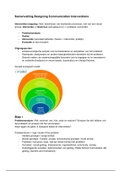
Culture as “layered” (Dodd’s 1998 model)
1. The inner core of culture
The inner core aspects underlie and shape a culture (and
behaviour in that culture)
- History: carrier of cultural heritage, provides
continuity
- Identity: a sense of “who we are’ or ‘who I am”
- Beliefs: what a culture believes as true or false
- Values: what a culture regards as good or bad
- Worldview: what a culture believes about nature
and the working of the universe
2. The intermediate layer of culture
Observable activities as manifestations of culture:
- Expressed in material objects, roles, rules, rituals, customs, communication patterns
and artistic expressions
- Reflect the behavioural and social rules and communication patterns a group shares
and agrees on
- Examples: King’s day, celebrating birthdays, other rituals
The intermediate layer of culture: popular culture
Learning objectives
Identify different contributors to cultural diversity in our global community
Recognize issues surrounding cultural diversity and multiculturalism
Appreciate intercultural communication as an integral part of life in a global
community
Globalization is the process of increasing interconnectedness between societies and people at
the economic, political and cultural levels.
Globalization in business is
o the increase of trade around the world, especially by large companies producing or
trading goods in many different countries
o the idea that the world is developing a single economy and culture as a result of
improved technology and communications and the influence of very large
multinational companies.
The effect of globalization on organizations
o In a response to economic transformations, businesses are continually expanding into
world markets as part of a wider process of globalization.
o There is a global trend for multinational corporations to shift form developed
economies in the West to emerging markets in the East.
o Having a multicultural workforce allows organizations to make use of scarce resources
and thus increase their competitive advantage.
o Ethnic diversity within workplaces is continually changing the organizational
composition of most parts of the world.
KOF – Index of Globalization is an objective way to measure globalization based on three
indicators:
1. Economic globalization
Trade and investment flows, import/export
2. Social globalization
Personal contact, information flows, number of McDonalds restaurants, IKEA
stores, etc.
3. Political globalization
Foreign embassies in a country, membership of international organizations,
participation in UN missions, involvement in international trade agreements.
Contributors in cultural contact/diversity
1. Advanced Technology and transportation, and increased mobility
Easier to travel and move for economic or lifestyle opportunities
Easier to interact online via ever-changing apps and modalities
Smaller, yet more diverse world
Understanding other cultures is a challenge we face on an everyday basis
2. Globalized economy and business
Global transformation: refers to the worldwide economic and technological changes
that influence how people relate to one another.
, International expansion (MNC’s operating globally, outsourcing to low wage
countries)
Diverse workforce: migrant workers, expats
Understanding cultural tensions created by economic transformations is a challenge
we face in intercultural communication in business contexts (BREXIT, EU, NATO)
3. Mass migration and international exchange
Immigration flows, from developing to developed countries
Refugees from war-torn countries
Migrant workers who move to a host country temporarily
Student exchanges
Expats who temporarily relocate to work in another country
Facilitating intercultural co-existence is a challenge we face in our societies.
International migration increases diversity in the composition of populations in destination
countries and contributes to social and economic development both in the countries of origin
and in the countries of destination.
The internet revolution (1990) means that a very high proportion of work-related
communication takes place via email, instant messaging, Skype, video conferencing, mobile
phone and social media.
Views of globalization
Three perspectives:
o Globalists
Inevitable development, cannot be resisted or significantly influenced by humans
o Traditionalists
Most economic and social activity is regional, rather than global, significant role of
nation-states.
o Transformationalists
Significant shifts, but there is still significant scope for national, local and other
agencies.
Global cultural diversity is affected by two factors:
Environmental factors
Geographical barriers breed; tropical climates support more life
Sociocultural factors
Smaller groups highly adaptable; multilingualism is the global norm
Cultural Home refers to an individual’s sense of belonging to an ethic, racial or geographic
community with shared traditions and practices. It provides its members with emotional
attachments to a cultural group as well as a sense of identity and belonging because its
members share a common history, culture and even physical features.
Four Necessity’s and benefits of Intercultural Communication
1. Societies are increasingly multicultural, made up of diverse cultures
o Living and working together requires mutual understanding and tolerance
o Melting pot societies flourish when there is acceptance of equal societal participation
of diverse groups
, - Therefore, necessary to study intercultural communication and gain intercultural
communicative competence, to build intercultural understanding.
2. Building intercultural understanding
o Become aware of cultural rules by being confronted with cultural rules of others.
3. Promoting international business exchange
o Communicating with unfamiliar cultures does not simply mean finding a translator
o Business is building relationships (e.g. trust, favour, dependence, adaptation)
- Understanding cultures and cultural differences is the key to successful business
exchange.
4. Facilitating cross-cultural adaptation
o The tension between immigrants and host nationals often centres on the issue of
cultural maintenance – melting pot or salad bowl?
Chapter 2: Culture and people
Learning objectives
Identify different components and characteristics of culture
Define and analyse different types of subcultures
Explain discursive construction of culture and identity
Evaluate different approaches to studying culture
Defining culture (1)
Culture may be defined as:
“the particular way of life of a group of people and the meaning-making process by
which people make sense of their social world.”
“culture comprises the deposit of knowledge, experience, beliefs, values, traditions,
religion, notions of time, roles, spatial relations, worldviews, material objects and
geographic territory.”
Defining culture (2)
- Many different definitions in scientific literature
- Those definitions have in common:
Culture is pervasive in human life
Culture governs people’s behaviours
- Culture is difficult to define => metaphors used to define
Definition of a metaphor
A metaphor is a figure of speech that describes a concept, object or action in a way that is not
literally true but helps explain an idea or make a comparison.
Characteristics of a metaphor:
- A metaphor states that one thing is another thing.
- It equates those two things not because they actually are the same, but for the sake of
explanation, illustration or vivid comparison.
- If you take a metaphor literally, it will probably sound very strange.
, Metaphors for culture
- People see the world through cultural glasses
- People see the world through a window
- Culture is the luggage we carry
- Culture is like the water fish swim in
- Culture is like the air we breathe
- Web that people have spun
Culture confines members to their social reality and facilitates their
functioning in it
Culture is product and process
Culture provides context to behaviour
Official metaphors for culture in models
- Iceberg metaphor by Hall, 1973
Visible part of culture (the iceberg) = symbols, rituals
Invisible part of culture (under water) = values, norms
- Onion metaphor by Hofstede
Based on different layers
Superficial to deep
Symbols – heroes – rituals – values
- Software of the mind by Hofstede
Culture as hardwired program in our mind
Needs to be installed
- Tree by Nguyen-Phuong-Mai
Bottom to top
Fundamental concerns – values – outward expressions
Dynamic
Culture as “layered” (Dodd’s 1998 model)
1. The inner core of culture
The inner core aspects underlie and shape a culture (and
behaviour in that culture)
- History: carrier of cultural heritage, provides
continuity
- Identity: a sense of “who we are’ or ‘who I am”
- Beliefs: what a culture believes as true or false
- Values: what a culture regards as good or bad
- Worldview: what a culture believes about nature
and the working of the universe
2. The intermediate layer of culture
Observable activities as manifestations of culture:
- Expressed in material objects, roles, rules, rituals, customs, communication patterns
and artistic expressions
- Reflect the behavioural and social rules and communication patterns a group shares
and agrees on
- Examples: King’s day, celebrating birthdays, other rituals
The intermediate layer of culture: popular culture