
1.5 Problem 3
A: What reflexes are we born with and what is their purpose?
How did reflexes evolve?
Is there a critical period for reflexes to develop for attachment?
B: What is postpartum depression? How does is affect the mom and
how long does it last (short-term/long-term)
What are different attachment styles and how do we measure
attachment?
How does attachment affect development?
Reflex- an involuntary response to external stimuli
Blue= permanent underlined= survival
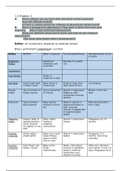
Reflex Method Baby’s response Function/significance Developmental course
of reflex
Breathing Repetitive Provides O2, expels
Reflex inhalation and CO2
expiration
Swallowing
Pupil Reflex Widen in
response to light
Eye blink Flash bright light Baby blinks or Protects baby from unchanging
in baby’s eyes closes eyes high visual stimuli
Biceps Tap on tendon of Short contraction Absent in depressed Brisker in first few
reflex biceps muscle of muscle babies or with days
congenital muscular
disease
Knee jerk Tap on tendon Baby quickly Weak or absent in More pronounced in
below patella extends or kicks depressed babies or first 2 days
leg with muscular
disease; exaggerated
in hyperexcitable
babies
Stepping Support baby in Baby makes Absent in depressed Disappears at 3-4
reflex upright position, rhythmic infants months
move forward, stepping
tilt slightly to one movements
side
Rooting Stroke baby’s Baby turns head Absent in depressed Disappears 3-4
response cheek lightly toward finger, babies months, becoming
opens mouth, voluntary
tries to suck
Sucking Inset finger into Baby sucks Weak, interrupted Often less intensive
response babies’ mouth finger sucking in apathetic and regular in first 3-4
rhythmically babies; maternal days, disappears by 6
medication may
depress suckling
, months
Babinski Stroke bottom of Big toe curves up Absent in defects of Disappears near end
reflex foot from heel to and other toes lower spine of first year
toes fan and curl
Palmar Press finger Baby grasps it Weak or absent in Initially strong;
grasp against baby’s depressed babies disappears 3-4
palm months, replaced with
voluntary grasp
Swimming Infant immersed Keeps infant afloat, Disappears 4-6
reflex in water will allowing easy rescue months
display active
movements of
arms/legs and
involuntarily hold
his/her breath
Moro reflex Allow baby’s Baby throws Absent or consistently Disappears 6-7
head to drop arms outward, weak reflex indicates months
back few inches; extends legs, serious problem in
lower baby’s brings arms back CNS
overall position to centre of
about 6 inches or body, clenches
make loud noise fist
o Abnormalities in reflex help identify visual/hearing problems and
predict abnormal functions that won’t appear for years
o Test baby’s reflexes to find out health, maturity and capabilities of
new-borns
Brazelton Neonatal Assessment Scale- scale containing
tests used to measure infant’s sensory and perceptual
capabilities, motor development, range of states, and ability
to regulate these states, and whether the brain and CNS are
properly regulating involuntary responses
Survival reflexes- reflexes with clear adaptive value, offering protection
against aversive stimulation and enabling infant to satisfy basic needs
(italics, underlined in table)
o Many reflexes believed to have outlived original purpose
o Primitive reflexes normally disappear as are controlled by lower
subcortical areas which are lost when higher centres of cerebral
cortex mature and guide voluntary behaviours
Fixed action pattern- complex innate behaviour that promotes the
survival of the individual and species
Sign stimulus- a particular stimulus whose presence automatically
releases a particular fixed action pattern
Sensitive (critical) periods- specific periods in which animal is
biologically ready to acquire a new behaviour
A: What reflexes are we born with and what is their purpose?
How did reflexes evolve?
Is there a critical period for reflexes to develop for attachment?
B: What is postpartum depression? How does is affect the mom and
how long does it last (short-term/long-term)
What are different attachment styles and how do we measure
attachment?
How does attachment affect development?
Reflex- an involuntary response to external stimuli
Blue= permanent underlined= survival
Reflex Method Baby’s response Function/significance Developmental course
of reflex
Breathing Repetitive Provides O2, expels
Reflex inhalation and CO2
expiration
Swallowing
Pupil Reflex Widen in
response to light
Eye blink Flash bright light Baby blinks or Protects baby from unchanging
in baby’s eyes closes eyes high visual stimuli
Biceps Tap on tendon of Short contraction Absent in depressed Brisker in first few
reflex biceps muscle of muscle babies or with days
congenital muscular
disease
Knee jerk Tap on tendon Baby quickly Weak or absent in More pronounced in
below patella extends or kicks depressed babies or first 2 days
leg with muscular
disease; exaggerated
in hyperexcitable
babies
Stepping Support baby in Baby makes Absent in depressed Disappears at 3-4
reflex upright position, rhythmic infants months
move forward, stepping
tilt slightly to one movements
side
Rooting Stroke baby’s Baby turns head Absent in depressed Disappears 3-4
response cheek lightly toward finger, babies months, becoming
opens mouth, voluntary
tries to suck
Sucking Inset finger into Baby sucks Weak, interrupted Often less intensive
response babies’ mouth finger sucking in apathetic and regular in first 3-4
rhythmically babies; maternal days, disappears by 6
medication may
depress suckling
, months
Babinski Stroke bottom of Big toe curves up Absent in defects of Disappears near end
reflex foot from heel to and other toes lower spine of first year
toes fan and curl
Palmar Press finger Baby grasps it Weak or absent in Initially strong;
grasp against baby’s depressed babies disappears 3-4
palm months, replaced with
voluntary grasp
Swimming Infant immersed Keeps infant afloat, Disappears 4-6
reflex in water will allowing easy rescue months
display active
movements of
arms/legs and
involuntarily hold
his/her breath
Moro reflex Allow baby’s Baby throws Absent or consistently Disappears 6-7
head to drop arms outward, weak reflex indicates months
back few inches; extends legs, serious problem in
lower baby’s brings arms back CNS
overall position to centre of
about 6 inches or body, clenches
make loud noise fist
o Abnormalities in reflex help identify visual/hearing problems and
predict abnormal functions that won’t appear for years
o Test baby’s reflexes to find out health, maturity and capabilities of
new-borns
Brazelton Neonatal Assessment Scale- scale containing
tests used to measure infant’s sensory and perceptual
capabilities, motor development, range of states, and ability
to regulate these states, and whether the brain and CNS are
properly regulating involuntary responses
Survival reflexes- reflexes with clear adaptive value, offering protection
against aversive stimulation and enabling infant to satisfy basic needs
(italics, underlined in table)
o Many reflexes believed to have outlived original purpose
o Primitive reflexes normally disappear as are controlled by lower
subcortical areas which are lost when higher centres of cerebral
cortex mature and guide voluntary behaviours
Fixed action pattern- complex innate behaviour that promotes the
survival of the individual and species
Sign stimulus- a particular stimulus whose presence automatically
releases a particular fixed action pattern
Sensitive (critical) periods- specific periods in which animal is
biologically ready to acquire a new behaviour


