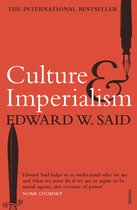
Edward Said- Culture and Imperialism (London: Vintage, 1994)
Cultural forms e.g. the novel ‘were immensely important in the formation of imperial
attitudes, references, and experiences’ (xii)
‘when it came to who owned the land, who had the right to settle and work on it, who
kept it going, who won it back, and who now plans its future- these issues were
reflected, contested, and even for a time decided in narrative’ (xiii)
Authors are ‘very much in the history of their societies, shaping and shaped by that
history and their social experience in different measure’ (xxvi)
The c19th novel- ‘because of their worldliness, because of their complex affiliations
with their real setting, they are more interesting and more valuable as works of art’
(p.13.)
Imperialism: ‘a process occurring as part of the metropolitan culture, which at times
acknowledges, at other times obscures the sustained business of empire itself’ (p.59.)
‘As we look back at the cultural archive, we begin to reread it not univocally but
contrapuntally, with a simultaneous awareness both of the metropolitan history that is
narrated and of those other histories against which (and together with which) the
dominating discourse acts’ (p.59).
‘we can read and interpret English novels […] whose engagement (usually
suppressed for the most part) with the West Indies or India, say, is shaped and
perhaps even determined by the specific history of colonization, resistance, and
finally native nationalism’ (p.60.)
‘we are dealing with the formation of cultural identities understood not as
essentializations (although part of their enduring appeal is that they seem and are
considered to be like essentializations) but as contrapuntal ensembles, for it is the
case that no identity can ever exist by itself without an array of opposites, negatives,
oppositions’ (p.60.) e.g. Greeks > require barbarians.
In Br culture- e.g. lit- a concern ‘that fixes socially desirable, empowered space in
metropolitan England or Europe and connects it by design, motive, and development
to distant or peripheral worlds’ (p.61.)
Need to read the canon ‘as a polyphonic accompaniment to the expansion of Europe,
giving a revised direction and valence to such writers as Conrad and Kipling’ (p.71.)
Cultural forms e.g. the novel ‘were immensely important in the formation of imperial
attitudes, references, and experiences’ (xii)
‘when it came to who owned the land, who had the right to settle and work on it, who
kept it going, who won it back, and who now plans its future- these issues were
reflected, contested, and even for a time decided in narrative’ (xiii)
Authors are ‘very much in the history of their societies, shaping and shaped by that
history and their social experience in different measure’ (xxvi)
The c19th novel- ‘because of their worldliness, because of their complex affiliations
with their real setting, they are more interesting and more valuable as works of art’
(p.13.)
Imperialism: ‘a process occurring as part of the metropolitan culture, which at times
acknowledges, at other times obscures the sustained business of empire itself’ (p.59.)
‘As we look back at the cultural archive, we begin to reread it not univocally but
contrapuntally, with a simultaneous awareness both of the metropolitan history that is
narrated and of those other histories against which (and together with which) the
dominating discourse acts’ (p.59).
‘we can read and interpret English novels […] whose engagement (usually
suppressed for the most part) with the West Indies or India, say, is shaped and
perhaps even determined by the specific history of colonization, resistance, and
finally native nationalism’ (p.60.)
‘we are dealing with the formation of cultural identities understood not as
essentializations (although part of their enduring appeal is that they seem and are
considered to be like essentializations) but as contrapuntal ensembles, for it is the
case that no identity can ever exist by itself without an array of opposites, negatives,
oppositions’ (p.60.) e.g. Greeks > require barbarians.
In Br culture- e.g. lit- a concern ‘that fixes socially desirable, empowered space in
metropolitan England or Europe and connects it by design, motive, and development
to distant or peripheral worlds’ (p.61.)
Need to read the canon ‘as a polyphonic accompaniment to the expansion of Europe,
giving a revised direction and valence to such writers as Conrad and Kipling’ (p.71.)