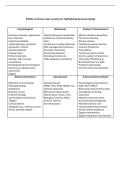
PAICD summary color-system (for highlighting during studying)
Psychological Behavioral Context / Environment:
Emotions (anxiety, depression, Health behaviors (medication SES and health inequalities
fear, distress) adherence, physical activity, Family functioning
Cognitions (beliefs, diet) School context
catastrophizing, symptom Avoidance or safety behaviors Healthcare system factors
perception, illness Self-management behaviors Cultural influences
representations) Parental monitoring Peer effects
Coping styles Scratching behavior Communication context
Stress responses Smoking, alcohol use Doctor–patient interactions
Identity, self-concept, Help-seeking or avoidance Theoretical Models (e.g.
acceptance Bronfenbrenner’s model
Developmental psychological Pediatric psychology
factors (e.g. adolescence, Chronic illness frameworks)
autonomy)
Stigma
Illness information Assessment Intervention/treatment
Definition of the disease Questionnaires Psychological interventions
Pathophysiology (PAID, PCS, IPOS, HADS, etc.) (CBT, ACT, MBCT)
Symptoms Clinical interviews Behavioral interventions (self-
Disease course Behavioral observations management training,
Disease etiology Diaries (pain, stress, itch) exposure)
Vulnerability (risk factors) Biological markers (FEV1, Medical treatment when
Triggers cortisol, HbA1c) discussed psychologically
Complications Screening tools Multidisciplinary care
Subtypes (e.g., asthma control Family-based interventions
levels, psoriasis types) School-based programs
Digital interventions
Stigma-reduction interventions
Psychological Behavioral Context / Environment:
Emotions (anxiety, depression, Health behaviors (medication SES and health inequalities
fear, distress) adherence, physical activity, Family functioning
Cognitions (beliefs, diet) School context
catastrophizing, symptom Avoidance or safety behaviors Healthcare system factors
perception, illness Self-management behaviors Cultural influences
representations) Parental monitoring Peer effects
Coping styles Scratching behavior Communication context
Stress responses Smoking, alcohol use Doctor–patient interactions
Identity, self-concept, Help-seeking or avoidance Theoretical Models (e.g.
acceptance Bronfenbrenner’s model
Developmental psychological Pediatric psychology
factors (e.g. adolescence, Chronic illness frameworks)
autonomy)
Stigma
Illness information Assessment Intervention/treatment
Definition of the disease Questionnaires Psychological interventions
Pathophysiology (PAID, PCS, IPOS, HADS, etc.) (CBT, ACT, MBCT)
Symptoms Clinical interviews Behavioral interventions (self-
Disease course Behavioral observations management training,
Disease etiology Diaries (pain, stress, itch) exposure)
Vulnerability (risk factors) Biological markers (FEV1, Medical treatment when
Triggers cortisol, HbA1c) discussed psychologically
Complications Screening tools Multidisciplinary care
Subtypes (e.g., asthma control Family-based interventions
levels, psoriasis types) School-based programs
Digital interventions
Stigma-reduction interventions