

Axis formation, morphogens and morphogenesis in vertebrates
In vertebrates the determination of the axes occurs partially in a cellular environment
Xenopus embryos are easily accessible
Asymmetry is already established in the oocyte (egg) of xenopus
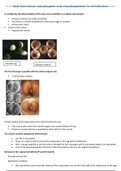
Animal pole ( dark)
Contains the nucleus
Vegetal pole (white)
Xenopus egg Xenopus embryo
The first cleavage is parallel with the animal-vegetal axis
2-cell xenopus embryo
Animal-vegetal axis broadly defines the anterior-posterior axis
Fate map studies show that animal-vegetal axis vroadly defines A/P axis
Similar to xenopus AP axis is specified to some extent in the oocyte
The oocyte contains cytoplasmic determinants
Just like in drosophila
These are maternal Mrna and proteins deposited in the egg before fertilisation
this is enough material to see the embryo through the first cleavages until its own genes begin to be expressed
most of the developmentally important maternal products end up in the vegetal hemisphere
Removal of the vegetal half affects AP and DV polarity
Example animal: fish
Experiment as follow:
this experiments shows that the maternal Mrna and protein are stored in the yolk of the vegetal part of the egg
, 1. remove yolk early
= radially symmetrical hyperblastula – no A/P or D/V pattern
radia symmetry = organism can be divided into similar halves by passing a plane at any angle along a central axis i.e.
starfish.
Blastula = A hollowsphere of cells referred to as blastomeres surrounding an inner fluid-filled cavity called blastocoele
formed during early stage of embryonic development
2. remove yolk later (after embryo has divided)
= normal embryo because embryo takes over and does not matter if the yolk is removed.
Yolk cell = Membranous sac attached to an embryo. Formed by cells of the hypoblast adjacent to the embryonic disk.
The yolk is made up of many cells called yolk cells.
Spemann’s experiment in 1903
further experiment to see what is required in making the A/P and V/D axis in embryos
What happens if the ligature is not along the normal plane of division?
- Only 1 normal embryo. Why?
Ligature = a thing used for tying or binding something tightly
Fertilised egg constricted by a ligature with nucleus excluded from half the egg, that half of the egg remained undivided
At the 16 cell stage Spemann loosened the ligature and one nucleus migrated into the half of the egg without any
nuclei
Result is that both eggs started to divide and he constricted the ligature further resulting into 2 normal salamander
embryos
Spemann concluded that early amphibian nuclei were genetically identical that each cell was capable of giving rise to
an entire organism
In vertebrates the determination of the axes occurs partially in a cellular environment
Xenopus embryos are easily accessible
Asymmetry is already established in the oocyte (egg) of xenopus
Animal pole ( dark)
Contains the nucleus
Vegetal pole (white)
Xenopus egg Xenopus embryo
The first cleavage is parallel with the animal-vegetal axis
2-cell xenopus embryo
Animal-vegetal axis broadly defines the anterior-posterior axis
Fate map studies show that animal-vegetal axis vroadly defines A/P axis
Similar to xenopus AP axis is specified to some extent in the oocyte
The oocyte contains cytoplasmic determinants
Just like in drosophila
These are maternal Mrna and proteins deposited in the egg before fertilisation
this is enough material to see the embryo through the first cleavages until its own genes begin to be expressed
most of the developmentally important maternal products end up in the vegetal hemisphere
Removal of the vegetal half affects AP and DV polarity
Example animal: fish
Experiment as follow:
this experiments shows that the maternal Mrna and protein are stored in the yolk of the vegetal part of the egg
, 1. remove yolk early
= radially symmetrical hyperblastula – no A/P or D/V pattern
radia symmetry = organism can be divided into similar halves by passing a plane at any angle along a central axis i.e.
starfish.
Blastula = A hollowsphere of cells referred to as blastomeres surrounding an inner fluid-filled cavity called blastocoele
formed during early stage of embryonic development
2. remove yolk later (after embryo has divided)
= normal embryo because embryo takes over and does not matter if the yolk is removed.
Yolk cell = Membranous sac attached to an embryo. Formed by cells of the hypoblast adjacent to the embryonic disk.
The yolk is made up of many cells called yolk cells.
Spemann’s experiment in 1903
further experiment to see what is required in making the A/P and V/D axis in embryos
What happens if the ligature is not along the normal plane of division?
- Only 1 normal embryo. Why?
Ligature = a thing used for tying or binding something tightly
Fertilised egg constricted by a ligature with nucleus excluded from half the egg, that half of the egg remained undivided
At the 16 cell stage Spemann loosened the ligature and one nucleus migrated into the half of the egg without any
nuclei
Result is that both eggs started to divide and he constricted the ligature further resulting into 2 normal salamander
embryos
Spemann concluded that early amphibian nuclei were genetically identical that each cell was capable of giving rise to
an entire organism


