General medicine | summary
HNH-27806
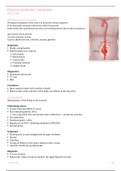
Abdominal aortic aneurysm
Permanent dilatation of the artery to twice the normal diameter
True aneurysm: arterial walls forms wall of aneurysm
False aneurysms (pseudoaneurysms): surrounding tissues form wall of aneurysm
AAA: below renal arteries
5x more frequent in men
Causes: atherosclerosis, infection, trauma, genetics
Symptoms
▪ Mostly asymptomatic
▪ Rapid expansion or rupture:
• Severe pain
• Hypotension
• Tachycardia
• Profound anaemia
• Sudden death
Diagnostics
▪ Abdominal ultrasound
▪ CT scan
▪ MRI
Treatment
▪ Open surgical repair with insertion of graft
▪ Endovascular stent; entrance of the body via catheter in the leg artery
Acute gastritis
Inflammation of the lining of the stomach
Underlying causes
▪ H. pylori infection (80% of cases)
▪ Auto-immune gastritis (5%)
• Loss of parietal cells and intrinsic factor deficiency → pernicious anaemia
▪ Viral infections
▪ Duodenal gastric reflux
▪ Regular use of COX-1 inhibiting medication (NSAIDs)
▪ Alcohol abuse
Symptoms
▪ Burning ache or pain (indigestion) in upper abdomen
▪ Nausea
▪ Vomiting
▪ Feeling of fullness in the upper abdomen after eating
▪ Gastritis can also be asymptomatic
Diagnosis
▪ Test for H. pylori
▪ Endoscopy: using a scope to examine the upper digestive system
7-3-2020 12:59 1 - 82
,▪ X-ray of upper digestive system: after swallowing barium, X0rays create images of the oesophagus, stomach
and small intestine
Treatment
▪ Stop ingestion of NSAIDs, if not possible; use a COX-2 NSAID
▪ Proton pump inhibitor (PPI) should be given: block acid production and promote healing
▪ H. pylori eradication therapy
Complications
▪ Gastritis may lead to stomach ulcers and stomach bleeding
▪ Chronic gastritis increases risk of stomach cancer
Acute/chronic prostatitis
Swelling and inflammation of the prostate gland
Affects all ages, more common in men under 50 years old
Underlying causes
▪ Bacterial infection
▪ Nerve damage in the lower urinary tract, caused by surgery or trauma to the area
Symptoms
▪ Pain or difficult urination
▪ Pain in the groin (lies), pelvic area or genitals
▪ Flu-like symptoms
Alzheimer’s disease
Most common form of dementia: degenerative disease of the cortex
Progressive disease over 10 or more years, death in state of extreme cognitive decline
Familial disease
Higher incidence in Down’s syndrome
Pathophysiology
▪ Loss of neurones
▪ Neurofibrillary tangles: made of τ protein
▪ Senile plaques
▪ Amyloid angiopathy: accumulation of β-amyloid
Symptoms
▪ Progressive loss of ability to learn, retain and process new information
▪ Decline in language
▪ Apraxia: impaired ability to carry out skilled motor activities
▪ Agnosia: failure to recognize objects
▪ Progressive loss of executive functioning: organizing, planning, sequencing
▪ Behavioural change
▪ Loss of insight
▪ Depression
Diagnosis
▪ Cognitive testing
▪ Psychometric testing
▪ MRI: bilateral atrophy in the hippocampus
▪ CT: to rule out tumours, strokes and head injuries
▪ PET scan: identifying patterns of degeneration; low metabolism
▪ Amyloid PET scanning: measures burden of amyloid deposits in the brain
7-3-2020 12:59 2 - 82
,▪ Tau PET imaging: measures burden of neurofibrillary tangles in the brain
Treatment
▪ Medication to temporarily improve symptoms or slow the rate of decline
Anaemia
Condition in which the patient lacks enough healthy red blood
cells to carry adequate oxygen to the body’s tissues
▪ Not enough erythrocytes are made; aplastic anaemia
▪ Bleeding causes loss of erythrocytes faster than they’re
made
▪ The body destroys erythrocytes; haemolytic anaemia
Decrease in level of haemoglobin in the blood below reference
level for the age and sex of the individual
▪ Hypochromic microcytic with a low MCV (mean cell
volume)
▪ Normochromic normocytic with a normal MCV
▪ Macrocytic with a high MCV
Underlying causes
▪ Iron deficiency
▪ Vitamin deficiency: vitamin B12 pernicious anaemia
▪ Anaemia of inflammation: cancer, HIV/AIDS, rheumatoid arthritis, kidney disease, Crohn’s disease
▪ Sickle cell disease
Symptoms
▪ Often asymptomatic more severe symptoms with rapid blood loss
▪ Fatigue, headaches, faintness
▪ Breathlessness
▪ Angina
▪ Intermittent claudication
▪ Palpitation (hartkloppingen)
7-3-2020 12:59 3 - 82
, ▪ Pale or yellowish skin
▪ Cold hands and feet
Anaemia is not a diagnosis → cause must be found!
Diagnostics
▪ Peripheral blood
• White blood cell count
• Platelet count
• Reticulocyte count
• Blood film: test for abnormal red cell morphology
▪ Examination of bone marrow to further investigate abnormalities in peripheral blood
• Cellularity of the marrow
• Type of erythropoiesis: normoblastic of megaloblastic
• Infiltration of bone marrow
• Iron stores
Treatment
▪ Treat cause of anaemia if possible
▪ Aplastic anaemia: blood transfusion, bone marrow transplant
▪ Sickle cell anaemia: oxygen, pain relievers, blood transfusions, folic acid supplements, antibiotics
Angina pectoris
Chest pain due to reduced blood flow to the heart
Symptom of coronary artery disease
Classical or exertional angina pectoris: provoked by physical exertion, after meals, in cold windy weather,
aggravated by anger or excitement
Decubitus angina: angina that occurs lying down, in association with impaired left ventricular function
Nocturnal angina: occurs at night and awake patient from sleep
Variant (Prinzmetal’s) angina: angina that occurs without provocation, usually at rest, as a result or coronary
artery spasm
Cardiac syndrome X: patients with good history of angina, positive exercise test and angiographically normal
coronary arteries
Unstable angina: angina of recent onset, worsening angina or angina at rest
Risk factors
▪ Smoking
▪ Diabetes
▪ Hypertension
▪ Hypercholesterolaemia
▪ Family history
▪ Older age
▪ Obesity
▪ Stress
Symptoms
▪ Squeezing, pressure, heaviness, tightness or pain in the chest
▪ In women: stabbing pain instead of chest pressure & abdominal pain
▪ Pain in the arms, neck, jaw, shoulder, back
▪ Nausea
▪ Fatigue
▪ Shortness of breath
▪ Sweating
▪ Dizziness
7-3-2020 12:59 4 - 82
HNH-27806
Abdominal aortic aneurysm
Permanent dilatation of the artery to twice the normal diameter
True aneurysm: arterial walls forms wall of aneurysm
False aneurysms (pseudoaneurysms): surrounding tissues form wall of aneurysm
AAA: below renal arteries
5x more frequent in men
Causes: atherosclerosis, infection, trauma, genetics
Symptoms
▪ Mostly asymptomatic
▪ Rapid expansion or rupture:
• Severe pain
• Hypotension
• Tachycardia
• Profound anaemia
• Sudden death
Diagnostics
▪ Abdominal ultrasound
▪ CT scan
▪ MRI
Treatment
▪ Open surgical repair with insertion of graft
▪ Endovascular stent; entrance of the body via catheter in the leg artery
Acute gastritis
Inflammation of the lining of the stomach
Underlying causes
▪ H. pylori infection (80% of cases)
▪ Auto-immune gastritis (5%)
• Loss of parietal cells and intrinsic factor deficiency → pernicious anaemia
▪ Viral infections
▪ Duodenal gastric reflux
▪ Regular use of COX-1 inhibiting medication (NSAIDs)
▪ Alcohol abuse
Symptoms
▪ Burning ache or pain (indigestion) in upper abdomen
▪ Nausea
▪ Vomiting
▪ Feeling of fullness in the upper abdomen after eating
▪ Gastritis can also be asymptomatic
Diagnosis
▪ Test for H. pylori
▪ Endoscopy: using a scope to examine the upper digestive system
7-3-2020 12:59 1 - 82
,▪ X-ray of upper digestive system: after swallowing barium, X0rays create images of the oesophagus, stomach
and small intestine
Treatment
▪ Stop ingestion of NSAIDs, if not possible; use a COX-2 NSAID
▪ Proton pump inhibitor (PPI) should be given: block acid production and promote healing
▪ H. pylori eradication therapy
Complications
▪ Gastritis may lead to stomach ulcers and stomach bleeding
▪ Chronic gastritis increases risk of stomach cancer
Acute/chronic prostatitis
Swelling and inflammation of the prostate gland
Affects all ages, more common in men under 50 years old
Underlying causes
▪ Bacterial infection
▪ Nerve damage in the lower urinary tract, caused by surgery or trauma to the area
Symptoms
▪ Pain or difficult urination
▪ Pain in the groin (lies), pelvic area or genitals
▪ Flu-like symptoms
Alzheimer’s disease
Most common form of dementia: degenerative disease of the cortex
Progressive disease over 10 or more years, death in state of extreme cognitive decline
Familial disease
Higher incidence in Down’s syndrome
Pathophysiology
▪ Loss of neurones
▪ Neurofibrillary tangles: made of τ protein
▪ Senile plaques
▪ Amyloid angiopathy: accumulation of β-amyloid
Symptoms
▪ Progressive loss of ability to learn, retain and process new information
▪ Decline in language
▪ Apraxia: impaired ability to carry out skilled motor activities
▪ Agnosia: failure to recognize objects
▪ Progressive loss of executive functioning: organizing, planning, sequencing
▪ Behavioural change
▪ Loss of insight
▪ Depression
Diagnosis
▪ Cognitive testing
▪ Psychometric testing
▪ MRI: bilateral atrophy in the hippocampus
▪ CT: to rule out tumours, strokes and head injuries
▪ PET scan: identifying patterns of degeneration; low metabolism
▪ Amyloid PET scanning: measures burden of amyloid deposits in the brain
7-3-2020 12:59 2 - 82
,▪ Tau PET imaging: measures burden of neurofibrillary tangles in the brain
Treatment
▪ Medication to temporarily improve symptoms or slow the rate of decline
Anaemia
Condition in which the patient lacks enough healthy red blood
cells to carry adequate oxygen to the body’s tissues
▪ Not enough erythrocytes are made; aplastic anaemia
▪ Bleeding causes loss of erythrocytes faster than they’re
made
▪ The body destroys erythrocytes; haemolytic anaemia
Decrease in level of haemoglobin in the blood below reference
level for the age and sex of the individual
▪ Hypochromic microcytic with a low MCV (mean cell
volume)
▪ Normochromic normocytic with a normal MCV
▪ Macrocytic with a high MCV
Underlying causes
▪ Iron deficiency
▪ Vitamin deficiency: vitamin B12 pernicious anaemia
▪ Anaemia of inflammation: cancer, HIV/AIDS, rheumatoid arthritis, kidney disease, Crohn’s disease
▪ Sickle cell disease
Symptoms
▪ Often asymptomatic more severe symptoms with rapid blood loss
▪ Fatigue, headaches, faintness
▪ Breathlessness
▪ Angina
▪ Intermittent claudication
▪ Palpitation (hartkloppingen)
7-3-2020 12:59 3 - 82
, ▪ Pale or yellowish skin
▪ Cold hands and feet
Anaemia is not a diagnosis → cause must be found!
Diagnostics
▪ Peripheral blood
• White blood cell count
• Platelet count
• Reticulocyte count
• Blood film: test for abnormal red cell morphology
▪ Examination of bone marrow to further investigate abnormalities in peripheral blood
• Cellularity of the marrow
• Type of erythropoiesis: normoblastic of megaloblastic
• Infiltration of bone marrow
• Iron stores
Treatment
▪ Treat cause of anaemia if possible
▪ Aplastic anaemia: blood transfusion, bone marrow transplant
▪ Sickle cell anaemia: oxygen, pain relievers, blood transfusions, folic acid supplements, antibiotics
Angina pectoris
Chest pain due to reduced blood flow to the heart
Symptom of coronary artery disease
Classical or exertional angina pectoris: provoked by physical exertion, after meals, in cold windy weather,
aggravated by anger or excitement
Decubitus angina: angina that occurs lying down, in association with impaired left ventricular function
Nocturnal angina: occurs at night and awake patient from sleep
Variant (Prinzmetal’s) angina: angina that occurs without provocation, usually at rest, as a result or coronary
artery spasm
Cardiac syndrome X: patients with good history of angina, positive exercise test and angiographically normal
coronary arteries
Unstable angina: angina of recent onset, worsening angina or angina at rest
Risk factors
▪ Smoking
▪ Diabetes
▪ Hypertension
▪ Hypercholesterolaemia
▪ Family history
▪ Older age
▪ Obesity
▪ Stress
Symptoms
▪ Squeezing, pressure, heaviness, tightness or pain in the chest
▪ In women: stabbing pain instead of chest pressure & abdominal pain
▪ Pain in the arms, neck, jaw, shoulder, back
▪ Nausea
▪ Fatigue
▪ Shortness of breath
▪ Sweating
▪ Dizziness
7-3-2020 12:59 4 - 82