
Study Unit 8: Control of gene expression in eukaryotes
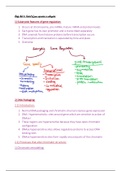
1) Eukaryotic features of gene regulation:
1. Occurs at chromosome, pre-mRNA, mature mRNA and protein levels
2. Each gene has its own promoter and is transcribed separately
3. DNA unwinds from histone proteins before transcription occurs
4. Transcription and translation is separated by time and place
5. Overview:
2) DNA Packaging:
2.1) Introduction:
1. Normal DNA packaging and chromatin structure repress gene expression
2. DNA I hypersensitivity: sites around gene which are sensitive to action of
DNAse I
3. These regions are hypersensitive because they have open chromatin
configuration
4. DNAse hypersensitive sites allows regulatory proteins to access DNA
binding sites
5. DNAse hypersensitive sites form rapidly around parts of the chromatin
2.2) Processes that alter chromatin structure:
1) Chromatin remodeling:
, 1. Chromatin remodeling complexes: regulatory proteins that bind directly
to DNA sites to reposition nucleosomes
2. Activators/ repressors help chromatin-remodeling complexes to target
specific DNA sequences
3. Repositioning of nucleosomes allow transcription factors to bind to
promoters and initiate transcription
2) Histone remodeling:
1. Major mechanism for regulating eukaryotic gene expression
2. Histones have 2 domains
Globular domain: interacts with other histones and DNA molecules
Positively charged tail: interacts with negatively charged phosphate
groups of DNA
3. Histone tails can be modified by addition/removal of
phosphate/methyl/acetyl group
4. Changes DNA packaging
3) Methylation of histones:
1. Histone methyltransferase: adds methyl group
2. Histone demethylase: removes methyl group
3. Addition of methyl group can activate/deactivate transcription
4. Cytosine groups are methylated to produce S-methyl cytosine
5. Occurs in CpG islands (usually near transcription start site)
1) Eukaryotic features of gene regulation:
1. Occurs at chromosome, pre-mRNA, mature mRNA and protein levels
2. Each gene has its own promoter and is transcribed separately
3. DNA unwinds from histone proteins before transcription occurs
4. Transcription and translation is separated by time and place
5. Overview:
2) DNA Packaging:
2.1) Introduction:
1. Normal DNA packaging and chromatin structure repress gene expression
2. DNA I hypersensitivity: sites around gene which are sensitive to action of
DNAse I
3. These regions are hypersensitive because they have open chromatin
configuration
4. DNAse hypersensitive sites allows regulatory proteins to access DNA
binding sites
5. DNAse hypersensitive sites form rapidly around parts of the chromatin
2.2) Processes that alter chromatin structure:
1) Chromatin remodeling:
, 1. Chromatin remodeling complexes: regulatory proteins that bind directly
to DNA sites to reposition nucleosomes
2. Activators/ repressors help chromatin-remodeling complexes to target
specific DNA sequences
3. Repositioning of nucleosomes allow transcription factors to bind to
promoters and initiate transcription
2) Histone remodeling:
1. Major mechanism for regulating eukaryotic gene expression
2. Histones have 2 domains
Globular domain: interacts with other histones and DNA molecules
Positively charged tail: interacts with negatively charged phosphate
groups of DNA
3. Histone tails can be modified by addition/removal of
phosphate/methyl/acetyl group
4. Changes DNA packaging
3) Methylation of histones:
1. Histone methyltransferase: adds methyl group
2. Histone demethylase: removes methyl group
3. Addition of methyl group can activate/deactivate transcription
4. Cytosine groups are methylated to produce S-methyl cytosine
5. Occurs in CpG islands (usually near transcription start site)

