NU 136 FUNDAMENTAL FINAL EXAM
QUESTIONS & UPDATED CORRECT
ANSWERS
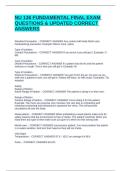
Standard Precaution - CORRECT ANSWER Any contact with body fluids uses
handwashing precaution. Example: Blood, urine, saliva
Type of Isolation
Contact Precautions - CORRECT ANSWER If you touch it,you will get it. Example: C-
diff.
Type of Isolation
Droplet Precautions - CORRECT ANSWER If a patient has the flu and the patient
sneezes or cough. This is how you will get it. Example: flu
Type of Isolation
Airborne Precautions - CORRECT ANSWER You get it from the air. As soon as you
walk into a patient's room, you will get it. Patient will wear, an N95 mask. Examples: TB,
measles
Safety
Range of Motion
Active Range of Motion - CORRECT ANSWER The patient is doing it on their own.
Range of Motion
Passive Range of Motion - CORRECT ANSWER You're doing it for the patient.
Example: The more you exercise your muscles, the vein also is contracting and
releasing contracting and releasing it's squeezes the veins. This will promote
circulations all over the body.
Weak patient - CORRECT ANSWER When ambulating a weak patient make sure for
safety reasons that the environment is free of clutter. The patient could fall. When you
hand them any type of item make sure you give it to them on their strong side.
Mouth care - CORRECT ANSWER unconscious patient. You must position the patient
in a supine position. And turn their head so they will not choke.
Vital Signs
Temperature - CORRECT ANSWER 97.6 - 100.2 on average it's 98.6
Pulse - CORRECT ANSWER 60-100
QUESTIONS & UPDATED CORRECT
ANSWERS
Standard Precaution - CORRECT ANSWER Any contact with body fluids uses
handwashing precaution. Example: Blood, urine, saliva
Type of Isolation
Contact Precautions - CORRECT ANSWER If you touch it,you will get it. Example: C-
diff.
Type of Isolation
Droplet Precautions - CORRECT ANSWER If a patient has the flu and the patient
sneezes or cough. This is how you will get it. Example: flu
Type of Isolation
Airborne Precautions - CORRECT ANSWER You get it from the air. As soon as you
walk into a patient's room, you will get it. Patient will wear, an N95 mask. Examples: TB,
measles
Safety
Range of Motion
Active Range of Motion - CORRECT ANSWER The patient is doing it on their own.
Range of Motion
Passive Range of Motion - CORRECT ANSWER You're doing it for the patient.
Example: The more you exercise your muscles, the vein also is contracting and
releasing contracting and releasing it's squeezes the veins. This will promote
circulations all over the body.
Weak patient - CORRECT ANSWER When ambulating a weak patient make sure for
safety reasons that the environment is free of clutter. The patient could fall. When you
hand them any type of item make sure you give it to them on their strong side.
Mouth care - CORRECT ANSWER unconscious patient. You must position the patient
in a supine position. And turn their head so they will not choke.
Vital Signs
Temperature - CORRECT ANSWER 97.6 - 100.2 on average it's 98.6
Pulse - CORRECT ANSWER 60-100