

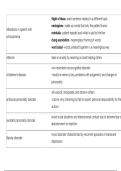
flight of ideas- each sentence relates to a different topic
neologisms- made up words that only the patient knows
Alterations in speech with
echolalia- patient repeats back what is said to him/her
schizophrenia
clang association- meaningless rhyming of words
word salad- words jumbled together in a meaningless way
Alterism deal w/ anxiety by reaching out and helping others
non-reversible neurocognitive disorder
Alzheimer's disease -results in memory loss, problems with judgement, and changes in
personality
will exploit, manipulate, and deceive others.
antisocial personality disorder -can be very charming but fail to expect personal responsibility for the
actions
avoid social situations and interpersonal contact due to extreme fear o
avoidant personality disorder
abandonment or rejection
mood disorder characterized by recurrent episodes of mania and
Bipolar disorder
depression
, -genetics
-psychological stressors
Bipolar disorder risk factors
-neurological disorders
-substance use disorder
Type 1: at least one episode of mania alternating with major depression
Type 2: one or more episodes of hypomania alternating with major
Bipolar disorder Types depression
Cyclothymic disorder: over the course of 2 or more years, pt has multip
hypomania episodes alternating with minor depression
pt will exhibit splitting behavior
-people are either all good or all bad
borderline personality disorder
-can be very impulsive
-high risk for self injury and suicide
only used sparingly to obtain specific data (ex. "are you feeling sad?")
close-ended questions
-health history
, Identify negative thoughts, try to understand cause behind thoughts, an
replace negative thoughts with more healthy and constructive thinking
Cognitive reframing Activites: priority restructuring, journal keeping, assertiveness training,
monitoring thoughts (tell self to stop negative self talk and replace it w
positive)
-Restating: repeat pt exact words to them
-Reflecting: return focus back to pt
-Paraphrasing: restate pt feelings to confirm your understanding of wh
they are trying to say
-Exploring: gather more information about what the patient has mentio
Communication techniques
-General leads: allow the pt to guide the discussion
-Presenting reality: communicate what is actually happening (dispellin
delusions or false beliefs)
-Offering of self: provide limited self disclosure (make sure return focu
back on patient asap)
emphasize strengths to make up for weaknesses
Compensations
-disabled person in wheelchair puts efforts to excel academically
-short-term memory loss is expected (may persist for several weeks)
Complications with ECT
-could be relapse of depression (ECT is not a permanent cure)
Conversion unconscious development of physical symptoms in response to a stres
neologisms- made up words that only the patient knows
Alterations in speech with
echolalia- patient repeats back what is said to him/her
schizophrenia
clang association- meaningless rhyming of words
word salad- words jumbled together in a meaningless way
Alterism deal w/ anxiety by reaching out and helping others
non-reversible neurocognitive disorder
Alzheimer's disease -results in memory loss, problems with judgement, and changes in
personality
will exploit, manipulate, and deceive others.
antisocial personality disorder -can be very charming but fail to expect personal responsibility for the
actions
avoid social situations and interpersonal contact due to extreme fear o
avoidant personality disorder
abandonment or rejection
mood disorder characterized by recurrent episodes of mania and
Bipolar disorder
depression
, -genetics
-psychological stressors
Bipolar disorder risk factors
-neurological disorders
-substance use disorder
Type 1: at least one episode of mania alternating with major depression
Type 2: one or more episodes of hypomania alternating with major
Bipolar disorder Types depression
Cyclothymic disorder: over the course of 2 or more years, pt has multip
hypomania episodes alternating with minor depression
pt will exhibit splitting behavior
-people are either all good or all bad
borderline personality disorder
-can be very impulsive
-high risk for self injury and suicide
only used sparingly to obtain specific data (ex. "are you feeling sad?")
close-ended questions
-health history
, Identify negative thoughts, try to understand cause behind thoughts, an
replace negative thoughts with more healthy and constructive thinking
Cognitive reframing Activites: priority restructuring, journal keeping, assertiveness training,
monitoring thoughts (tell self to stop negative self talk and replace it w
positive)
-Restating: repeat pt exact words to them
-Reflecting: return focus back to pt
-Paraphrasing: restate pt feelings to confirm your understanding of wh
they are trying to say
-Exploring: gather more information about what the patient has mentio
Communication techniques
-General leads: allow the pt to guide the discussion
-Presenting reality: communicate what is actually happening (dispellin
delusions or false beliefs)
-Offering of self: provide limited self disclosure (make sure return focu
back on patient asap)
emphasize strengths to make up for weaknesses
Compensations
-disabled person in wheelchair puts efforts to excel academically
-short-term memory loss is expected (may persist for several weeks)
Complications with ECT
-could be relapse of depression (ECT is not a permanent cure)
Conversion unconscious development of physical symptoms in response to a stres


