BLP WS 10 & 11
Company Finance
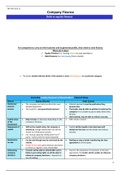
Debt vs equity finance
For companies to carry on their business and to generate profits, they need to raise finance.
There are 2 ways:
ü Equity Finance (i.e. issuing shares to new members)
ü Debt Finance (i.e. borrowing from a bank)
® The boxes shaded indicate which of the options is more advantageous in a particular category.
From the Lender/Investor’s/Shareholder’s Point of View
Reason Equity (Shares) Debt (Loans)
Dividends/ • The company normally has discretion over • Interest payments must be paid when they
interest - dividend payments. become due.
income • The investor is not guaranteed payment. • The lender may be able to petition to wind up the
company if it is unable to pay its debts when they
fall due.
• Alternatively, may be able to enforce security.
Capital value • May increase or decrease depending on the • Will remain constant
of the company’s fortunes
investment
Repayment of • Will not be repaid unless the company is • Capital will be repaid or else borrower will
capital wound up, though shareholder can sell his default on the loan and the lender can enforce
shares to a third party investor. security.
• Can recoup capital by selling shares to 3rd
party – hard to find for small companies
Restrictions • Can be sold though may be restricted by the • Nothing to stop a lender transferring the loan
on sale articles agreement to a third party
• Model Article 26(5) gives directors discretion
to refuse to register a new shareholder
Influencing • Investor will be able to attend GM’s and is • Save for the imposition of covenants in the loan
company likely to get voting rights so will be able to agreement, the lender will be unable to influence
decisions influence company decisions – depends on company decisions.
size of holding
1
Company Finance
Debt vs equity finance
For companies to carry on their business and to generate profits, they need to raise finance.
There are 2 ways:
ü Equity Finance (i.e. issuing shares to new members)
ü Debt Finance (i.e. borrowing from a bank)
® The boxes shaded indicate which of the options is more advantageous in a particular category.
From the Lender/Investor’s/Shareholder’s Point of View
Reason Equity (Shares) Debt (Loans)
Dividends/ • The company normally has discretion over • Interest payments must be paid when they
interest - dividend payments. become due.
income • The investor is not guaranteed payment. • The lender may be able to petition to wind up the
company if it is unable to pay its debts when they
fall due.
• Alternatively, may be able to enforce security.
Capital value • May increase or decrease depending on the • Will remain constant
of the company’s fortunes
investment
Repayment of • Will not be repaid unless the company is • Capital will be repaid or else borrower will
capital wound up, though shareholder can sell his default on the loan and the lender can enforce
shares to a third party investor. security.
• Can recoup capital by selling shares to 3rd
party – hard to find for small companies
Restrictions • Can be sold though may be restricted by the • Nothing to stop a lender transferring the loan
on sale articles agreement to a third party
• Model Article 26(5) gives directors discretion
to refuse to register a new shareholder
Influencing • Investor will be able to attend GM’s and is • Save for the imposition of covenants in the loan
company likely to get voting rights so will be able to agreement, the lender will be unable to influence
decisions influence company decisions – depends on company decisions.
size of holding
1