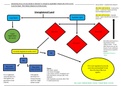
Answering UL Q: is it an estate or interest? Is it legal or equitable? Check LPA 1972 s1/2 if Actual notice = actually know about it
it can be legal. Then follow diagram to find answer.
LPA 1925, S199 (1) (ii) (a) - Constructive
notice = could have found out if they
had investigated properly.
Unregistered Land
LPA 1925 s199 (1) (ii) (b) - Imputed
Equitable rights notice = agent should have found out =
Legal Rights lawyer etc.
LCA 1972 BFPVLEWN
‘Legal
Rights Bind
the world’
Bona fide purchaser for a
Overreachin legal estate in land
without notice – if you
didn’t know you are not
bound, if you could have
found out you would be
Correctly Registered under LCA?? bound.
NO Kingsnorth Finance v
Tizard
YES
Reg under If it is not registered correctly
Reg under can it be overreached? If not
A/B/Ci/Cii/F? Classes:
Class C/Civ/D? A/B: Under statute then the bona fide test
C (i): Puisne Mortgage applies.
C (iv): Estate contract, including O to P
If it is registered Void against D (i): Restrictive covenant after 1925 –
correctly then it is purchaser for equitable
void against any money/moneys D (ii): Equitable easements after 1925
purchaser of any worth of a legal F: Matrimonial home
interest. estate in land. Key cases: Midland Bank v Green / Lloyds Bank v Carrick
it can be legal. Then follow diagram to find answer.
LPA 1925, S199 (1) (ii) (a) - Constructive
notice = could have found out if they
had investigated properly.
Unregistered Land
LPA 1925 s199 (1) (ii) (b) - Imputed
Equitable rights notice = agent should have found out =
Legal Rights lawyer etc.
LCA 1972 BFPVLEWN
‘Legal
Rights Bind
the world’
Bona fide purchaser for a
Overreachin legal estate in land
without notice – if you
didn’t know you are not
bound, if you could have
found out you would be
Correctly Registered under LCA?? bound.
NO Kingsnorth Finance v
Tizard
YES
Reg under If it is not registered correctly
Reg under can it be overreached? If not
A/B/Ci/Cii/F? Classes:
Class C/Civ/D? A/B: Under statute then the bona fide test
C (i): Puisne Mortgage applies.
C (iv): Estate contract, including O to P
If it is registered Void against D (i): Restrictive covenant after 1925 –
correctly then it is purchaser for equitable
void against any money/moneys D (ii): Equitable easements after 1925
purchaser of any worth of a legal F: Matrimonial home
interest. estate in land. Key cases: Midland Bank v Green / Lloyds Bank v Carrick