

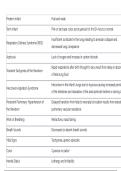
Preterm Infant Frail and weak
Term Infant Pink or tan base color, acrocyanosis for first 24 hours is normal
Insufficient surfactant in the lungs leading to alveolar collapse and
Respiratory Distress Syndrome (RDS)
decreased lung compliance
Asphyxia Lack of oxygen and increase in carbon dioxide
Rapid respirations after birth thought to be a result from delay in absor
Transient Tachypnea of the Newborn
of fetal lung fluid
Meconium in the infant's lungs due to hypoxia causing increased perist
Meconium Aspiration Syndrome
of the intestines and relaxation of the anal sphincter before or during la
Persistent Pulmonary Hypertension of Delayed transition from fetal to neonatal circulation results from elevat
the Newborn pulmonary vascular resistance
Work of Breathing Retractions, nasal flaring
Breath Sounds Decreased or absent breath sounds
Vital Signs Tachypnea, apneic episodes
Color Cyanosis or pallor
Mental Status Lethargy and irritability
, Primary Mechanism: Metabolism of brown fat tissue, increases overall
Nonshivering Thermogenesis
metabolic rate
Metabolic Acidosis Brown fat metabolism releases fatty acids leading to acid accumulation
Respiratory Distress Increased oxygen demand and decreased surfactant production
Rapid depletion of glycogen stores, increased glucose consumption fo
Hypoglycemia
heat
Skin with blood vessels near the surface, less brown fat, little white fat f
Thin skin
insulation.
Axillary temp less than 36.3 C, poor feeding, hypoglycemia, respiratory
Impaired thermoregulation findings
distress, poor weight gain, weak cry or decreased muscle tone.
Increased respirations and use of oxygen increase fluid loss from lungs
Fluid and electrolyte imbalance risk
skin is more permeable.
Nursing actions for fluid balance Track daily weights, I&O, regular electrolyte panels, evaluate skin turgo
Dehydration urine output Less than 2 mL/kg/hr.
Dehydration skin findings Dry skin and mucous membranes.
Dehydration fontanels Sunken anterior fontanel.
Term Infant Pink or tan base color, acrocyanosis for first 24 hours is normal
Insufficient surfactant in the lungs leading to alveolar collapse and
Respiratory Distress Syndrome (RDS)
decreased lung compliance
Asphyxia Lack of oxygen and increase in carbon dioxide
Rapid respirations after birth thought to be a result from delay in absor
Transient Tachypnea of the Newborn
of fetal lung fluid
Meconium in the infant's lungs due to hypoxia causing increased perist
Meconium Aspiration Syndrome
of the intestines and relaxation of the anal sphincter before or during la
Persistent Pulmonary Hypertension of Delayed transition from fetal to neonatal circulation results from elevat
the Newborn pulmonary vascular resistance
Work of Breathing Retractions, nasal flaring
Breath Sounds Decreased or absent breath sounds
Vital Signs Tachypnea, apneic episodes
Color Cyanosis or pallor
Mental Status Lethargy and irritability
, Primary Mechanism: Metabolism of brown fat tissue, increases overall
Nonshivering Thermogenesis
metabolic rate
Metabolic Acidosis Brown fat metabolism releases fatty acids leading to acid accumulation
Respiratory Distress Increased oxygen demand and decreased surfactant production
Rapid depletion of glycogen stores, increased glucose consumption fo
Hypoglycemia
heat
Skin with blood vessels near the surface, less brown fat, little white fat f
Thin skin
insulation.
Axillary temp less than 36.3 C, poor feeding, hypoglycemia, respiratory
Impaired thermoregulation findings
distress, poor weight gain, weak cry or decreased muscle tone.
Increased respirations and use of oxygen increase fluid loss from lungs
Fluid and electrolyte imbalance risk
skin is more permeable.
Nursing actions for fluid balance Track daily weights, I&O, regular electrolyte panels, evaluate skin turgo
Dehydration urine output Less than 2 mL/kg/hr.
Dehydration skin findings Dry skin and mucous membranes.
Dehydration fontanels Sunken anterior fontanel.


