

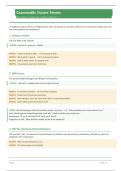
Grammatik: Future Tenses
will / going to / progressive / perfect • Klasse 6–9
Im Englischen gibt es mehrere Möglichkeiten, über die Zukunft zu sprechen. Welche Form du benutzt, hängt davon ab,
wie sicher/geplant die Handlung ist.
1. Going to-future
Für feste Pläne in der Zukunft.
FORMEL am/are/is + going to + Infinitiv
BEISPIEL Today I'm going to take… . I'm not going to take… .
BEISPIEL We're going to spend… . We're not going to spend… .
BEISPIEL Look at those clouds. It's going to rain.
BEISPIEL I am going to play tennis tomorrow.
2. Will-future
Für spontane Redewendungen, zum Beispiel in Gesprächen.
FORMEL will/won't + Infinitiv (eine Form für alle Personen)
BEISPIEL He will find a solution. – He won't find a solution.
BEISPIEL Maybe they'll have some questions.
BEISPIEL Next Saturday, you'll see some tricks that I've never done before.
BEISPIEL Spain will be warm and sunny in June.
MERKE Bei Vermutungen steht oft: probably, maybe, (not) sure – z. B. "Maya probably won't come without Lucy."
Nach I think/suppose/expect/hope folgt meist will: "I think it will be sunny tomorrow."
Kurzformen: I'll, you'll, he'll/she'll/it'll, we'll, you'll, they'll
Fragewort vor will: "What will the weather be like at the weekend?"
3. Will für spontane Entscheidungen
Man benutzt "will", um spontane Entscheidungen (im Moment des Sprechens) auszudrücken. Oft geht es dabei um
Angebote oder Versprechen.
BEISPIEL Wait, I'll open the door for you.
BEISPIEL I'll call you when we're finished.
Englisch Seite
will / going to / progressive / perfect • Klasse 6–9
Im Englischen gibt es mehrere Möglichkeiten, über die Zukunft zu sprechen. Welche Form du benutzt, hängt davon ab,
wie sicher/geplant die Handlung ist.
1. Going to-future
Für feste Pläne in der Zukunft.
FORMEL am/are/is + going to + Infinitiv
BEISPIEL Today I'm going to take… . I'm not going to take… .
BEISPIEL We're going to spend… . We're not going to spend… .
BEISPIEL Look at those clouds. It's going to rain.
BEISPIEL I am going to play tennis tomorrow.
2. Will-future
Für spontane Redewendungen, zum Beispiel in Gesprächen.
FORMEL will/won't + Infinitiv (eine Form für alle Personen)
BEISPIEL He will find a solution. – He won't find a solution.
BEISPIEL Maybe they'll have some questions.
BEISPIEL Next Saturday, you'll see some tricks that I've never done before.
BEISPIEL Spain will be warm and sunny in June.
MERKE Bei Vermutungen steht oft: probably, maybe, (not) sure – z. B. "Maya probably won't come without Lucy."
Nach I think/suppose/expect/hope folgt meist will: "I think it will be sunny tomorrow."
Kurzformen: I'll, you'll, he'll/she'll/it'll, we'll, you'll, they'll
Fragewort vor will: "What will the weather be like at the weekend?"
3. Will für spontane Entscheidungen
Man benutzt "will", um spontane Entscheidungen (im Moment des Sprechens) auszudrücken. Oft geht es dabei um
Angebote oder Versprechen.
BEISPIEL Wait, I'll open the door for you.
BEISPIEL I'll call you when we're finished.
Englisch Seite


