

Meest verkochte samenvattingen voor Biochemistry

Samenvatting
Organic Chemistry
Populairorganic chemistry functional groups and IUPAC naming
 mbochantine
College aantekeningen
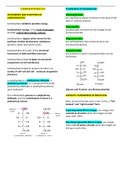
Introduction to Carbohydrate lecture notes
PopulairCarbohydrate oxidation provides energy. Carbohydrate storage, in the form of glycogen, provides a short-term energy reserve. Carbohydrates supply carbon atoms for the synthesis of other biochemical substances (proteins, lipids, and nucleic acids) Carbohydrates form part of the structural framework of DNA and RNA molecules. Carbohydrates linked to lipids are structural components of cell membranes. Carbohydrates linked to proteins function in a variety of cell–cell and cell– m...
 renatocalmajr
College aantekeningen
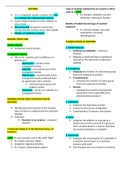
Introduction to enzymes lecture note
PopulairENZYMES • It is a compound usually a protein, that acts as a catalyst for a biochemical reaction • Cause cellular reaction to occur millions of times faster • Not consumed during the reaction but merely help the reaction occur more rapidly • Mostly, are globular proteins
renatocalmajr
College aantekeningen
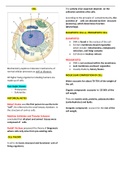
Introduction to cell lecture notes
PopulairThe activity of an organism depends on the collective activities of its cells. According to the principle of complementarity, the activities of cells are dictated by their structure (anatomy), which determines function (physiology).
renatocalmajr
College aantekeningen
Glycolysis, Gluconeogenesis and Pentose phosphate shunt notes
PopulairBiochemistry students can easily understand the process of lycolysis, gluconeogenesis and Pentose phosphate shunt with the assistance of these notes. The notes are written with full consideration to make the process easier for students to learn.
 haiqaraza911534
College aantekeningen
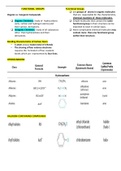
Introduction to functional groups lecture notes
PopulairFunctional Groups are groups of atoms in organic molecules that are responsible for the characteristics, chemical reactions of those molecules. Simple molecules that contain the same functional group in their structure can be expected to react in similar ways. More complicated chemical molecules may contain more than one functional group within their structure.
renatocalmajr
College aantekeningen
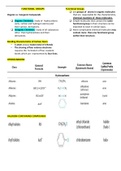
Introduction to functional groups lecture notes
PopulairFunctional Groups are groups of atoms in organic molecules that are responsible for the characteristics, chemical reactions of those molecules. Simple molecules that contain the same functional group in their structure can be expected to react in similar ways. More complicated chemical molecules may contain more than one functional group within their structure.
renatocalmajr
College aantekeningen
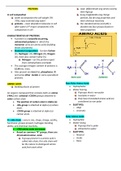
Introductions to Carbohydrates, cell, protein, Enzymes, and Functional groups lecture notes
PopulairCARBOHYDRATES OCCURRENCE AND FUNCTIONS OF CARBOHYDRATES Carbohydrate oxidation provides energy. Carbohydrate storage, in the form of glycogen, provides a short-term energy reserve. Carbohydrates supply carbon atoms for the synthesis of other biochemical substances (proteins, lipids, and nucleic acids) Carbohydrates form part of the structural framework of DNA and RNA molecules. Carbohydrates linked to lipids are structural components of cell membranes. Carbohydrates linked to p...
renatocalmajr
Nieuwste samenvattingen van Biochemistry
College aantekeningen
Introductions to Carbohydrates, cell, protein, Enzymes, and Functional groups lecture notes
NieuwCARBOHYDRATES OCCURRENCE AND FUNCTIONS OF CARBOHYDRATES Carbohydrate oxidation provides energy. Carbohydrate storage, in the form of glycogen, provides a short-term energy reserve. Carbohydrates supply carbon atoms for the synthesis of other biochemical substances (proteins, lipids, and nucleic acids) Carbohydrates form part of the structural framework of DNA and RNA molecules. Carbohydrates linked to lipids are structural components of cell membranes. Carbohydrates linked to p...
renatocalmajr
College aantekeningen
Introduction to Carbohydrate lecture notes
NieuwCarbohydrate oxidation provides energy. Carbohydrate storage, in the form of glycogen, provides a short-term energy reserve. Carbohydrates supply carbon atoms for the synthesis of other biochemical substances (proteins, lipids, and nucleic acids) Carbohydrates form part of the structural framework of DNA and RNA molecules. Carbohydrates linked to lipids are structural components of cell membranes. Carbohydrates linked to proteins function in a variety of cell–cell and cell– m...
renatocalmajr
College aantekeningen
Introduction to functional groups lecture notes
NieuwFunctional Groups are groups of atoms in organic molecules that are responsible for the characteristics, chemical reactions of those molecules. Simple molecules that contain the same functional group in their structure can be expected to react in similar ways. More complicated chemical molecules may contain more than one functional group within their structure.
renatocalmajr
College aantekeningen
Introduction to functional groups lecture notes
NieuwFunctional Groups are groups of atoms in organic molecules that are responsible for the characteristics, chemical reactions of those molecules. Simple molecules that contain the same functional group in their structure can be expected to react in similar ways. More complicated chemical molecules may contain more than one functional group within their structure.
renatocalmajr
College aantekeningen
Introduction to enzymes lecture note
NieuwENZYMES • It is a compound usually a protein, that acts as a catalyst for a biochemical reaction • Cause cellular reaction to occur millions of times faster • Not consumed during the reaction but merely help the reaction occur more rapidly • Mostly, are globular proteins
renatocalmajr
College aantekeningen
Introduction to cell lecture notes
NieuwThe activity of an organism depends on the collective activities of its cells. According to the principle of complementarity, the activities of cells are dictated by their structure (anatomy), which determines function (physiology).
renatocalmajr
College aantekeningen
Glycolysis, Gluconeogenesis and Pentose phosphate shunt notes
NieuwBiochemistry students can easily understand the process of lycolysis, gluconeogenesis and Pentose phosphate shunt with the assistance of these notes. The notes are written with full consideration to make the process easier for students to learn.
haiqaraza911534
Samenvatting
Organic Chemistry
Nieuworganic chemistry functional groups and IUPAC naming
mbochantine