Week 5 discussion with relevant points that will help you study
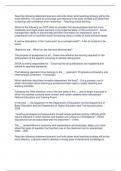
Week 5 discussion What would you add to the current treatment plan? Why? I would like to rule out any cardiac issue by ECG and labs including CBC, electrolyte, BUN/creatinine, and cardiac enzymes b ecause of the patient’s history of MI and kidney disease. I would also like to check patient’s blood sugar level because beta blockers have the ability to produce hypoglycemia and block the common symptoms of it. Only diaphoresis in hypoglycemia is not blocked by these drugs. I would add amitriptyline 50mg OD at night in his regime because amitriptyline helps in relieving diabetic neuropathy (Stöppler & Davis, 2018). Would you discontinue any of the currently prescribed medication? Why or why not? How does the diagnosis stage 3 chronic kidney disease affect your choices? Antihypertensive atenolol: I would like to switch beta blockers from atenolol to metoprolol because hydrophilic beta blockers (e.g., atenolol, bisoprolol, nadolol, acebutolol) are eliminated by the kidney and dosing adjustments are needed in patients with chronic kidney failure. However, metoprolol tartrate (Lopressor), metoprolol succinate (Toprol XL), propranolol (Inderal), and labetalol (Normodyne) are metabolized by the liver and adjustments are not required. Other antihypertensive agents that do not require dosing adjustments include calcium channel blockers, clonidine (Catapres), and alpha blockers (Munar & Singh, 2017). Lisinopril: Patient needs to continue his ACE inhibitors because ACEI and angiotensin receptor blockers (ARBs) are first-line hypertensive agents for patients with type 1 or 2 diabetes mellitus and proteinuria or early chronic kidney disease. These agents reduce blood pressure and proteinuria, slow the progression of kidney disease, and provide long-term cardiovascular protection (Munar & Singh, 2017). Anti-diabetic metformin: Patient is on a low dose of metformin that is appropriate with his condition. Because metformin (Glucophage) is 90 to 100 percent excreted through the kidney, its use is not recommended when the serum creatinine level is higher than 1.5 mg/dl in men or higher than 1.4 mg/dl in women, in patients older than 80 years, or in patients with chronic heart failure. The primary concern about the use of metformin in patients with renal insufficiency is that other hypoxemic conditions (e.g., acute myocardial infarction, severe infection, respiratory disease, liver disease) increase the risk of lactic acidosis. However, instead of avoiding the drug completely in patients with chronic kidney disease, it would be reasonable to start with a low dose in these patients and titrate, with close monitoring, based on patient response and tolerability. A more common practice is to temporarily discontinue metformin therapy in patientsat a higher risk of lactic acidosis, such as patients who become septic. Glipizide, however, does not have an active metabolite and is safe in these patients (Munar & Singh, 2017). Cholesterol lowering drug simvastatin: Recommended starting dosage is 5 mg daily in persons with a GFR less than 10 mL per minute. Or switch to atorvastatin 10 mg daily with a maximum dosage of 80 mg daily without any adjustment because atorvastatin is largely metabolized in the liver via CYP 3A4 and excreted in bile (Satirapoj, Promrattanakun, Supasyndh and Choovichian, 2015). Aspirin which serve to protect blood coagulation: Patient is getting a low dose of aspirin so there is no need to change it. There is strong experimental and epidemiologic evidence that the use of acetaminophen or aspirin is associated with a very small risk of analgesic nephropathy. However, only extensive and uncontrolled consumption has been proved to be dangerous. Because there is a higher risk of acute renal impairment associated with cyclooxygenase inhibition, current practice is to ban the use of nonsteroidal anti-inflammatory drugs (including high-dose aspirin) in patients with chronic renal failure and to recommend instead acetaminophen or low-dose aspirin (Acetaminophen, aspirin, and renal failure, 2017). Why is the patient prescribing more than one antihypertensive? Many times, patients require more than one drug for effective control of hypertension. In order to achieve the recommend and correct blood pressure levels providers need to combine two antihypertensive medicines to get the additive hypotensive effects. What is the benefit of the aspirin therapy in this patient? This patient needs low-dose of Aspirin to actually prevent blood clot and hinder the risks of heart attack and stroke (Acetaminophen, aspirin, and renal failure, 2017).References Acetaminophen, aspirin, and renal failure. (2017). The New England Journal of Medicine. Retrieved from DOI: 10.1056/NEJM Munar, M. Y., & Singh, H. (2017). Drug dosing adjustments in patients with chronic kidney disease. American Family Physician. Retrieved from

Geschreven voor
- Instelling
- South University
- Vak
- NSG 6005
Documentinformatie
- Geüpload op
- 19 januari 2021
- Aantal pagina's
- 3
- Geschreven in
- 2020/2021
- Type
- Tentamen (uitwerkingen)
- Bevat
- Vragen en antwoorden
Onderwerpen
-
electro
-
week 5 discussion with relevant points that will help you study
-
what would you add to the current treatment plan why i would like to rule out any cardiac issue by ecg and labs including cbc