

Unit 11 Rent-seeking, price-setting, and market
dynamics
11.7 Assets market bubbles
Commodities are physical goods traded similar like stock (metals/agricultural products).
A bubble is a large price change of an asset, with the expectation that it will keep on
growing/shrinking. These expectation can be based on patents, lawsuits, earnings and more.
Crashes can exist when the price of an asset increases, stock traders with no further
information about the firm will expect that the stock value will keep on increasing (positive
feedback), and this causes the price to rise even more, thus inflating the price in a self-
reinforcing cycle. But when it turns out the firm is not doing so well, prices drop and crashes
occur.
Reasons why bubbles increase:
Resale value: people might buy an asset in the hopes that it will increase in price to later on
sell it. New information about the asset causes the price to change.
Ease of trading: it is easy to be a seller or a trading in financial markets. Causing people with
little information about a firm to join the hype train.
Ease of borrowing to finance purchases: it is easy to borrow money to buy an asset, in the
hopes to repay the debt by the selling asset with an increased price.
Irrational exuberance is a process where assets will be overvalued.
11.8 Modelling bubbles and crashes
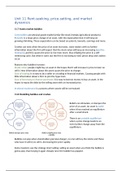
Beliefs can stimulate, or dampen the
price of an asset. An asset is stable
when it has reached an equilibrium
after a small shock.
There is an unstable equilibrium
when a price change leads to an
even further change away from the
equilibrium.
Bubbles can pop when shareholders perceive danger, no one will buy the stocks and those
who have it will try to sell it, decreasing the price rapidly.
Some investors use the strategy short selling: selling an asset when you think the bubble is
gonna pop, than buying it again cheaply once the bubble has popped.
dynamics
11.7 Assets market bubbles
Commodities are physical goods traded similar like stock (metals/agricultural products).
A bubble is a large price change of an asset, with the expectation that it will keep on
growing/shrinking. These expectation can be based on patents, lawsuits, earnings and more.
Crashes can exist when the price of an asset increases, stock traders with no further
information about the firm will expect that the stock value will keep on increasing (positive
feedback), and this causes the price to rise even more, thus inflating the price in a self-
reinforcing cycle. But when it turns out the firm is not doing so well, prices drop and crashes
occur.
Reasons why bubbles increase:
Resale value: people might buy an asset in the hopes that it will increase in price to later on
sell it. New information about the asset causes the price to change.
Ease of trading: it is easy to be a seller or a trading in financial markets. Causing people with
little information about a firm to join the hype train.
Ease of borrowing to finance purchases: it is easy to borrow money to buy an asset, in the
hopes to repay the debt by the selling asset with an increased price.
Irrational exuberance is a process where assets will be overvalued.
11.8 Modelling bubbles and crashes
Beliefs can stimulate, or dampen the
price of an asset. An asset is stable
when it has reached an equilibrium
after a small shock.
There is an unstable equilibrium
when a price change leads to an
even further change away from the
equilibrium.
Bubbles can pop when shareholders perceive danger, no one will buy the stocks and those
who have it will try to sell it, decreasing the price rapidly.
Some investors use the strategy short selling: selling an asset when you think the bubble is
gonna pop, than buying it again cheaply once the bubble has popped.



