Chapter 25 - Medical genetics and cancer
25.1 Inheritance patterns of genetic disease
A genetic basis for a human disease may be suggested by a variety of observations.
When the occurrence of a disease correlates with several of these observations, a geneticist
becomes increasingly confident that the disease has a genetic basis:
1. An individual who exhibits a disease is more likely to have genetic relatives with the
disorder than are people in the general population.
2. Identical twins share the disease more often than non identical twins.
3. The disease does not spread to individuals sharing similar environmental situations.
4. Different populations tend to have different frequencies of the disease.
5. The disease tends to develop at a characteristic age
6. The human disorder may resemble a disorder that is already known to have a
genetic basis in an animal.
7. A correlation is observed between a disease and a mutant human gene or a
chromosomal alteration.
Inheritance patterns of human disease may be determined via pedigree analysis.
Autosomal recessive inheritance:
- Frequently, an affected offspring has two unaffected parents.
- When two unaffected heterozygotes have children, the percentage of affected
children is 25%
- Two affected individuals have 100% affected children.
- The trait occurs with the same frequency in both sexes.
Autosomal dominant inheritance:
- An affected offspring usually has one or two affected parents.
- An affected individual with only one affected parent is expected to produce 50%
affected offspring.
- Two affected, heterozygous individuals have 25% unaffected offspring.
- The trait occurs with the same frequency in both sexes.
- For most dominant, disease-causing alleles, the homozygote is more severely
affected with the disorder. In some cases, a dominant allele may be lethal in the
homozygous condition.
X- linked recessive inheritance:
- Males are much more likely to exhibit the trait.
- Mothers of affected males often have brothers or fathers who are also affected.
- Daughters of affected males produce, on average, 50% affected sons.
X-linked dominant inheritance:
- Only female exhibit the trait when it is lethal to males
- Affected mothers have a 50% chance of passing the trait to daughters.
Many genetic disorders exhibit locus heterogeneity. Locus heterogeneity refers to the
phenomenon in which a particular type of disease may be caused by mutations in two or
more different genes.
, 25.2 Detection of disease-causing alleles via haplotypes.
Haplotypes exhibit genetic variation. The term haplotype, which is a contraction of haploid
genotype, refers to the linkage of alleles or molecular markers along a single chromosome.
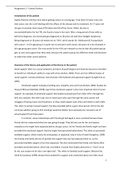
The haplotypes for these four sites are shown at the bottom of each chromosome.
Haplotypes do not dramatically change from one generation to the next due to new
mutations. Haplotypes are more likely to change over the course of a few generations due to
crossing over.
Haplotype association studies are conducted to identify disease causing alleles.
Based on two assumptions:
1. The disease-causing allele had its origin in a single individual known as a founder,
who lived many generations ago. Since that time, the allele had spread throughout
portions of human population.
2. When the disease-causing allele originated in the founder, it occurred in a region of a
chromosome with a particular haplotype. The haplotype is not likely to changed over
the course of several generations if the disease-causing allele and markers in this
region are very close together.
When alleles and molecular markers are associated with each other at a frequency that is
significantly higher than expected by random chance, they are said to exhibit linkage
disequilibrium. The phenomenon of linkage disequilibrium is common when a disease-
causing allele arose in a founder and the allele is closely linked to other markers along a
chromosome.
The international HapMap project is a worldwide effort to identify haplotypes in
human populations.
25.3 Genetic testing and screening
The term genetic testing refers to the use of testing methods to determine if an individual
carries a genetic abnormality. By comparison, the term genetic screening refers to
population-wide genetic testing.
Genetic testing is used to identify many inherited human diseases. See tabel 25.5:
- Biochemical
- Immunological
- DNA sequencing
- In situ hybridization
- Karyotyping
- DNA microarrays
Many human genetic abnormalities involve changes in chromosome number and/or
structure. Changes in chromosome number are a common class of human genetic
abnormality. Most of these results in spontaneous abortions. Approximately 1 in 200 live
births are aneuploid. About 5% of infant and childhood deaths are related to such genetic
abnormalities. Changes in chromosome number and many changes in chromosome
structure can be detected by karyotyping.
25.1 Inheritance patterns of genetic disease
A genetic basis for a human disease may be suggested by a variety of observations.
When the occurrence of a disease correlates with several of these observations, a geneticist
becomes increasingly confident that the disease has a genetic basis:
1. An individual who exhibits a disease is more likely to have genetic relatives with the
disorder than are people in the general population.
2. Identical twins share the disease more often than non identical twins.
3. The disease does not spread to individuals sharing similar environmental situations.
4. Different populations tend to have different frequencies of the disease.
5. The disease tends to develop at a characteristic age
6. The human disorder may resemble a disorder that is already known to have a
genetic basis in an animal.
7. A correlation is observed between a disease and a mutant human gene or a
chromosomal alteration.
Inheritance patterns of human disease may be determined via pedigree analysis.
Autosomal recessive inheritance:
- Frequently, an affected offspring has two unaffected parents.
- When two unaffected heterozygotes have children, the percentage of affected
children is 25%
- Two affected individuals have 100% affected children.
- The trait occurs with the same frequency in both sexes.
Autosomal dominant inheritance:
- An affected offspring usually has one or two affected parents.
- An affected individual with only one affected parent is expected to produce 50%
affected offspring.
- Two affected, heterozygous individuals have 25% unaffected offspring.
- The trait occurs with the same frequency in both sexes.
- For most dominant, disease-causing alleles, the homozygote is more severely
affected with the disorder. In some cases, a dominant allele may be lethal in the
homozygous condition.
X- linked recessive inheritance:
- Males are much more likely to exhibit the trait.
- Mothers of affected males often have brothers or fathers who are also affected.
- Daughters of affected males produce, on average, 50% affected sons.
X-linked dominant inheritance:
- Only female exhibit the trait when it is lethal to males
- Affected mothers have a 50% chance of passing the trait to daughters.
Many genetic disorders exhibit locus heterogeneity. Locus heterogeneity refers to the
phenomenon in which a particular type of disease may be caused by mutations in two or
more different genes.
, 25.2 Detection of disease-causing alleles via haplotypes.
Haplotypes exhibit genetic variation. The term haplotype, which is a contraction of haploid
genotype, refers to the linkage of alleles or molecular markers along a single chromosome.
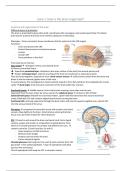
The haplotypes for these four sites are shown at the bottom of each chromosome.
Haplotypes do not dramatically change from one generation to the next due to new
mutations. Haplotypes are more likely to change over the course of a few generations due to
crossing over.
Haplotype association studies are conducted to identify disease causing alleles.
Based on two assumptions:
1. The disease-causing allele had its origin in a single individual known as a founder,
who lived many generations ago. Since that time, the allele had spread throughout
portions of human population.
2. When the disease-causing allele originated in the founder, it occurred in a region of a
chromosome with a particular haplotype. The haplotype is not likely to changed over
the course of several generations if the disease-causing allele and markers in this
region are very close together.
When alleles and molecular markers are associated with each other at a frequency that is
significantly higher than expected by random chance, they are said to exhibit linkage
disequilibrium. The phenomenon of linkage disequilibrium is common when a disease-
causing allele arose in a founder and the allele is closely linked to other markers along a
chromosome.
The international HapMap project is a worldwide effort to identify haplotypes in
human populations.
25.3 Genetic testing and screening
The term genetic testing refers to the use of testing methods to determine if an individual
carries a genetic abnormality. By comparison, the term genetic screening refers to
population-wide genetic testing.
Genetic testing is used to identify many inherited human diseases. See tabel 25.5:
- Biochemical
- Immunological
- DNA sequencing
- In situ hybridization
- Karyotyping
- DNA microarrays
Many human genetic abnormalities involve changes in chromosome number and/or
structure. Changes in chromosome number are a common class of human genetic
abnormality. Most of these results in spontaneous abortions. Approximately 1 in 200 live
births are aneuploid. About 5% of infant and childhood deaths are related to such genetic
abnormalities. Changes in chromosome number and many changes in chromosome
structure can be detected by karyotyping.