CULTURAL PSYCHOLOGY
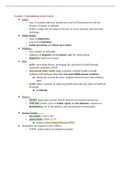
Chapter O: Introduction
1. Introduction
cultural novice – a person with little knowledge about a
particular culture
objective elements – clothes, architecture, food, art
subjective elements – values, beliefs, attitudes, norms
! invisible (subjective) elements are often conveyed by the
things that we can observe
culture is not monolithic – is it constantly in flux and it
changes
cultural transmission – developmental psychological
question
multiculturalism, biculturalism and acculturation
(intercultural communication)
CHAPTER 1.1: What is culture?
1. Definition of culture
culture – a unique meaning and infoamtion system shared
by a group and transmitted across generations that allows
the group to meet basic needs of survival, pursue happiness
and well-being and derive meaning from life
- inherently difficult to define
- culture is a perspective – “a pair of glasses”/ a schema
we use to evaluate and organize information so that we can
behave in accordance with the rules, norms, regulations in a
specific context
2. Goals of cross-cultural psychology
transport and test hypotheses and findings to other cultural
settings
explore other cultures in order to discover cultural and
psychological variations
integrate findings into a more universal psychology (finding
similarities and dissimilarities)
mostly WEIRD participants are used for studies
- not representative of mankind
- 73% of first authors were at American universities; 99%
were at universities in Western countries
, - 96% of the psychological samples come from countries with
only 12% of the world’s population
! we only know things about these 12% of people
3. Theoretical approaches
culture influences behavior
three theoretical frameworks
3.1 Hofstede
individualism vs collectivism
- the most cited general framework to classify cultural
patterns on the country level
- how related/ interrelated you are to other people
- a dimension, not a category
- to what extend each of them is prototypical in a society
examination of work-related values in employees of IBM
- he did factor analysis
- bottom-up approach
- clusters of items which he labeled in dimensions
four classic dimensions:
1) power distance
2) individualism/ collectivism
3) masculinity/ femininity
4) uncertainty avoidance
! two more are added:
5) long-term/ short-term orientation
6) indulgence
comparisons of cultures at the national level
individualism: ties between people are loose
- everyone looks after themselves and their immediate family
collectivism: people are integrated into strong cohesive in-
groups which protect them in exchange for unquestioning
loyalty
criticism of Hofstede:
- not representative of the whole truth – simply an
approximation
- the used items – are the dimensions assessed correctly?
- relatively low face validity (loose connections of items and
the definition of the dimensions)
- low statistical values – what does it actually explain? (how
much of the variance is explained by the model?)
,- Matsumoto: not known how reliable the measures are
(predicted differences by the model were not observed)
- the long-term orientation dimension: oriented towards the
future (pragmatic) or toward the present (familiar ways)
* normative societies – people have low long-term
orientation/ societal change is viewed with suspicion/ no
desire to engage with anything novel
* pragmatic individual score higher on this dimension
(prepare for the future)
- Minkov: analysis on secondary data with 4 questions
* issues with reliability
* items lack face validity
* power distance seems to be a part of individualism/
collectivism
* uncertainty avoidance is not reliably measured and it does
not predict criteria (ex. job security)
* masculinity-femininity does not predict criteria
* Hofstede’s model is made on the national level of analysis –
if one uses it on the individual level, they are falling prey to
ecological fallacy
* Minkov’s assessment: Hofstede’s model fails the test of
being validated across cultures and needs revision
- expansion of the model: cultural syndrome (Triandis)
* focus on individualism/ collectivism and equality
(horizontal/ vertical) – cultural syndromes (negotiation of
cultural belonging and values)
, 3.2 Markus & Kitayama
categorical difference between:
- an interdependent self that perceives the self as being
embedded into others
- an independent self that perceives the self as distinct
the self is the mediator of cultural differences: the
construal of the self differs across cultures
the importance assigned to so-called public, relational and
private inner aspects of the self can vary by culture
- Western: people are separate/ distinct (internal attributes
matter)
- Eastern: the way one defines themselves overlaps with how
other people are (internal attributes are not that important)
independent – interdependent
criticism of Markus & Kitayama:
Chapter O: Introduction
1. Introduction
cultural novice – a person with little knowledge about a
particular culture
objective elements – clothes, architecture, food, art
subjective elements – values, beliefs, attitudes, norms
! invisible (subjective) elements are often conveyed by the
things that we can observe
culture is not monolithic – is it constantly in flux and it
changes
cultural transmission – developmental psychological
question
multiculturalism, biculturalism and acculturation
(intercultural communication)
CHAPTER 1.1: What is culture?
1. Definition of culture
culture – a unique meaning and infoamtion system shared
by a group and transmitted across generations that allows
the group to meet basic needs of survival, pursue happiness
and well-being and derive meaning from life
- inherently difficult to define
- culture is a perspective – “a pair of glasses”/ a schema
we use to evaluate and organize information so that we can
behave in accordance with the rules, norms, regulations in a
specific context
2. Goals of cross-cultural psychology
transport and test hypotheses and findings to other cultural
settings
explore other cultures in order to discover cultural and
psychological variations
integrate findings into a more universal psychology (finding
similarities and dissimilarities)
mostly WEIRD participants are used for studies
- not representative of mankind
- 73% of first authors were at American universities; 99%
were at universities in Western countries
, - 96% of the psychological samples come from countries with
only 12% of the world’s population
! we only know things about these 12% of people
3. Theoretical approaches
culture influences behavior
three theoretical frameworks
3.1 Hofstede
individualism vs collectivism
- the most cited general framework to classify cultural
patterns on the country level
- how related/ interrelated you are to other people
- a dimension, not a category
- to what extend each of them is prototypical in a society
examination of work-related values in employees of IBM
- he did factor analysis
- bottom-up approach
- clusters of items which he labeled in dimensions
four classic dimensions:
1) power distance
2) individualism/ collectivism
3) masculinity/ femininity
4) uncertainty avoidance
! two more are added:
5) long-term/ short-term orientation
6) indulgence
comparisons of cultures at the national level
individualism: ties between people are loose
- everyone looks after themselves and their immediate family
collectivism: people are integrated into strong cohesive in-
groups which protect them in exchange for unquestioning
loyalty
criticism of Hofstede:
- not representative of the whole truth – simply an
approximation
- the used items – are the dimensions assessed correctly?
- relatively low face validity (loose connections of items and
the definition of the dimensions)
- low statistical values – what does it actually explain? (how
much of the variance is explained by the model?)
,- Matsumoto: not known how reliable the measures are
(predicted differences by the model were not observed)
- the long-term orientation dimension: oriented towards the
future (pragmatic) or toward the present (familiar ways)
* normative societies – people have low long-term
orientation/ societal change is viewed with suspicion/ no
desire to engage with anything novel
* pragmatic individual score higher on this dimension
(prepare for the future)
- Minkov: analysis on secondary data with 4 questions
* issues with reliability
* items lack face validity
* power distance seems to be a part of individualism/
collectivism
* uncertainty avoidance is not reliably measured and it does
not predict criteria (ex. job security)
* masculinity-femininity does not predict criteria
* Hofstede’s model is made on the national level of analysis –
if one uses it on the individual level, they are falling prey to
ecological fallacy
* Minkov’s assessment: Hofstede’s model fails the test of
being validated across cultures and needs revision
- expansion of the model: cultural syndrome (Triandis)
* focus on individualism/ collectivism and equality
(horizontal/ vertical) – cultural syndromes (negotiation of
cultural belonging and values)
, 3.2 Markus & Kitayama
categorical difference between:
- an interdependent self that perceives the self as being
embedded into others
- an independent self that perceives the self as distinct
the self is the mediator of cultural differences: the
construal of the self differs across cultures
the importance assigned to so-called public, relational and
private inner aspects of the self can vary by culture
- Western: people are separate/ distinct (internal attributes
matter)
- Eastern: the way one defines themselves overlaps with how
other people are (internal attributes are not that important)
independent – interdependent
criticism of Markus & Kitayama: