Neuroanatomy
The Nervous System: Summarised
The nervous system can be broken down into parts:
CNS: The Central Nervous System- seen in the brain and spinal cord
Somatic: Controls the body, voluntary control and informs the brain about
the outside environment.
Automatic: Controls non-voluntary behaviours (breathing, sweating etc) and
helps regulate the body’s internal state (homeostasis)
Parasympathetic Nervous System: Conserves the body’s energy resources
(relaxing, digestion)
Sympathetic: Contrary to the parasympathetic, this uses up the energy
resources. (Fight or flight, arousal)
The Brain:
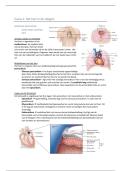
How are our brains protected?
The Skin: Sends signals to the brain about what you are touching so we can
react or move out of the way.
Hypodermis (Subcutaneous Connective Tissue): A layer of internal tissue to
protect the organs from shock, changes in temperature (thermoregulation)
Galea Aponeurotica: covers the frontalis forehead muscle and occipitalis
muscle at the back of the head.
Loose Areola tissue: A connective tissue that helps bind the skin together.
Pericranium: Covered by layers of meninges- by acting as a shock absorber.
They anchor your CNS (Central Nervous System) and keep your brain from
moving around within your skull. Meninges are made up of the
, following: Dura Mater, Arachnoid Membrane, Sub-Arachnoid
Membrane & Pia Mater
Our skulls are made up of 22 individual bones. The cranial bones line up with
the cranial lobes to protect each individual one. During natural birth, the
child’s head gets squished so these cranial sutures slide over each other.
The skull has foramina and sinuses, which are essentially holes in the skull,
to allow for space for the oxygen or movement.
In the lateral ventricles, cerebrospinal fluid helps remove any waste
products from the brain. This fluid is constantly produced to flush everything
out, protecting the brain from infection. This also cushions the brain,
preventing movement and does not allow the brain to compress.
Gyri, or , less scientifically known as the ‘sausagey bits’ and sulci (the
grooves in-between the gyri) make up the external appearance of the brain.
It is important to note that no 2 brains are identical, like fingerprints, our
brains are original to us. Every brain has hemispherical asymmetry- where
one part of the brain may control 1 thing, but the left side will not have this.
For Example:
Wernicke's Area- If this area were damaged, the individual would not be able
to understand speech.
Broca’s Area (mentioned previously) focuses on producing speech.
Whilst the right side of the brain is mostly responsible for spatial processing,
emotions and enjoying music, the left side focuses on language
comprehension and production. 5% of people have these hemispherical roles
reversed. However, both sides of the brain often communicate to complete
functions.
Commissural Pathways:
These are fibre bundles of white matter which work to connect the left and
right hemispheres, and the midbrain, which is also divided into two.
Commisus= A joining.
The Nervous System: Summarised
The nervous system can be broken down into parts:
CNS: The Central Nervous System- seen in the brain and spinal cord
Somatic: Controls the body, voluntary control and informs the brain about
the outside environment.
Automatic: Controls non-voluntary behaviours (breathing, sweating etc) and
helps regulate the body’s internal state (homeostasis)
Parasympathetic Nervous System: Conserves the body’s energy resources
(relaxing, digestion)
Sympathetic: Contrary to the parasympathetic, this uses up the energy
resources. (Fight or flight, arousal)
The Brain:
How are our brains protected?
The Skin: Sends signals to the brain about what you are touching so we can
react or move out of the way.
Hypodermis (Subcutaneous Connective Tissue): A layer of internal tissue to
protect the organs from shock, changes in temperature (thermoregulation)
Galea Aponeurotica: covers the frontalis forehead muscle and occipitalis
muscle at the back of the head.
Loose Areola tissue: A connective tissue that helps bind the skin together.
Pericranium: Covered by layers of meninges- by acting as a shock absorber.
They anchor your CNS (Central Nervous System) and keep your brain from
moving around within your skull. Meninges are made up of the
, following: Dura Mater, Arachnoid Membrane, Sub-Arachnoid
Membrane & Pia Mater
Our skulls are made up of 22 individual bones. The cranial bones line up with
the cranial lobes to protect each individual one. During natural birth, the
child’s head gets squished so these cranial sutures slide over each other.
The skull has foramina and sinuses, which are essentially holes in the skull,
to allow for space for the oxygen or movement.
In the lateral ventricles, cerebrospinal fluid helps remove any waste
products from the brain. This fluid is constantly produced to flush everything
out, protecting the brain from infection. This also cushions the brain,
preventing movement and does not allow the brain to compress.
Gyri, or , less scientifically known as the ‘sausagey bits’ and sulci (the
grooves in-between the gyri) make up the external appearance of the brain.
It is important to note that no 2 brains are identical, like fingerprints, our
brains are original to us. Every brain has hemispherical asymmetry- where
one part of the brain may control 1 thing, but the left side will not have this.
For Example:
Wernicke's Area- If this area were damaged, the individual would not be able
to understand speech.
Broca’s Area (mentioned previously) focuses on producing speech.
Whilst the right side of the brain is mostly responsible for spatial processing,
emotions and enjoying music, the left side focuses on language
comprehension and production. 5% of people have these hemispherical roles
reversed. However, both sides of the brain often communicate to complete
functions.
Commissural Pathways:
These are fibre bundles of white matter which work to connect the left and
right hemispheres, and the midbrain, which is also divided into two.
Commisus= A joining.