Knowledge clip 1: Introduction to OM
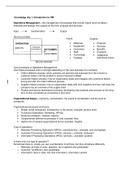
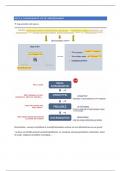
Operations Management = the management of processes that convert inputs (such as labour,
materials and energy) into outputs (in the form of goods and services)
Input transformation Output
Service provided
Inputs: Outputs:
OPERATION • Materials • Products
PROCESS
• Equipment • Services
INPUTS • Customers • Benefits
EXPERIENCE OUTCOMES
• Staff • Emotions
CUSTOMER • Technology • Judgments
• Facilities (perceived value)
Service received
Core processes of Operations Management:
How these processes work is strongly depending on the core business of a company
• Order fulfillment process: which activities are planned and executed from the moment a
customer orders until the product or service has been fulfilled
• Customer relation process: how an organization deals and engages with customers before,
during and after the order fulfillment process
• Supplier relation process: how an organization deals with their suppliers and how well does the
company has an overview of the supply chain
• Product and service development process: developing new products and services on the long-
term to stay successful as a business in the future
Organizational design = hierarchy, centralization, the extent of formalization and the level of
complexity
Organizational structures and forms:
• Simple (small companies, entrepreneur is the owner) example: grocery store
• Functional (Operations, Marketing, HR etc)
• Divisional (products, markets, regions)
• Conglomerate (different businesses in one) example: Ikea
• Hybrid (mix of several organizational forms) example: hospital
Type of operations:
• Materials Processing Operations (MPOs): manufacturing > example: cars and laptops
• Customer Processing Operations (CPOs): services > example: restaurant
• Information Processing Operations (IPOs): services > example: systems
Is there only one type of operation?
Sometimes there is, mostly you see a combination of all three, but they all behave differently
o Materials; all kinds of sizes, specifics, but in general also predictable
o Customer; all different, less predictable
o Information; facts or data, real time information, information system
,Differences between CPOs (services) and MPOs (manufacturing):
• Intangibility (directly experiences, no tangible proof)
• Heterogeneity (variability in service experience)
• Perishability (services cannot be stored)
• Simultaneity (or inseparability)
Central questions
• What are the core processes of Operations Management?
• What are the differences between an IPO, CPO and MPO?
• Which examples of IPOs, CPOs, MPOs or combinations can you find nowadays?
Knowledge clip 2: The 4 V’s (an analysis tool)
Operations Diagnosis: 4 V’s
= a diagnosis to determine what you are doing within Operations Management
• Volume of output (scale, how many customers, how many products, how many workplaces)
• Variety of products or services offered (size of product range, number of services)
• Variation in demand (demand changing over time, per day, per season)
• Variability (customization possibilities)
= to what extent can your customers actually customise your services
Fine dining restaurant Fast food restaurant
Boutique hotel Resort hotel
Railway station Hospital
Volume Low High
Variety High Low
Variation Low High
Variability Low Low
• Visibility
= to what extent can I actually see the experience and am I part of the experience
Volume Variety Variation Visibility Variability
Low: High: High: High: High:
• Low repetition • Flexible • Changing • Short waiting • Tailor made
• Multi-skilling • Complex capacity tolerance • Highly
• Less • Customised • Flexibility • Importance of customisable
systemisation • High unit cost • Anticipation perception
• High unit cost • In touch with • Co-production
demand • High unit cost
• High unit cost
High: Low: Low: Low: Low:
• High • Well defined • Stable • Delay between • High efficiency
repeatability • Routine • Routine production and • Standardised
• Specialisation • Standardised • Predictable consumption • Process
• Capital • Regular • High utilisation • Low contact oriented
intensive • Low cost unit • Low unit cost • High staff
• Low cost unit utilisation
• Low unit cost
Central questions
• What are the 4 V’s?
• Why are the 4 V’s of importance for an organization (from an organizational perspective)?
• How do the 4 V’s interrelate?
• Why should the ‘5th V’ be of importance, especially within an CPO/service organization?
, Knowledge clip 3: Servuction model
= a service Marketing and Operations Management tool
Operations Management is all about processing customers, materials and information
If you combine these three elements, production, customer processing and information processing, you
are looking at operations as a system that can help you to create a service experience
The system can help you to analyse what your input exactly is: what kind of processes happen, how
they can finally lead to a experience for your customers
Operations Management as a system:
Transformational inputs (physical
assets and human assets)
Materials and Back of House processes Front of House processes Outputs
information
Customers and information
Operations management is a service environment is understanding the relationship between
customers, information, production and transformational input, both the physical environment and staff
are of influence on the customer experience
The Servuction system can help you to ‘process’ your customers and offer a service experience
= a service marketing tool that can very well be used in Operations Management (service + production)
• Back of House: invisible to the customer, mainly MPO
• Front of House: visible to the customer, mainly CPO
How can Servuction help to manage operations?
Try to bundle the benefits of all these elements to successfully form Operations Management
o Physical environment: atmosphere, signage, exterior and interior, layout, temperature, air
o Processes (both Back of House and Front of House): policies, work procedures, systems
o Staff: appearance, knowlegde, accuracy
o Other customers: behaviour, positive and negative influence on atmosphere
Central questions
• What is a Servuction model?
• What functions does it combine?
• Why is it important to incorporate all elements of the Servuction model when designing a service
experience?
, Knowledge clip 4: Internal performance objectives, OWs and OQs
Operations with a customer perspective
Internal performance objectives = a specific end result that contributes to the success of organization
and that an employee is expected to accomplish or produce
o What are the criteria for a customer to even consider your company, to buy a service or get a
product, when will they place an order, what do you need to do as an organization to create
Order Winners and distinguish yourself from other companies
o Examples: cost, quality, dependability, flexibility and speed
Order Qualifier (minimum requirement) = a set of characteristics of a product or service that is required
to be considered by a customer, such as holding a recognised quality standard or being able to fly
directly to a customer’s destination airport
o Making sure that everything is up to a certain standard
o Having more of these factors will not normally give firms opportunities to do more business. This
is not a reason why customers will come to your organization
o Examples: physical store, website, staff, perks
Order Winners = a set of characteristics which directly contribute to winning business from customers,
such as speed of delivery or flexibility to increase or decrease production output to meet demand
o Order Winners are the key reasons for customers to purchase goods or services and improving
the performance of these factors may result in increased business
Five internal performance objectives (can lead to Order Winners):
• Cost (selling price, running cost, service cost, manufacturing cost, value added)
• Quality (consistency, conformance, serviceability, perceived quality, value for money,
aesthetics, technical durability, performance, features)
• Dependability (delivery performance, ability to keep, safety, price performance, schedule
adherence)
• Flexibility (output quality, modified product, volume, resource mix, mix, deliverability, new
product, material quality)
• Speed (delivery speed, production speed, new product development speed, delivery frequency,
quote generation)
How to compete on OQs and OWs?
Competing is all about making choices on internal performance objectives, but they all affect each
other. As a company you always need to consider what should be on a Order Qualifier and Order
Winner level. Making sure you consider speed, quality, flexibility and dependability has a positive effect
on cost, because an error-free process (quality) can lead to higher margins (cost)
Internal effects of the five performance objectives:
o Controlled lower price of higher margins or potentially both > cost > high total productivity
o Correct specification products / services > quality > error-free processes
o Dependable delivery > dependability > reliable processes
o New / frequent and wide ranges in products or services with options to vary the volume and
delivery criteria > flexibility > ability to change
o Reduced delivery lead items > speed > fast throughput
Central questions
• What is an internal performance objective and how does it relate to Operations Management?
• Which five internal performance objectives can be distinguished?
• What is the difference between an Order Qualifier and an Order Winner?
• How can focussing on one (or a combination of) internal performance objective lead to
becoming an Order Winner?
Operations Management = the management of processes that convert inputs (such as labour,
materials and energy) into outputs (in the form of goods and services)
Input transformation Output
Service provided
Inputs: Outputs:
OPERATION • Materials • Products
PROCESS
• Equipment • Services
INPUTS • Customers • Benefits
EXPERIENCE OUTCOMES
• Staff • Emotions
CUSTOMER • Technology • Judgments
• Facilities (perceived value)
Service received
Core processes of Operations Management:
How these processes work is strongly depending on the core business of a company
• Order fulfillment process: which activities are planned and executed from the moment a
customer orders until the product or service has been fulfilled
• Customer relation process: how an organization deals and engages with customers before,
during and after the order fulfillment process
• Supplier relation process: how an organization deals with their suppliers and how well does the
company has an overview of the supply chain
• Product and service development process: developing new products and services on the long-
term to stay successful as a business in the future
Organizational design = hierarchy, centralization, the extent of formalization and the level of
complexity
Organizational structures and forms:
• Simple (small companies, entrepreneur is the owner) example: grocery store
• Functional (Operations, Marketing, HR etc)
• Divisional (products, markets, regions)
• Conglomerate (different businesses in one) example: Ikea
• Hybrid (mix of several organizational forms) example: hospital
Type of operations:
• Materials Processing Operations (MPOs): manufacturing > example: cars and laptops
• Customer Processing Operations (CPOs): services > example: restaurant
• Information Processing Operations (IPOs): services > example: systems
Is there only one type of operation?
Sometimes there is, mostly you see a combination of all three, but they all behave differently
o Materials; all kinds of sizes, specifics, but in general also predictable
o Customer; all different, less predictable
o Information; facts or data, real time information, information system
,Differences between CPOs (services) and MPOs (manufacturing):
• Intangibility (directly experiences, no tangible proof)
• Heterogeneity (variability in service experience)
• Perishability (services cannot be stored)
• Simultaneity (or inseparability)
Central questions
• What are the core processes of Operations Management?
• What are the differences between an IPO, CPO and MPO?
• Which examples of IPOs, CPOs, MPOs or combinations can you find nowadays?
Knowledge clip 2: The 4 V’s (an analysis tool)
Operations Diagnosis: 4 V’s
= a diagnosis to determine what you are doing within Operations Management
• Volume of output (scale, how many customers, how many products, how many workplaces)
• Variety of products or services offered (size of product range, number of services)
• Variation in demand (demand changing over time, per day, per season)
• Variability (customization possibilities)
= to what extent can your customers actually customise your services
Fine dining restaurant Fast food restaurant
Boutique hotel Resort hotel
Railway station Hospital
Volume Low High
Variety High Low
Variation Low High
Variability Low Low
• Visibility
= to what extent can I actually see the experience and am I part of the experience
Volume Variety Variation Visibility Variability
Low: High: High: High: High:
• Low repetition • Flexible • Changing • Short waiting • Tailor made
• Multi-skilling • Complex capacity tolerance • Highly
• Less • Customised • Flexibility • Importance of customisable
systemisation • High unit cost • Anticipation perception
• High unit cost • In touch with • Co-production
demand • High unit cost
• High unit cost
High: Low: Low: Low: Low:
• High • Well defined • Stable • Delay between • High efficiency
repeatability • Routine • Routine production and • Standardised
• Specialisation • Standardised • Predictable consumption • Process
• Capital • Regular • High utilisation • Low contact oriented
intensive • Low cost unit • Low unit cost • High staff
• Low cost unit utilisation
• Low unit cost
Central questions
• What are the 4 V’s?
• Why are the 4 V’s of importance for an organization (from an organizational perspective)?
• How do the 4 V’s interrelate?
• Why should the ‘5th V’ be of importance, especially within an CPO/service organization?
, Knowledge clip 3: Servuction model
= a service Marketing and Operations Management tool
Operations Management is all about processing customers, materials and information
If you combine these three elements, production, customer processing and information processing, you
are looking at operations as a system that can help you to create a service experience
The system can help you to analyse what your input exactly is: what kind of processes happen, how
they can finally lead to a experience for your customers
Operations Management as a system:
Transformational inputs (physical
assets and human assets)
Materials and Back of House processes Front of House processes Outputs
information
Customers and information
Operations management is a service environment is understanding the relationship between
customers, information, production and transformational input, both the physical environment and staff
are of influence on the customer experience
The Servuction system can help you to ‘process’ your customers and offer a service experience
= a service marketing tool that can very well be used in Operations Management (service + production)
• Back of House: invisible to the customer, mainly MPO
• Front of House: visible to the customer, mainly CPO
How can Servuction help to manage operations?
Try to bundle the benefits of all these elements to successfully form Operations Management
o Physical environment: atmosphere, signage, exterior and interior, layout, temperature, air
o Processes (both Back of House and Front of House): policies, work procedures, systems
o Staff: appearance, knowlegde, accuracy
o Other customers: behaviour, positive and negative influence on atmosphere
Central questions
• What is a Servuction model?
• What functions does it combine?
• Why is it important to incorporate all elements of the Servuction model when designing a service
experience?
, Knowledge clip 4: Internal performance objectives, OWs and OQs
Operations with a customer perspective
Internal performance objectives = a specific end result that contributes to the success of organization
and that an employee is expected to accomplish or produce
o What are the criteria for a customer to even consider your company, to buy a service or get a
product, when will they place an order, what do you need to do as an organization to create
Order Winners and distinguish yourself from other companies
o Examples: cost, quality, dependability, flexibility and speed
Order Qualifier (minimum requirement) = a set of characteristics of a product or service that is required
to be considered by a customer, such as holding a recognised quality standard or being able to fly
directly to a customer’s destination airport
o Making sure that everything is up to a certain standard
o Having more of these factors will not normally give firms opportunities to do more business. This
is not a reason why customers will come to your organization
o Examples: physical store, website, staff, perks
Order Winners = a set of characteristics which directly contribute to winning business from customers,
such as speed of delivery or flexibility to increase or decrease production output to meet demand
o Order Winners are the key reasons for customers to purchase goods or services and improving
the performance of these factors may result in increased business
Five internal performance objectives (can lead to Order Winners):
• Cost (selling price, running cost, service cost, manufacturing cost, value added)
• Quality (consistency, conformance, serviceability, perceived quality, value for money,
aesthetics, technical durability, performance, features)
• Dependability (delivery performance, ability to keep, safety, price performance, schedule
adherence)
• Flexibility (output quality, modified product, volume, resource mix, mix, deliverability, new
product, material quality)
• Speed (delivery speed, production speed, new product development speed, delivery frequency,
quote generation)
How to compete on OQs and OWs?
Competing is all about making choices on internal performance objectives, but they all affect each
other. As a company you always need to consider what should be on a Order Qualifier and Order
Winner level. Making sure you consider speed, quality, flexibility and dependability has a positive effect
on cost, because an error-free process (quality) can lead to higher margins (cost)
Internal effects of the five performance objectives:
o Controlled lower price of higher margins or potentially both > cost > high total productivity
o Correct specification products / services > quality > error-free processes
o Dependable delivery > dependability > reliable processes
o New / frequent and wide ranges in products or services with options to vary the volume and
delivery criteria > flexibility > ability to change
o Reduced delivery lead items > speed > fast throughput
Central questions
• What is an internal performance objective and how does it relate to Operations Management?
• Which five internal performance objectives can be distinguished?
• What is the difference between an Order Qualifier and an Order Winner?
• How can focussing on one (or a combination of) internal performance objective lead to
becoming an Order Winner?