

Experimental Cell Biology 1: The basics
Cells are membrane-enclosed units of life. They Denatured proteins in the nucleus focussing on
have a metabolism, grow, divide and give the role of the nucleolus and its phase-separated
responses to environmental signals and can nature in protein quality control.
communicate internally and externally. The
genetic material in the cell is called DNA.
Metabolites are molecules that are produced or
altered by the cell.
The eukaryotic cell is larger than the
prokaryotic cell. The eukaryotic cell is multi-
cellular and has membrane-enclosed
compartments while the prokaryotic cell has no
membrane-enclosed compartments. Also, Upon heat stress, misfolded nuclear proteins
prokaryotic cells are biochemically flexible. entered the liquid-like GC phase of the nucleolus
where they were associated with certain proteins
The eukaryotic cell consists of: a nucleus, and adopted a state of low mobility. Storage in the
endoplasmatic reticulum, Golgi apparatus, GC phase prevented the irreversible aggregation
mitochondria, lysosomes, transport vesicles and of misfolded protein species, allowing their
chloroplasts. extraction and refolding upon recovery from
stress in an hsp70-dependent manner. 200
What is the difference between the nucleus different proteins were tested either entering the
membrane and the plasma membrane? nucleoplasm or from within the nucleolus.
The cell membrane is the biological membrane Disruption of the GC phase resulted in the
that separates the interior of all cells from the formation of stable aggregates of stress-
outside environment whereas the nuclear denatured proteins in the nucleoplasm which
membrane surrounds the nucleus, enclosing the exerted toxic effects. In conclusion, the liquid-like
genetic material. Besides the cell membrane is phase of the nucleolus functions as a non-
made up of one lipid bilayer structure and the membrane-bound protein quality control
nuclear membrane is made up of two lipid compartment. It is characterized by a chaperone-
bilayer structures. like capacity to temporarily store misfolded
proteins preventing their irreversible
The nucleus aggregation and maintaining them as competent
The nucleus is a specialized structure that is for hsp70-assisted refolding. Nucleoplasmic
separated from the rest of the cell by a double proteins exit the nucleolus upon refolding and
layer called the nuclear membrane. This nucleolar proteins resume their functional state.
membrane is continuous with the endoplasmatic
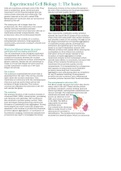
reticulum and has pores which permit the The endoplasmatic reticulum (ER)
entrance of large molecules. The nucleus The ER is a large, dynamic structure that serves
controls and regulates the activities of the cell many roles in the cell. These include protein
and carries the genes. synthesis, transport, protein folding, lipid and
steroid synthesis, carbohydrate metabolism and
The nucleolus calcium storage. The organelle itself looks like
The primary function of the nucleus consists of membrane-enclosed sacs also
ribosomal RNA (rRNA) transcription, processing known as cisternae in the
and ribosome unit assembly. The nucleolus is RER, and tubular structures
also involved in protein quality control. Cells in the SER. The RER is
have developed mechanisms that prevent the responsible for protein
formation of potentially toxic aggregates. During synthesis since
stress Hsp70 and other molecular chaperones it is covered with ribosomes.
assemble in the nucleus to protect the ribosomal SER is mostly found in liver
proteins against aggregation. A combination of cells since it’s involved in
fluorescence imaging, biochemical analyses and detoxification. The phospholipid membrane
proteomics was used to investigate the stress- encloses the cisternal space, which is continuous
Cells are membrane-enclosed units of life. They Denatured proteins in the nucleus focussing on
have a metabolism, grow, divide and give the role of the nucleolus and its phase-separated
responses to environmental signals and can nature in protein quality control.
communicate internally and externally. The
genetic material in the cell is called DNA.
Metabolites are molecules that are produced or
altered by the cell.
The eukaryotic cell is larger than the
prokaryotic cell. The eukaryotic cell is multi-
cellular and has membrane-enclosed
compartments while the prokaryotic cell has no
membrane-enclosed compartments. Also, Upon heat stress, misfolded nuclear proteins
prokaryotic cells are biochemically flexible. entered the liquid-like GC phase of the nucleolus
where they were associated with certain proteins
The eukaryotic cell consists of: a nucleus, and adopted a state of low mobility. Storage in the
endoplasmatic reticulum, Golgi apparatus, GC phase prevented the irreversible aggregation
mitochondria, lysosomes, transport vesicles and of misfolded protein species, allowing their
chloroplasts. extraction and refolding upon recovery from
stress in an hsp70-dependent manner. 200
What is the difference between the nucleus different proteins were tested either entering the
membrane and the plasma membrane? nucleoplasm or from within the nucleolus.
The cell membrane is the biological membrane Disruption of the GC phase resulted in the
that separates the interior of all cells from the formation of stable aggregates of stress-
outside environment whereas the nuclear denatured proteins in the nucleoplasm which
membrane surrounds the nucleus, enclosing the exerted toxic effects. In conclusion, the liquid-like
genetic material. Besides the cell membrane is phase of the nucleolus functions as a non-
made up of one lipid bilayer structure and the membrane-bound protein quality control
nuclear membrane is made up of two lipid compartment. It is characterized by a chaperone-
bilayer structures. like capacity to temporarily store misfolded
proteins preventing their irreversible
The nucleus aggregation and maintaining them as competent
The nucleus is a specialized structure that is for hsp70-assisted refolding. Nucleoplasmic
separated from the rest of the cell by a double proteins exit the nucleolus upon refolding and
layer called the nuclear membrane. This nucleolar proteins resume their functional state.
membrane is continuous with the endoplasmatic
reticulum and has pores which permit the The endoplasmatic reticulum (ER)
entrance of large molecules. The nucleus The ER is a large, dynamic structure that serves
controls and regulates the activities of the cell many roles in the cell. These include protein
and carries the genes. synthesis, transport, protein folding, lipid and
steroid synthesis, carbohydrate metabolism and
The nucleolus calcium storage. The organelle itself looks like
The primary function of the nucleus consists of membrane-enclosed sacs also
ribosomal RNA (rRNA) transcription, processing known as cisternae in the
and ribosome unit assembly. The nucleolus is RER, and tubular structures
also involved in protein quality control. Cells in the SER. The RER is
have developed mechanisms that prevent the responsible for protein
formation of potentially toxic aggregates. During synthesis since
stress Hsp70 and other molecular chaperones it is covered with ribosomes.
assemble in the nucleus to protect the ribosomal SER is mostly found in liver
proteins against aggregation. A combination of cells since it’s involved in
fluorescence imaging, biochemical analyses and detoxification. The phospholipid membrane
proteomics was used to investigate the stress- encloses the cisternal space, which is continuous



