Digital Food Marketing 2021/2022
Lectures (including interviews) and literature
Lecture 1 + readings
Lecture 1: Introduction of the course and history of food marketing
What is food marketing?
- Speech (traditional advertising: TV, radio, billboards) & non-speech related activities (public
relations, YouTube)
- Food marketers and retailers also engage in marketing practices that do not involve speech,
such as establishing the price of products and determining where to locate them within a store.
- Schaffner, Schroder, & Earle, 1998: “Food marketing is the act of communicating to the
consumer through a range of marketing techniques to add value to a food product and
persuade the consumer to purchase. This includes all activities that occur in between the
completion of a product through to the purchasing process of consumers.”
Marketingmix (4 P’s)
- Product: goods and services that the company will offer the consumer (creating or improving a
food product)
- Price: pricing is important in influencing the buying activity (in-store, but also to persuade
people into going to the store, so that they buy more)
- Promotion: actions used to communicate the food product’s features and benefitsà
persuading to purchase (out-of-store, in-store, packaging, or coupons)
- Place: distribution and warehousing efforts to move a food from the manufacturer to the
location where it is sold (alsoà place in the shelf)
3 or 4 phases:
1. Fragmentation phase (end 19th century)
Numerous geographic fragments because of expensive transport à local production,
distribution, and selling
2. Unification phase (end 19th century – mid 20st century)
More distribution by railroads etc. à led by large food processors and companies such as Heinz,
Quaker, Coca Cola because they sold their brands all over the world
à Advertising in print media and direct marketingthrough demonstrations at stores and public
venues were among the prime marketing tools.
3. Segmentation phase (1950- current)
Radio, TV, and internet advertising enables a wider range of competing products to focus on
different benefits and images to appeal to different markets
More efficient distributions (trucks, flights) to sell your brand worldwide
4. Personalized/ tailored phase (2010- current)
Tailored to specific people and target groups
Big data collections, artificial intelligence, machine learning, neuromarketing, eye-tracking have
caused more personalized marketing possibilities
,Objective food marketing
- Because of the large availability of foods, combined with a ‘rich’ society (who can buy more food
than they need) causes competition. The food industry competes for every dollar spent on food
and food companies develop market products that will sell, regardless of their effect on
nutritional status or waistlines
- Food companies try to convince people to eat more of their product or choose their product
above that of competitors. They use advertising, but also professionals, and media à mostly
virtual.
Example: nicotine. Create a demand by creating an addiction.
10 largest food companies:
Nestle, Pepsi, Coca-Cola, Unilever, Danone, General Mills, Kellogg’s, Mars, Associated British Foods,
Mondelez
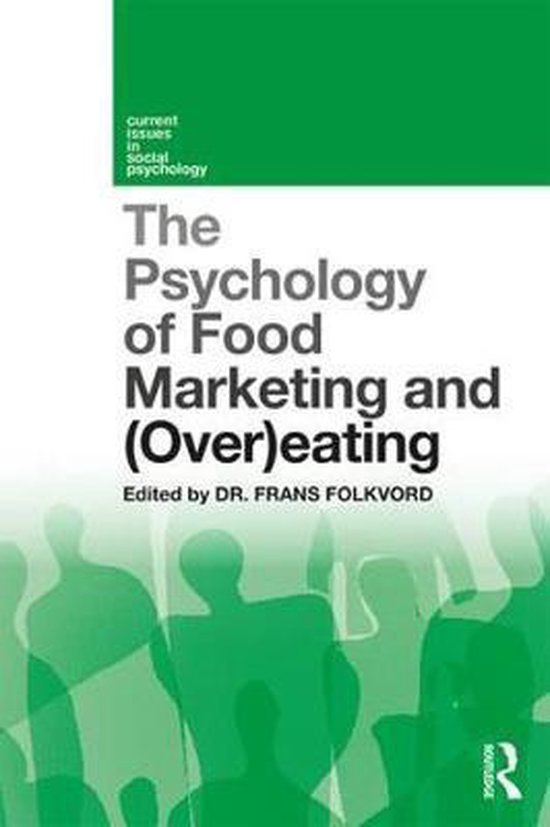
, Folkvord (1986): The Psychology of Food Marketing and Overeating
Foreword
World’s food supply doesn’t function correctly
- Driven by the same forces that led to their achievements: the cost efficiencies imposed on the
supply chain by the drive for return on investment
Low-nutrition foods is a modifiable risk factor for non-communicable diseases (NCDs) and is linked to the
obesity crisis
WHO implemented a set of recommendations on the marketing of foods and drinks to children. Adopted
by the UN, so mostly political commitments.
Two direct functions of advertising:
- Providing information about the product (freedom of speech)
- Induce positive feelings about a product so that potential customers view the product as
desirable and attractive (works mainly at unconscious level, therefore operates outside the
classical market assumption that purchasers make purely rational choices).
When contemplating restrictions to promotional markting, two approaches are available: the rights-based
approach, which says that people and especially children should be protected from commercially driven
inducements to consume, and the risk-based approach, which suggests that the market has freedoms that
should only be curtailed on evidence of harm. Risk-based approach is seen more often in many countries.
Folkvord (1986): The Psychology of Food Marketing and Overeating
Introduction
Obesity has emerged as an epidemic in the developed countries (started in Western countries in the 1980s)
- One of the biggest health concerns
- One of the main drivers behind the unhealthy dietary intake of people over the world is food
marketing.
- Food companies’ marketing strategies target determinants for why people choose to eat one
food rather than another, or more instead of less. In order to do that, food marketing is
ubiquitous, to increase sales and comply with the laws of capitalism: increase profits to improve
the value of the shares to satisfy the share-holders.
Marketing
- Includes activities and processes designed to communicate and deliver value to consumers,
through advertising e.g., through purchased media (such as television, internet, radio),
earned media (e.g., social media marketing, influencer marketing, public relations),
promotions, and retail strategies.
Food marketing
- The communication to the consumer through a range of marketing techniques to add value to a
food product and/or brand to persuade the consumer to purchase the product and/or brand.
The goal is to serve as an overview on the existing knowledge about food marketing and its effect on eating
behavior of people and functions as a point of departure for the development of new research programs,
legislation, and techniques about what can be done about unhealthy food marketing.
, Lecture 2 + readings
Lecture 2: Mix of food marketing
Food marketing is everywhere!
- Examples: Redbull racing, CocaCola/Santa etc.
Link between two trends
One thing that food marketing uses is societal situations (like the cola commercial). People are more
exposed to coca cola, bad or negative news is also advertising.
- Increasing expenditure on food advertisements (capitalistic market economy, welfare)à
negative side to it is an increase in people consuming energy-dense snacks.
- This results in increased obesity.
Increase in expenditure goes parallel with increase in obesity
Consequences: sugar addiction, a perpetual cycle.
- You like sugary food over food with less sugar
- You eat sugar à blood sugar level spikes à blood sugar falls rapidly (dip) à hunger and
cravings à you eat sugar again
- Nutritional value? à With one bottle of coke and Doritos you already have enough sugar and
saturated fat for a day (often, we don’t even read this info on the back of a product)
Food advertising activates certain areas in your brain that is related to the reward system, which is also the
case for drugs, alcohol, gambling. However the evidence is not convincing enough to proof.
Direct link
- Food advertisements have a direct effect on:
• (brand/product) Attitudes à Redbull makes you faster because Verstappen is also fast
• Cognitions
• Emotions à Verstappen won, so happy
• Eating/ consumption behavior
Main question
- Is there a causal relationship between food advertisements and food intake?
- Does food marketing have a role in the obesity epidemic?
- Factors that should be considered: association between television viewing and obesity remains
significant even when potential confounding variables such as socioeconomic status, family
tendency to overweight, and, critically, levels of physical activity are taken into account.
à so: link to advertisements seen on tv and obesity
Food marketing
- Old media/advertisements
• Television, newspaper, radio, magazines, billboards
- New media/ advertisements
• Banners on websites
• Social media
• Product placement (embedding food cues in content)
• Promotional characters (Frozen on cereal)
• Celebrity endorsement
Lectures (including interviews) and literature
Lecture 1 + readings
Lecture 1: Introduction of the course and history of food marketing
What is food marketing?
- Speech (traditional advertising: TV, radio, billboards) & non-speech related activities (public
relations, YouTube)
- Food marketers and retailers also engage in marketing practices that do not involve speech,
such as establishing the price of products and determining where to locate them within a store.
- Schaffner, Schroder, & Earle, 1998: “Food marketing is the act of communicating to the
consumer through a range of marketing techniques to add value to a food product and
persuade the consumer to purchase. This includes all activities that occur in between the
completion of a product through to the purchasing process of consumers.”
Marketingmix (4 P’s)
- Product: goods and services that the company will offer the consumer (creating or improving a
food product)
- Price: pricing is important in influencing the buying activity (in-store, but also to persuade
people into going to the store, so that they buy more)
- Promotion: actions used to communicate the food product’s features and benefitsà
persuading to purchase (out-of-store, in-store, packaging, or coupons)
- Place: distribution and warehousing efforts to move a food from the manufacturer to the
location where it is sold (alsoà place in the shelf)
3 or 4 phases:
1. Fragmentation phase (end 19th century)
Numerous geographic fragments because of expensive transport à local production,
distribution, and selling
2. Unification phase (end 19th century – mid 20st century)
More distribution by railroads etc. à led by large food processors and companies such as Heinz,
Quaker, Coca Cola because they sold their brands all over the world
à Advertising in print media and direct marketingthrough demonstrations at stores and public
venues were among the prime marketing tools.
3. Segmentation phase (1950- current)
Radio, TV, and internet advertising enables a wider range of competing products to focus on
different benefits and images to appeal to different markets
More efficient distributions (trucks, flights) to sell your brand worldwide
4. Personalized/ tailored phase (2010- current)
Tailored to specific people and target groups
Big data collections, artificial intelligence, machine learning, neuromarketing, eye-tracking have
caused more personalized marketing possibilities
,Objective food marketing
- Because of the large availability of foods, combined with a ‘rich’ society (who can buy more food
than they need) causes competition. The food industry competes for every dollar spent on food
and food companies develop market products that will sell, regardless of their effect on
nutritional status or waistlines
- Food companies try to convince people to eat more of their product or choose their product
above that of competitors. They use advertising, but also professionals, and media à mostly
virtual.
Example: nicotine. Create a demand by creating an addiction.
10 largest food companies:
Nestle, Pepsi, Coca-Cola, Unilever, Danone, General Mills, Kellogg’s, Mars, Associated British Foods,
Mondelez
, Folkvord (1986): The Psychology of Food Marketing and Overeating
Foreword
World’s food supply doesn’t function correctly
- Driven by the same forces that led to their achievements: the cost efficiencies imposed on the
supply chain by the drive for return on investment
Low-nutrition foods is a modifiable risk factor for non-communicable diseases (NCDs) and is linked to the
obesity crisis
WHO implemented a set of recommendations on the marketing of foods and drinks to children. Adopted
by the UN, so mostly political commitments.
Two direct functions of advertising:
- Providing information about the product (freedom of speech)
- Induce positive feelings about a product so that potential customers view the product as
desirable and attractive (works mainly at unconscious level, therefore operates outside the
classical market assumption that purchasers make purely rational choices).
When contemplating restrictions to promotional markting, two approaches are available: the rights-based
approach, which says that people and especially children should be protected from commercially driven
inducements to consume, and the risk-based approach, which suggests that the market has freedoms that
should only be curtailed on evidence of harm. Risk-based approach is seen more often in many countries.
Folkvord (1986): The Psychology of Food Marketing and Overeating
Introduction
Obesity has emerged as an epidemic in the developed countries (started in Western countries in the 1980s)
- One of the biggest health concerns
- One of the main drivers behind the unhealthy dietary intake of people over the world is food
marketing.
- Food companies’ marketing strategies target determinants for why people choose to eat one
food rather than another, or more instead of less. In order to do that, food marketing is
ubiquitous, to increase sales and comply with the laws of capitalism: increase profits to improve
the value of the shares to satisfy the share-holders.
Marketing
- Includes activities and processes designed to communicate and deliver value to consumers,
through advertising e.g., through purchased media (such as television, internet, radio),
earned media (e.g., social media marketing, influencer marketing, public relations),
promotions, and retail strategies.
Food marketing
- The communication to the consumer through a range of marketing techniques to add value to a
food product and/or brand to persuade the consumer to purchase the product and/or brand.
The goal is to serve as an overview on the existing knowledge about food marketing and its effect on eating
behavior of people and functions as a point of departure for the development of new research programs,
legislation, and techniques about what can be done about unhealthy food marketing.
, Lecture 2 + readings
Lecture 2: Mix of food marketing
Food marketing is everywhere!
- Examples: Redbull racing, CocaCola/Santa etc.
Link between two trends
One thing that food marketing uses is societal situations (like the cola commercial). People are more
exposed to coca cola, bad or negative news is also advertising.
- Increasing expenditure on food advertisements (capitalistic market economy, welfare)à
negative side to it is an increase in people consuming energy-dense snacks.
- This results in increased obesity.
Increase in expenditure goes parallel with increase in obesity
Consequences: sugar addiction, a perpetual cycle.
- You like sugary food over food with less sugar
- You eat sugar à blood sugar level spikes à blood sugar falls rapidly (dip) à hunger and
cravings à you eat sugar again
- Nutritional value? à With one bottle of coke and Doritos you already have enough sugar and
saturated fat for a day (often, we don’t even read this info on the back of a product)
Food advertising activates certain areas in your brain that is related to the reward system, which is also the
case for drugs, alcohol, gambling. However the evidence is not convincing enough to proof.
Direct link
- Food advertisements have a direct effect on:
• (brand/product) Attitudes à Redbull makes you faster because Verstappen is also fast
• Cognitions
• Emotions à Verstappen won, so happy
• Eating/ consumption behavior
Main question
- Is there a causal relationship between food advertisements and food intake?
- Does food marketing have a role in the obesity epidemic?
- Factors that should be considered: association between television viewing and obesity remains
significant even when potential confounding variables such as socioeconomic status, family
tendency to overweight, and, critically, levels of physical activity are taken into account.
à so: link to advertisements seen on tv and obesity
Food marketing
- Old media/advertisements
• Television, newspaper, radio, magazines, billboards
- New media/ advertisements
• Banners on websites
• Social media
• Product placement (embedding food cues in content)
• Promotional characters (Frozen on cereal)
• Celebrity endorsement