Module 2
Quantum Computing
Dr. F. Jyothi Serrao
Professor
Dept. of Physics. SCEM
BPH102GC1/BPH202GC1
The first electronic computers, developed around 1945, used vacuum tubes for switching and
amplification. These machines were large, consumed a lot of power, and generated significant
heat. A major technological leap occurred in 1948, when John Bardeen, Walter Brattain, and
William Shockley invented the transistor at Bell Laboratories. This tiny semiconductor device
replaced vacuum tubes, making computers smaller, faster, more reliable, and energy-efficient.
Building on this progress, Gordon Moore, co-founder of Intel, made a key observation in 1965 —
known as Moore’s Law.
Moore’s Law:
In 1965, Gordon Moore, co-founder of Intel, stated that the number of transistors on a
microchip roughly doubles every 2 years, while its cost is halved over the same timeframe.
This prediction implies that the computational power of processors increases exponentially
over time. As a result, computers become faster, more powerful, smaller in size, and
cheaper with each generation.
However, Moore’s law is now approaching its physical limits due to issues like power
dissipation, miniaturization barriers, and quantum effects in very small transistors.
Limitations of VLSI (Very Large Scale Integration):
Although VLSI technology has transformed modern electronics by enabling compact, high-speed,
and low-power devices, it still faces several limitations, such as:
1. Complex Design: As the number of transistors on a chip increases, designing, testing, and
verifying circuits becomes extremely complex and time-consuming.
2. Fabrication Challenges: Manufacturing advanced chips requires sophisticated and
expensive fabrication facilities with precision down to nanometers.
3. Power Dissipation: As the number of transistors increases in the device, the heat generation
and power consumption also increase, requiring advanced cooling and low-power design
techniques.
, 4. Cost Factor: The initial cost for VLSI design tools, fabrication, and testing is very high,
making it less feasible for small-scale industries or research setups.
5. Scalability and Miniaturization Limits: When transistors become extremely small,
problems like electron tunneling and leakage currents takes place, limiting further
miniaturization.
6. Testing and Debugging Difficulties: Finding and fixing faults in complex, tightly packed
circuits is challenging and needs sophisticated testing equipment.
7. Environmental and Material Issues: Disposal of semiconductor materials and e-waste
harms the environment. A shortage of materials (such as rare earth elements) can affect
production.
Quantum Computing:
Quantum computing is an emerging field of computation that uses the principles of quantum
mechanics to process information. It provides high computational power, less energy
consumption and exponential speed over classical computers by controlling the behaviour of
microscopic particles like atoms, electrons, photons and ions.
Unlike classical computers that use binary bits 0 and 1 to store and process information,
quantum computers use their quantum bits or ‘Qubits’. A qubit can exist in a state of 0, 1 or a
superposition of both simultaneously, which gives quantum systems their extraordinary
power. Computers using this type of computing are known as ‘Quantum Computers’.
Quantum computers are specifically designed to solve problems that are extremely
difficult—or even impossible—for classical computers to handle, such as large-scale
optimization, quantum simulations, and cryptography.
In such machines, traditional circuits with transistors, logic gates, and integrated circuits are
not feasible at the quantum scale. Instead, they rely on subatomic particles and their intrinsic
properties (such as spin and energy states) to represent and manipulate information.
Qubits and their quantum states are often expressed using Dirac notation (also called bra-ket
notation), which provides a compact and powerful mathematical representation of quantum
states.
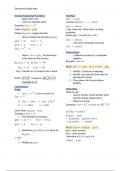
Dirac Notation of wave function: In quantum mechanics, Dirac notation or (Bra-Ket notation)
is a standard notation used to represent the quantum state of a particle or qubit. The notation uses
2
Quantum Computing
Dr. F. Jyothi Serrao
Professor
Dept. of Physics. SCEM
BPH102GC1/BPH202GC1
The first electronic computers, developed around 1945, used vacuum tubes for switching and
amplification. These machines were large, consumed a lot of power, and generated significant
heat. A major technological leap occurred in 1948, when John Bardeen, Walter Brattain, and
William Shockley invented the transistor at Bell Laboratories. This tiny semiconductor device
replaced vacuum tubes, making computers smaller, faster, more reliable, and energy-efficient.
Building on this progress, Gordon Moore, co-founder of Intel, made a key observation in 1965 —
known as Moore’s Law.
Moore’s Law:
In 1965, Gordon Moore, co-founder of Intel, stated that the number of transistors on a
microchip roughly doubles every 2 years, while its cost is halved over the same timeframe.
This prediction implies that the computational power of processors increases exponentially
over time. As a result, computers become faster, more powerful, smaller in size, and
cheaper with each generation.
However, Moore’s law is now approaching its physical limits due to issues like power
dissipation, miniaturization barriers, and quantum effects in very small transistors.
Limitations of VLSI (Very Large Scale Integration):
Although VLSI technology has transformed modern electronics by enabling compact, high-speed,
and low-power devices, it still faces several limitations, such as:
1. Complex Design: As the number of transistors on a chip increases, designing, testing, and
verifying circuits becomes extremely complex and time-consuming.
2. Fabrication Challenges: Manufacturing advanced chips requires sophisticated and
expensive fabrication facilities with precision down to nanometers.
3. Power Dissipation: As the number of transistors increases in the device, the heat generation
and power consumption also increase, requiring advanced cooling and low-power design
techniques.
, 4. Cost Factor: The initial cost for VLSI design tools, fabrication, and testing is very high,
making it less feasible for small-scale industries or research setups.
5. Scalability and Miniaturization Limits: When transistors become extremely small,
problems like electron tunneling and leakage currents takes place, limiting further
miniaturization.
6. Testing and Debugging Difficulties: Finding and fixing faults in complex, tightly packed
circuits is challenging and needs sophisticated testing equipment.
7. Environmental and Material Issues: Disposal of semiconductor materials and e-waste
harms the environment. A shortage of materials (such as rare earth elements) can affect
production.
Quantum Computing:
Quantum computing is an emerging field of computation that uses the principles of quantum
mechanics to process information. It provides high computational power, less energy
consumption and exponential speed over classical computers by controlling the behaviour of
microscopic particles like atoms, electrons, photons and ions.
Unlike classical computers that use binary bits 0 and 1 to store and process information,
quantum computers use their quantum bits or ‘Qubits’. A qubit can exist in a state of 0, 1 or a
superposition of both simultaneously, which gives quantum systems their extraordinary
power. Computers using this type of computing are known as ‘Quantum Computers’.
Quantum computers are specifically designed to solve problems that are extremely
difficult—or even impossible—for classical computers to handle, such as large-scale
optimization, quantum simulations, and cryptography.
In such machines, traditional circuits with transistors, logic gates, and integrated circuits are
not feasible at the quantum scale. Instead, they rely on subatomic particles and their intrinsic
properties (such as spin and energy states) to represent and manipulate information.
Qubits and their quantum states are often expressed using Dirac notation (also called bra-ket
notation), which provides a compact and powerful mathematical representation of quantum
states.
Dirac Notation of wave function: In quantum mechanics, Dirac notation or (Bra-Ket notation)
is a standard notation used to represent the quantum state of a particle or qubit. The notation uses
2