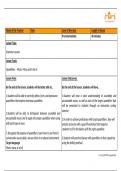
Name of the Teacher Date Level of the class Length of lesson
Pre-Intermediate 60 minutes
Lesson Type:
Grammar Lesson
Lesson Topic:
Quantifiers – Much, Many and A lot of
Lesson Aims Lesson Outcomes:
By the end of the lesson, students will be better able to… By the end of the lesson, students will have…
1.Students will be able to correctly define, form, and pronounce 1.Students will have a clear understanding of countable and
quantifiers that express enormous quantities. uncountable nouns, as well as each of the target quantifiers that
will be presented to students through an interactive sorting
exercise
2.Students will be able to distinguish between countable and
uncountable nouns and to apply the proper quantifier when using 2.In order to achieve proficiency with target quantifiers, they will
with each type of noun. practice accuracy with a gap fill worksheet that requires
. students to fill in the blanks with the right quantifier.
3. Recognize the purpose of quantifiers, learn how to use them in
conversation successfully, and use them in a natural environment. 3.Students will practice fluency with quantifiers in their speech by
Target language using the drilling method .
Much, many, a lot of
1 i-to-i LOVE TEFL Lesson Plan
,Example sentence:
She eats a lot of cake.
They have many party balloons.
There isn’t much time.
Anticipated difficulties: Suggested solutions:
1. Potential racial or cultural conflicts will likely be influenced 1. Explain to the students that although it may be difficult for
by the students cultural backgrounds. people to meet or learn something new for the first time, it
can also be interesting to learn from other people.
2. For French students there are many words that is silent like 2. I will insist that the students repeat the target language and
“f” “c” “h” or letters that are rarely pronounced such as “m” sentences after me. The words will be written on the board
they have a lot of unpronounced letters making it difficult so that they don’t only hear it but also see the words and
for them to pronounce “many” or “much” and they don’t how they are spelt, visual representation is always a bonus
know how to distinguish between long and short vowels like for students to understand and pronounce words better.
“many “ can sound like “money” Italian students tend to
add vowels or consonants for example. “much” “muche”.
3. As it would be summer holidays, the students would much
3. Keep an eye on your students and give the students who
prefer to be having fun with friends, at this age (11 and 12)
appear to be paying less attention leadership duties, such as
students may find grammar to be completely boring.
those of group leader or person in charge of distributing
and collecting worksheets from students, to encourage
them to pay more attention and behave more quietly during
the lesson.
2 i-to-i LOVE TEFL Lesson Plan
, Target language analysis:
1. What is the use or function of this Much, many and a lot (of) are quantifiers used to convey the amount or quantity of a
language? (include a timeline if countable noun (nouns that can be counted, such as two apples) or uncountable noun
appropriate)
(nouns that cannot be counted e.g., water). We use many, much, a lot (of) to refer to big
amounts.
many and numerous
Much and many are commonly used in questions and negative statements; they are less
common in affirmative sentences, though they are nevertheless feasible. Many is used
with countable nouns, whereas much is used with uncountable nouns.
Examples:
How many people came to the birthday party?
There are not many balloons left.
How much cake did you eat?
He doesn’t have much time.
When we want to emphasize a really big quantity we can add ‘so’ in front of ‘many’ and
‘much’.
Example:
You shouldn’t eat so much chocolate.
We shouldn’t eat so many sweets.
3 i-to-i LOVE TEFL Lesson Plan
Pre-Intermediate 60 minutes
Lesson Type:
Grammar Lesson
Lesson Topic:
Quantifiers – Much, Many and A lot of
Lesson Aims Lesson Outcomes:
By the end of the lesson, students will be better able to… By the end of the lesson, students will have…
1.Students will be able to correctly define, form, and pronounce 1.Students will have a clear understanding of countable and
quantifiers that express enormous quantities. uncountable nouns, as well as each of the target quantifiers that
will be presented to students through an interactive sorting
exercise
2.Students will be able to distinguish between countable and
uncountable nouns and to apply the proper quantifier when using 2.In order to achieve proficiency with target quantifiers, they will
with each type of noun. practice accuracy with a gap fill worksheet that requires
. students to fill in the blanks with the right quantifier.
3. Recognize the purpose of quantifiers, learn how to use them in
conversation successfully, and use them in a natural environment. 3.Students will practice fluency with quantifiers in their speech by
Target language using the drilling method .
Much, many, a lot of
1 i-to-i LOVE TEFL Lesson Plan
,Example sentence:
She eats a lot of cake.
They have many party balloons.
There isn’t much time.
Anticipated difficulties: Suggested solutions:
1. Potential racial or cultural conflicts will likely be influenced 1. Explain to the students that although it may be difficult for
by the students cultural backgrounds. people to meet or learn something new for the first time, it
can also be interesting to learn from other people.
2. For French students there are many words that is silent like 2. I will insist that the students repeat the target language and
“f” “c” “h” or letters that are rarely pronounced such as “m” sentences after me. The words will be written on the board
they have a lot of unpronounced letters making it difficult so that they don’t only hear it but also see the words and
for them to pronounce “many” or “much” and they don’t how they are spelt, visual representation is always a bonus
know how to distinguish between long and short vowels like for students to understand and pronounce words better.
“many “ can sound like “money” Italian students tend to
add vowels or consonants for example. “much” “muche”.
3. As it would be summer holidays, the students would much
3. Keep an eye on your students and give the students who
prefer to be having fun with friends, at this age (11 and 12)
appear to be paying less attention leadership duties, such as
students may find grammar to be completely boring.
those of group leader or person in charge of distributing
and collecting worksheets from students, to encourage
them to pay more attention and behave more quietly during
the lesson.
2 i-to-i LOVE TEFL Lesson Plan
, Target language analysis:
1. What is the use or function of this Much, many and a lot (of) are quantifiers used to convey the amount or quantity of a
language? (include a timeline if countable noun (nouns that can be counted, such as two apples) or uncountable noun
appropriate)
(nouns that cannot be counted e.g., water). We use many, much, a lot (of) to refer to big
amounts.
many and numerous
Much and many are commonly used in questions and negative statements; they are less
common in affirmative sentences, though they are nevertheless feasible. Many is used
with countable nouns, whereas much is used with uncountable nouns.
Examples:
How many people came to the birthday party?
There are not many balloons left.
How much cake did you eat?
He doesn’t have much time.
When we want to emphasize a really big quantity we can add ‘so’ in front of ‘many’ and
‘much’.
Example:
You shouldn’t eat so much chocolate.
We shouldn’t eat so many sweets.
3 i-to-i LOVE TEFL Lesson Plan