Theory III: Theory of History in practice
Summary lectures 1 - 7 (2023)
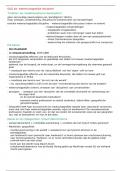
Lecture 1 (08-02): Critical thinking and Theory
History and Rhetorics
The goal: “Helping historians to detect, analyse, and critically evaluate the underlying
assumptions of historical research and writing.”
History is often compared to a never ending discussion (P. Geijl):
- Historical arguments are often long, complex, broad and deep.
- It’s difficult to analyse a story, because it contains tacit assumptions and premises etc.
about time, nature, ethics…
- Because there are no universally valid premises, the interpretations don’t necessarily
follow from the evidence; there are multiple interpretations possible.
- Interpretations are based on non-strict forms of reasoning, which can involve for
example essentially contested concepts.
- Historical interpretations are inferences to the best explanation
- Concepts, reasonings, information, etc. can be challenged any time.
Discussions are essential for historians: “one answer is the end of freedom”
Reverse engineering: exposing the underlying assumptions based on the interpretation by
asking the four questions:
1. Nature - what is history?
2. Object - what is it about?
3. Method - how does it proceed?
4. Aim - what is it for?
Examples of underlying assumptions are: Tychè, Fortuna, divine providence, human action,
general laws, idealism and realism.
Science versus rethorics
There are four main differences between the scientist and the rhetorician:
1. Scientists are observers, while rhetoricians are active participants.
2. Scientists study human actions in the past, while rhetoricians concern themselves with
human action in the present.
This means that the rhetoricians are motivated by problems in the present to
write and study history and are aiming to solve the contemporary problems with
wisdom of the past.
Meanwhile, the scientist wants distance to retain objectivity - therefore, the
subject cannot be too recent.
, 3. Scientists use logic and avoid fallacy and ambiguity; rhetoricians use persuasiveness
to convince the audience.
4. Scientists aim to establish truth or fact, the rhetoricians aim to convince their
audience.
Where are the limits of these two disciplines? Where does one end and the other start?
Historical Reasoning
There are three types of reasoning that are applied in the study of history: deduction,
induction and abduction.
Deduction: the premises are true, therefore the conclusion is true.
Induction: from the particular to the general.
Abduction: hypotheses, or inference to the best explanation.
Only deduction can be logically valid, in- and abduction are never completely certain.
Ginzburg’s article teaches us that the ‘clues’, or, the smaller parts of information, can tell us
more than the whole. If we analyse those clues using the types of historical reasoning and our
imagination, we are able to gather knowledge.
In Ginzburg’s article, Morelli, Freud and Holmes all inspected and analysed details
that no one else previously considered to be helpful to come to an answer or conclusion.
Abduction in historical reasoning takes the following form:
P1: The surprising information ‘I’ has been observed (e.g. a roman coin, the shape of an ear,
the dog did not bark)
P2: If hypothesis ‘H’ were true, ‘I’ would follow…
C: probably ‘H’ is true.
We have to critically distinguish between the most loveable inference and the most likely
inference to get to the best explanation. To arrive at the best explanation, you need to
compare the most plausible hypotheses based on the available information at that moment.
Keep in mind that inferences are never completely certain! There can always be a
more accurate or better explanation or hypothesis.
There are however two ‘tricky’ (read: fallacious) types of inferences: affirming the
consequent and denial of the antecedent.
Affirming the consequent: the second premise affirms the consequence of the first
premise, which risks exclusion of other (possibly better) conclusions and premises.
This takes the logical form of:
P1: if p then q
P2: q
C: p
, This inference would only be valid if the first premise consists of a law without
exceptions. But, in writing and analysing history, there are no such laws, which means this
kind of inference cannot be made.
It would therefore be best to compare multiple hypotheses and choose the most
plausible law instead of basing the argument on a rule.
Denial of the antecedent: if there is no evidence, it has not happened.This excludes
other causes for the consequence/hypotheses or assumes that something is not the case, while
it actually might be.
This takes the logical form of:
P1: if p then q
P2: not q
C: not p
“Historians cannot escape the ‘negative proof’; if they claim on the basis of
information that something has been the case, they assume that there is no argument against
the hypothesis.”
The rule of inference can be used to find (hidden) assumptions in reasoning. In the case of an
abduction/inference to the best explanation, the assumption connects the standpoint to the
argument.
An example would be: ‘The doorbell rings, that must be Pete’ which contains the rule
of inference that ‘every time the doorbell rings, it is Pete’.
Essentially Contested Concepts (ECC’s): a term coined by Gallie, which refers to concepts
about which there is always an inevitable dispute about its proper use.
If there is no consensus on its proper use, there is automatically also no consensus on
its proper meaning. For some kind of solution we can look at Wittgenstein: the meaning of a
word depends on its lingual context, and we can use historical analysis on language to at least
gain some understanding of the dispute and the concept in question.
Julia Galef made the distinction between the ‘soldier mindset’ and the ‘scout mindset’. In
history writing, it is best to take on the ‘scout mindset’, which entails asking whether the
picture fits the evidence (instead of the other way around), revising your reasoning when new
information is found to make it more accurate and to be self-critical.
It is important to be able to detect a fallacy. Van Eemerens new definition is: “incorrect
moves in a discussion for which the goal is successful resolution of a dispute.”
Summary lectures 1 - 7 (2023)
Lecture 1 (08-02): Critical thinking and Theory
History and Rhetorics
The goal: “Helping historians to detect, analyse, and critically evaluate the underlying
assumptions of historical research and writing.”
History is often compared to a never ending discussion (P. Geijl):
- Historical arguments are often long, complex, broad and deep.
- It’s difficult to analyse a story, because it contains tacit assumptions and premises etc.
about time, nature, ethics…
- Because there are no universally valid premises, the interpretations don’t necessarily
follow from the evidence; there are multiple interpretations possible.
- Interpretations are based on non-strict forms of reasoning, which can involve for
example essentially contested concepts.
- Historical interpretations are inferences to the best explanation
- Concepts, reasonings, information, etc. can be challenged any time.
Discussions are essential for historians: “one answer is the end of freedom”
Reverse engineering: exposing the underlying assumptions based on the interpretation by
asking the four questions:
1. Nature - what is history?
2. Object - what is it about?
3. Method - how does it proceed?
4. Aim - what is it for?
Examples of underlying assumptions are: Tychè, Fortuna, divine providence, human action,
general laws, idealism and realism.
Science versus rethorics
There are four main differences between the scientist and the rhetorician:
1. Scientists are observers, while rhetoricians are active participants.
2. Scientists study human actions in the past, while rhetoricians concern themselves with
human action in the present.
This means that the rhetoricians are motivated by problems in the present to
write and study history and are aiming to solve the contemporary problems with
wisdom of the past.
Meanwhile, the scientist wants distance to retain objectivity - therefore, the
subject cannot be too recent.
, 3. Scientists use logic and avoid fallacy and ambiguity; rhetoricians use persuasiveness
to convince the audience.
4. Scientists aim to establish truth or fact, the rhetoricians aim to convince their
audience.
Where are the limits of these two disciplines? Where does one end and the other start?
Historical Reasoning
There are three types of reasoning that are applied in the study of history: deduction,
induction and abduction.
Deduction: the premises are true, therefore the conclusion is true.
Induction: from the particular to the general.
Abduction: hypotheses, or inference to the best explanation.
Only deduction can be logically valid, in- and abduction are never completely certain.
Ginzburg’s article teaches us that the ‘clues’, or, the smaller parts of information, can tell us
more than the whole. If we analyse those clues using the types of historical reasoning and our
imagination, we are able to gather knowledge.
In Ginzburg’s article, Morelli, Freud and Holmes all inspected and analysed details
that no one else previously considered to be helpful to come to an answer or conclusion.
Abduction in historical reasoning takes the following form:
P1: The surprising information ‘I’ has been observed (e.g. a roman coin, the shape of an ear,
the dog did not bark)
P2: If hypothesis ‘H’ were true, ‘I’ would follow…
C: probably ‘H’ is true.
We have to critically distinguish between the most loveable inference and the most likely
inference to get to the best explanation. To arrive at the best explanation, you need to
compare the most plausible hypotheses based on the available information at that moment.
Keep in mind that inferences are never completely certain! There can always be a
more accurate or better explanation or hypothesis.
There are however two ‘tricky’ (read: fallacious) types of inferences: affirming the
consequent and denial of the antecedent.
Affirming the consequent: the second premise affirms the consequence of the first
premise, which risks exclusion of other (possibly better) conclusions and premises.
This takes the logical form of:
P1: if p then q
P2: q
C: p
, This inference would only be valid if the first premise consists of a law without
exceptions. But, in writing and analysing history, there are no such laws, which means this
kind of inference cannot be made.
It would therefore be best to compare multiple hypotheses and choose the most
plausible law instead of basing the argument on a rule.
Denial of the antecedent: if there is no evidence, it has not happened.This excludes
other causes for the consequence/hypotheses or assumes that something is not the case, while
it actually might be.
This takes the logical form of:
P1: if p then q
P2: not q
C: not p
“Historians cannot escape the ‘negative proof’; if they claim on the basis of
information that something has been the case, they assume that there is no argument against
the hypothesis.”
The rule of inference can be used to find (hidden) assumptions in reasoning. In the case of an
abduction/inference to the best explanation, the assumption connects the standpoint to the
argument.
An example would be: ‘The doorbell rings, that must be Pete’ which contains the rule
of inference that ‘every time the doorbell rings, it is Pete’.
Essentially Contested Concepts (ECC’s): a term coined by Gallie, which refers to concepts
about which there is always an inevitable dispute about its proper use.
If there is no consensus on its proper use, there is automatically also no consensus on
its proper meaning. For some kind of solution we can look at Wittgenstein: the meaning of a
word depends on its lingual context, and we can use historical analysis on language to at least
gain some understanding of the dispute and the concept in question.
Julia Galef made the distinction between the ‘soldier mindset’ and the ‘scout mindset’. In
history writing, it is best to take on the ‘scout mindset’, which entails asking whether the
picture fits the evidence (instead of the other way around), revising your reasoning when new
information is found to make it more accurate and to be self-critical.
It is important to be able to detect a fallacy. Van Eemerens new definition is: “incorrect
moves in a discussion for which the goal is successful resolution of a dispute.”