Heart Code 2025 ACLS Complete_Legacy Questions with Correct Solutions
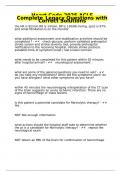
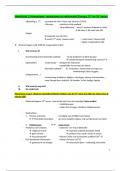
the HR is 92/min RR is 14/min, BP is 130/86 mmhg, spo2 is 97% and atrial fibrillation is on the monitor what additional assessment and stabilization activities should be completed ? - check glucose, perform validated prehospital stroke screen and stroke severity tool, provide prehospital notification to the receiving hospital, initiate stroke protocol, establish time of symptom onset ( last known normal) what needs to be completed for this patient within 20 minutes after hospital arrival? - neurological assessment what are some of the general questions you need to ask? - do you take any medications? when did the symptoms start? do you have allergies? what other symptoms do you have? within 45 minutes the neuroimaging interpretation of the CT scan of the brain suggests an acute ischemic infarction. There are no signs of hemorrhage or mass lesions. is this patient a potential candidate for fibrinolytic therapy? - Yes NOT Not enough information what actions should the hospital staff take to determine whether the pt is a candidate for fibrinolytic therapy? - repeat the neurological exam NOT obtain an MRI of the brain for confirmation of hemorrhage you find that the patient's neurological function is rapidly improving. Is this patient still a candidate for fibrinolytic therapy? - no because this patient is no longer a candidate for fibrinolytic therapy, what are the next steps? - support airway,breathing, and circulation (ABCs), begin stroke pathway, admit the patient to an intensive care unit what initial action should be taken (respiratory ) - check for responsiveness, assess airway, breathing, and circulation, call for additional help the patient is unresponsive and not breathing but has a strong pulse. What should your initial actions include? - open the patient"s airway via a head tilt-chin lift or jaw thrust, initiate VE with a bag mask device attached to supplemental oxygen bradycardia scenario what should be your next steps be to assess and treat the patient - obtain a 12 lead ECG, maintain airway and administer oxygen if needed, establish iv access what is bradycadia rhythm - third degree av block -definied by less than 50/min rate, p waves and QRS complex firing independent of each other you determine the patient has poor perfusion what is your next step - administer atropine 1mg iv patient does not respond to atropine. the vital signs are HR 34/min, bp 66/43 mm hg, RR 18/min and SPo2 is 91%. He is responsive, but dizzy.
Geschreven voor
- Instelling
- Acls
- Vak
- Acls
Documentinformatie
- Geüpload op
- 18 januari 2024
- Aantal pagina's
- 5
- Geschreven in
- 2023/2024
- Type
- Tentamen (uitwerkingen)
- Bevat
- Vragen en antwoorden
Onderwerpen
-
heart code 2025 acls
-
acls
-
heart code 2025 acls completelegacy questions
-
heart code 2025 acls completelegacy

Ook beschikbaar in voordeelbundel