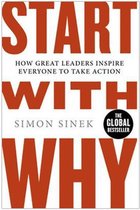
Start with why – Simon Sinek
Introduction
Start with Why explains how we can create a long-term business by continually focusing on ‘Why’ we
created our business. Starting with ‘Why’ will help us overcome unstable markets and build loyal
customers. We can then use our expertise to support our company’s ‘Why’ and build a highly
successful company that fits our values.
Chapter 1 – Start with the End Result in Mind
The assumptions we make have a significant impact on our actions. Looking at the bigger picture and
considering your end result when planning will lead to better long-term results. Sinek provides an
example that compares American and Japanese car manufacturers. In American car factories,
workers provide final alterations on doors using a rubber mallet. They have to do this as the doors
are not engineered to fit each model perfectly. Japanese car manufacturers’ doors are engineered to
fit perfectly from the start.
Sinek also uses this metaphor when talking about leadership. He describes two types of leader:
1. Those who manipulate circumstances to reach their end result.
2. Those who have their end result and potential issues in mind from the beginning.
Chapter 2 – Carrots and Sticks
Sinek describes two ways that you can attract customers: inspiring the carrots or manipulating the
sticks. Most business managers choose to manipulate the sticks. Here are some examples of the
sticks:
• Price
• Promotions
• Fear
• Aspirations
• Peer pressure
• Novelty
When we look at the number of different incentives offered to us as consumers (price drops, special
short-term promotions, using fear as a trigger, peer pressure and aspirational messages), they all
typically point to some form of manipulation. We are put under the stress of making a quick decision
for the benefit of the vendor. This happens everywhere, be it a purchase, a vote or support.
Irrespective of which of these manipulations are being used, we must notice these solutions are
short-term. So, despite short-term improvements, these approaches will only lead to a cycle of
repeated manipulations. If your business becomes heavily reliant on these manipulations, your
business’ long-term profitability will be impacted.
1
, Chapter 3 – The Golden Circle
“Instead of asking, “WHAT should we do to compete?” the questions must be asked, “WHY did we
start doing WHAT we’re doing in the first place, and WHAT can we do to bring our cause to life
considering all the technologies and market opportunities available today?”
In Start with Why, Sinek introduces a new concept called The Golden Circle. The Golden Circle is
formed of three parts: ‘Why,’ ‘How’ and ‘What.’
Why
A company must articulate why they do what they do. Despite this, they often struggle to do so. The
Why in The Golden Circle relates to your purpose. So, it has nothing to do with running a profitable
company (the What). You need to ask yourself these questions frequently:
• Why does your company exist?
• Why do you get out of bed in the morning?
• Why should anyone care?
How
The How of a company relates to the approaches a company adopts. Other terms used for the How
of a company are the differentiating value proposition or a unique selling point. The How of The
Golden Circle outlines how you are different or better than other companies.
What
The What of a company relates to the product that a company provides. This can be a specific item or
a service. The What of a company is the outer layer of the circle. Sinek explains that this concept goes
from the inside out. So, you should first consider the Why. The Why will help give customers a reason
to buy. Then, the How will help convince the customers that your version of this product is the best.
Finally, the What provides proof of the belief that this customer wants to purchase from you.
Example
Sinek provides Apple as an example of a company that effectively gains and keeps customers through
a clear Golden Circle. Firstly, Apple provides a strong and clear ‘Why’: challenge the status quo and
empower the individual. This ‘Why’ is repeated in all they say and do, plus in their products. This
clear message helps Apple to beat its competitors.
2
Introduction
Start with Why explains how we can create a long-term business by continually focusing on ‘Why’ we
created our business. Starting with ‘Why’ will help us overcome unstable markets and build loyal
customers. We can then use our expertise to support our company’s ‘Why’ and build a highly
successful company that fits our values.
Chapter 1 – Start with the End Result in Mind
The assumptions we make have a significant impact on our actions. Looking at the bigger picture and
considering your end result when planning will lead to better long-term results. Sinek provides an
example that compares American and Japanese car manufacturers. In American car factories,
workers provide final alterations on doors using a rubber mallet. They have to do this as the doors
are not engineered to fit each model perfectly. Japanese car manufacturers’ doors are engineered to
fit perfectly from the start.
Sinek also uses this metaphor when talking about leadership. He describes two types of leader:
1. Those who manipulate circumstances to reach their end result.
2. Those who have their end result and potential issues in mind from the beginning.
Chapter 2 – Carrots and Sticks
Sinek describes two ways that you can attract customers: inspiring the carrots or manipulating the
sticks. Most business managers choose to manipulate the sticks. Here are some examples of the
sticks:
• Price
• Promotions
• Fear
• Aspirations
• Peer pressure
• Novelty
When we look at the number of different incentives offered to us as consumers (price drops, special
short-term promotions, using fear as a trigger, peer pressure and aspirational messages), they all
typically point to some form of manipulation. We are put under the stress of making a quick decision
for the benefit of the vendor. This happens everywhere, be it a purchase, a vote or support.
Irrespective of which of these manipulations are being used, we must notice these solutions are
short-term. So, despite short-term improvements, these approaches will only lead to a cycle of
repeated manipulations. If your business becomes heavily reliant on these manipulations, your
business’ long-term profitability will be impacted.
1
, Chapter 3 – The Golden Circle
“Instead of asking, “WHAT should we do to compete?” the questions must be asked, “WHY did we
start doing WHAT we’re doing in the first place, and WHAT can we do to bring our cause to life
considering all the technologies and market opportunities available today?”
In Start with Why, Sinek introduces a new concept called The Golden Circle. The Golden Circle is
formed of three parts: ‘Why,’ ‘How’ and ‘What.’
Why
A company must articulate why they do what they do. Despite this, they often struggle to do so. The
Why in The Golden Circle relates to your purpose. So, it has nothing to do with running a profitable
company (the What). You need to ask yourself these questions frequently:
• Why does your company exist?
• Why do you get out of bed in the morning?
• Why should anyone care?
How
The How of a company relates to the approaches a company adopts. Other terms used for the How
of a company are the differentiating value proposition or a unique selling point. The How of The
Golden Circle outlines how you are different or better than other companies.
What
The What of a company relates to the product that a company provides. This can be a specific item or
a service. The What of a company is the outer layer of the circle. Sinek explains that this concept goes
from the inside out. So, you should first consider the Why. The Why will help give customers a reason
to buy. Then, the How will help convince the customers that your version of this product is the best.
Finally, the What provides proof of the belief that this customer wants to purchase from you.
Example
Sinek provides Apple as an example of a company that effectively gains and keeps customers through
a clear Golden Circle. Firstly, Apple provides a strong and clear ‘Why’: challenge the status quo and
empower the individual. This ‘Why’ is repeated in all they say and do, plus in their products. This
clear message helps Apple to beat its competitors.
2