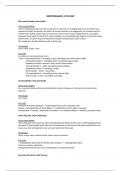
EXAM 2 STUDY GUIDE HEMATOLOGIC DISORDERS: 7-10 questions
EXAM 2 STUDY GUIDE HEMATOLOGIC DISORDERS: 7-10 questions • Identify general nursing strategies associated with altered anemia • Describe the morphology, pathophysiology, clinical manifestations, therapeutic management and nursing considerations of the following anemias: o ***Laboratory norms: 6-12 years of age ▪ Hemoglobin: • 11.5-15.5 g/dl ▪ Hematocrit: • 35-45% ▪ MCV (mean corpuscular volume) • 77-95 fL • Measure of average size of RBC • ↓ in microcytic; ↑ in macrocytic ▪ MCHC (mean corpuscular Hgb concentration) • 31–37 g/dl • Reflection of Hgb concentration • Refer to color; in hypo-, values are ↓ ▪ MCH (mean corpuscular Hgb) • 25–33 pg/cell • Reflection of Hgb concentration • Refer to color; in hypo-, values are ↓ o Anemia ▪ Condition where the hemoglobin content of the blood is insufficient to satisfy bodily needs ▪ Causes: • Blood loss • Accelerated hemolysis • Decreased production ▪ Typical Clinical Manifestations: • Fatigue • Dizziness • Weakness • Pallor • ↑ heart rate • ↑ breathing rate o Types: ▪ Iron-deficiency anemia—MOST COMMON IN PEDS • Nutritional anemia • Microcytic-hypochromic—small, pale RBC • Who’s at risk? o Varied o Premature babies at ↑ risk b/c they don’t get that blood rush the mom gives the baby late in that 3rd trimester, b/c premies are born early—this is why premature infants need the iron supplements at 2-3 months, whereas term babies don’t need it until 4-6 months o Multiples and twins at ↑ because only finite amount of blood available in that last rush of blood; so not all the babies get enough iron o Breast-fed exclusively babies at ↑ risk—breast milk doesn’t have same iron content as fortified iron formula o Kiddos with chronic blood loss—GI bleeders, hemophiliacs o Kiddos with poor dietary intake; whole milk doesn’t have same iron concentration as iron fortified formula • Pathophysiology: o Body stores iron that is used for erythropoiesis o Iron necessary mineral for erythropoiesis to occur o Not enough iron to transport to the bone marrow to make RBCs o Bone marrow still makes RBCs but they are very small and have a lower hemoglobin concentration • Clinical Manifestations: o Typical signs of anemia plus: .................................................continued......................................................
Geschreven voor
- Instelling
- Chamberlain College Of Nursing
- Vak
- PEDS NR 328
Documentinformatie
- Geüpload op
- 17 juli 2021
- Aantal pagina's
- 55
- Geschreven in
- 2020/2021
- Type
- OVERIG
- Persoon
- Onbekend
Onderwerpen
-
peds exam 2 sg
-
hematologic disorders 7 10 questions
-
identify general nursing strategies associated with altered anemia