2025
2026
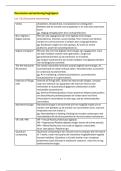
Introduction to
managing and
organising
PROF STEFFI WEIL
JADE VAN WALLENDAEL
,CH1 – Managing people in organisations
Managing is beyond one perspective. Making sense of managing as a
coherent set of assumptions, concepts, values and practices that
constitute a way of viewing reality.
Managing is sense making and framing.
Managerialism justifies the application of its one-dimensional managerial
techniques. The theory states that there is one way of managing that
should fit for everyone, and lead to the best results. However, this is not
the case.
Managerialism is an ideology that you can solve any problem in any
context with managerial tools.
We can make a difference between managing as a practice: something we
do. And as a process of continuous communication, coordinating, and
trying to accomplish the objectives of the organisations. Organisations can
be e.g. companies, but also NATO.
Management is not one dimensional. You need to manage relationships
with stakeholders, you need to take into account new technologies, you
have different types of relationships to manage. You cannot do all these
activities with only one technique (critique on managerialism).
Management as an activity is not neutral. You are not a robot, you cannot
react to each situation in the same way.
Management cannot only be considered in terms of its capacity to deliver
gains. You cannot only focus on the results that are delivered, but also are
we sustainable? Are the employees happy? What is the goal of the
organisations?
It is also a socio-political activity, which implies the need to adhere to
societal, political and ethical responsibilities.
Because it is not a neutral activity, sensemaking is very important. Before,
the goal was solely to make money, sensemaking does not come into play.
Now, it is also important that you know how to sell and frame your
information. Sensemaking is explaining what is going on, and you give this
‘sense’ to your team.
The pitfall is framing. You have to critically reflect on the information.
Sensemaking is the process through which individuals and groups give
meaning to something, especially to explain novel, unexpected or
confusing events. It is a process where we give meaning to something,
based on our own past experience.
1
,We use information from the past to make predictions on the situations we
find ourselves in.
Sensemaking in a capitalist system:
- Making sense of profit orientation?
- Does it make sense to you?
- The art of making sense of your work (proud to work for a particular
company?)
- Dare to challenge the narrative of a company (projection of an
image that may not be reality, eg: greenwashing Patagonia)
- Dare to challenge the narrative of your manager
We are constantly making sense, revising past rationalisations in the light
of new information, knowledge and events not previously available.
Example: USA attacking Iraq. He was convinced that Iraq had weapons of
mass destructions that they could use against the US so they attacked
Iraq. However, there were no weapons. He framed the message to
convince others, but you have to be critical.
Sensemaking is an important part of being a manager. You have to make
sense for yourself, but also guide your team. How can I explain certain
events to my team?
A ‘one size fits all’ management approach will not work. A top-down way of
managing, just telling people what to do as a superior, will not work.
Managing has become an increasingly difficult, political, and challenging
endeavour. People work in complex organisations that are embedded in
contexts inscribed by complex networks.
Managers should have an understanding of (human) complexity. This is a
more modern approach of managing, beyond solely numbers and
rationality.
Managers manage through processes of:
- Sense making: managers try to make sense of what is going on
- Sense giving: explaining to the people
- Sense breaking: challenge what is going on
A key part of managing is to frame what is going on in the organisation. As
social realities of business and organisations change, the different sense
and framing is required.
Managerialism portrays management as a universal solution to all
problems. Managerial rationality means that your manager style is based
2
, on rationality (numbers, budgets, forecasts…). You cannot put numbers on
everything, so managerial rationalism is more a myth, a belief.
While the sense you make is always your sense, it is never made in
isolation. Not only is sense made through the language and concepts you
use, but also through the many cues that prompt you to make sense:
experience, reactions of others, stories that you have heard…
People will not use these cues in a uniform way, because they are
individuals and, as a result, people can make wildly different sense of the
same set of cues.
Framing is a term that comes from film making. A director frames a shot
by including some detail and omitting other elements. A frame means to
put information in a spotlight.
A frame defines what is relevant. All managing involves framing:
separating that which deserves focus from that which does not. One thing
that managers do all the time is to differentiate between the relevant and
the irrelevant.
Framing involves the creation of devices that assign meaning to
organisational situations. It entails the ideational use of metaphors, the
repetition of stories, the citing of traditions…
Managerialism portrays management as a universal solution to all
problems. Managerialism combines management’s generic tools and
knowledge with ideology to establish itself systematically in organisations.
Managerialism justifies the application of its one-dimensional managerial
techniques to all areas of work, society, and capitalism on the grounds of
superior ideology, expert training, and the exclusiveness of managerial
knowledge necessary to run public institutions and society as corporations.
Managerial rationality states that everything is based on rationality:
numbers and a certain logic. You are a rational manager and you focus on
optimizing the process by looking at the numbers.
You leave out the emotional/human part (what effect may firing people
have, even though it would save money).
The rational manager thinks that the information he/she has is complete,
there is no part of the information/context they should construct
(sensemaking). The information is right and decisions can be based on
that.
But is this possible? Management as an ideology? No because within an
organisation, management goes beyond managing financial capital. What
about symbolic capital (reputation), social capital (set of relations)…
3
2026
Introduction to
managing and
organising
PROF STEFFI WEIL
JADE VAN WALLENDAEL
,CH1 – Managing people in organisations
Managing is beyond one perspective. Making sense of managing as a
coherent set of assumptions, concepts, values and practices that
constitute a way of viewing reality.
Managing is sense making and framing.
Managerialism justifies the application of its one-dimensional managerial
techniques. The theory states that there is one way of managing that
should fit for everyone, and lead to the best results. However, this is not
the case.
Managerialism is an ideology that you can solve any problem in any
context with managerial tools.
We can make a difference between managing as a practice: something we
do. And as a process of continuous communication, coordinating, and
trying to accomplish the objectives of the organisations. Organisations can
be e.g. companies, but also NATO.
Management is not one dimensional. You need to manage relationships
with stakeholders, you need to take into account new technologies, you
have different types of relationships to manage. You cannot do all these
activities with only one technique (critique on managerialism).
Management as an activity is not neutral. You are not a robot, you cannot
react to each situation in the same way.
Management cannot only be considered in terms of its capacity to deliver
gains. You cannot only focus on the results that are delivered, but also are
we sustainable? Are the employees happy? What is the goal of the
organisations?
It is also a socio-political activity, which implies the need to adhere to
societal, political and ethical responsibilities.
Because it is not a neutral activity, sensemaking is very important. Before,
the goal was solely to make money, sensemaking does not come into play.
Now, it is also important that you know how to sell and frame your
information. Sensemaking is explaining what is going on, and you give this
‘sense’ to your team.
The pitfall is framing. You have to critically reflect on the information.
Sensemaking is the process through which individuals and groups give
meaning to something, especially to explain novel, unexpected or
confusing events. It is a process where we give meaning to something,
based on our own past experience.
1
,We use information from the past to make predictions on the situations we
find ourselves in.
Sensemaking in a capitalist system:
- Making sense of profit orientation?
- Does it make sense to you?
- The art of making sense of your work (proud to work for a particular
company?)
- Dare to challenge the narrative of a company (projection of an
image that may not be reality, eg: greenwashing Patagonia)
- Dare to challenge the narrative of your manager
We are constantly making sense, revising past rationalisations in the light
of new information, knowledge and events not previously available.
Example: USA attacking Iraq. He was convinced that Iraq had weapons of
mass destructions that they could use against the US so they attacked
Iraq. However, there were no weapons. He framed the message to
convince others, but you have to be critical.
Sensemaking is an important part of being a manager. You have to make
sense for yourself, but also guide your team. How can I explain certain
events to my team?
A ‘one size fits all’ management approach will not work. A top-down way of
managing, just telling people what to do as a superior, will not work.
Managing has become an increasingly difficult, political, and challenging
endeavour. People work in complex organisations that are embedded in
contexts inscribed by complex networks.
Managers should have an understanding of (human) complexity. This is a
more modern approach of managing, beyond solely numbers and
rationality.
Managers manage through processes of:
- Sense making: managers try to make sense of what is going on
- Sense giving: explaining to the people
- Sense breaking: challenge what is going on
A key part of managing is to frame what is going on in the organisation. As
social realities of business and organisations change, the different sense
and framing is required.
Managerialism portrays management as a universal solution to all
problems. Managerial rationality means that your manager style is based
2
, on rationality (numbers, budgets, forecasts…). You cannot put numbers on
everything, so managerial rationalism is more a myth, a belief.
While the sense you make is always your sense, it is never made in
isolation. Not only is sense made through the language and concepts you
use, but also through the many cues that prompt you to make sense:
experience, reactions of others, stories that you have heard…
People will not use these cues in a uniform way, because they are
individuals and, as a result, people can make wildly different sense of the
same set of cues.
Framing is a term that comes from film making. A director frames a shot
by including some detail and omitting other elements. A frame means to
put information in a spotlight.
A frame defines what is relevant. All managing involves framing:
separating that which deserves focus from that which does not. One thing
that managers do all the time is to differentiate between the relevant and
the irrelevant.
Framing involves the creation of devices that assign meaning to
organisational situations. It entails the ideational use of metaphors, the
repetition of stories, the citing of traditions…
Managerialism portrays management as a universal solution to all
problems. Managerialism combines management’s generic tools and
knowledge with ideology to establish itself systematically in organisations.
Managerialism justifies the application of its one-dimensional managerial
techniques to all areas of work, society, and capitalism on the grounds of
superior ideology, expert training, and the exclusiveness of managerial
knowledge necessary to run public institutions and society as corporations.
Managerial rationality states that everything is based on rationality:
numbers and a certain logic. You are a rational manager and you focus on
optimizing the process by looking at the numbers.
You leave out the emotional/human part (what effect may firing people
have, even though it would save money).
The rational manager thinks that the information he/she has is complete,
there is no part of the information/context they should construct
(sensemaking). The information is right and decisions can be based on
that.
But is this possible? Management as an ideology? No because within an
organisation, management goes beyond managing financial capital. What
about symbolic capital (reputation), social capital (set of relations)…
3