Intimate relationships – Rowland Miller
Chapter 1: Introduction
The influence of culture: Cultural norms regarding relationships in the United States have changed
dramatically over the last 50 years. Fewer people are marrying than ever before, and those who do
marry wait longer. People routinely cohabit, and that often makes a future divorce more, not less,
likely.
Sources of change: Economic changes, increasing individualism, and new technology contribute to
cultural change. So does the sex ratio; cultures with high sex ratios are characterized by traditional
roles for men and women, whereas low sex ratios are correlated with more permissive behaviour
The influence of experience: Children’s interactions with their caregivers produce different styles of
attachment. Four styles— secure, preoccupied, fearful, and dismissing —which differ in avoidance
of intimacy and anxiety about abandonment, are now recognized. These orientations are mostly
learned. Thus, our beliefs about the nature and worth of close relationships are shaped by our
experiences within them
Sex Differences: Most differences between men and women overlap. They are more the same, than
different.
Gender differences: Refers to social and psychological distinctions that are created by our cultures
and upbringing, e.g. women are more loving. Some people are said to be androgynous, they have
both masculine (= instrumental traits) and feminine (= expressive traits) traits.
The upshot of all this is that both instrumentality and expressiveness are valuable traits, and the
happiest, best-adjusted, most effective, mentally healthy people possess both sets of skills.
Self-esteem: A provocative, leading theory argues that self-esteem is a subjective gauge, a
sociometer, that measures the quality of our relationships with others.
Chapter 2: Research Methods
The Short History of Relationship Science: The scientific study of relationships is a recent endeavor
that has come of age only in the last 35 years. The field has now grown to include the study of all
types of relationships in their natural settings around the world.
Developing a Question: Research questions come from a number of sources, including personal
experience, recognition of social problems, the results of prior research, and theoretical predictions.
The questions usually seek either to describe events or to delineate causal connections among
variables.
Obtaining Participants: Convenience samples are composed of participants who are easily available.
Representative samples are more costly, but they better reflect the population of interest. Both types
of samples can suffer from volunteer bias.
Choosing a Design:
Correlational Designs. A correlation describes the strength and direction of an association
between two variables. Correlations are inherently ambiguous because events can be related
for a variety of reasons.
, Experimental Designs. Experiments control and manipulate situations to delineate cause and
effect. Experiments are very informative, but some events cannot be studied experimentally
for practical or ethical reasons.
Selecting a Setting: Research can be conducted in laboratories or in real-world settings such as a
couple’s home. Control over extraneous variables is often reduced outside the lab. Role-play studies
allow researchers to examine emotional events in an ethical manner but may not indicate what
people really do in such situations.
The Nature of Our Data .
Self-Reports. With self-reports, participants describe their own thoughts, feelings, and
behavior, but they may misunderstand the researchers’ questions, have faulty memories,
and be subject to social desirability biases.
Observations. In event-sampling , brief observations are made intermittently. Observations
avoid the problems of self-reports, but they are expensive to conduct, and reactivity can be a
problem.
Physiological Measures. Measurements of people’s biological changes indicate how our
physical states are associated with our social interactions.
Archival Materials. Historical records are nonreactive and allow researchers to compare the
present with the past.
The Ethics of Such Endeavors: Participation in relationship research may change people’s
relationships by encouraging them to think carefully about the situations they face. As a result,
researchers take pains to protect the welfare of their participants.
Interpreting and Integrating Results: Statistical analysis determines the likelihood that results could
have occurred by chance. When this likelihood is very low, the results are said to be significant. Some
such results may still be due to chance, however, so the thoughtful consumer does not put undue
faith in any one study. Meta-analysis lends confidence to conclusions by statistically combining
results from several studies.
Chapter 3: Attraction
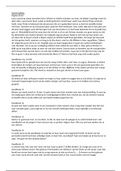
Proximity (See picture)
Interesting: s. As we gain information about others, we may find
that they are obnoxious, disagreeable, or inept, and increasing
exposure to such people may lead us to like them less, not more.
Indeed, a study in a condominium complex in California
(Ebbesen et al., 1976) found that although most of the residents’
friends lived nearby, most of their enemies did, too.
Similarity: Similarity attracts. E.g.: demographic similarity,
attitudes and values.
Reciprocity
Our expectations regarding the probability of others’ acceptance have much to do with our mate
value, or overall attractiveness as a reproductive partner. People with high mate values are highly
sought by others, and as a result, they’re able to insist on partners of high quality
The tendency to like those who like us is obviously consistent with the reward model of attraction. It
also fits another perspective known as balance theory that suggests that people desire consistency
among their thoughts, feelings, and social relationships.
So:
Chapter 1: Introduction
The influence of culture: Cultural norms regarding relationships in the United States have changed
dramatically over the last 50 years. Fewer people are marrying than ever before, and those who do
marry wait longer. People routinely cohabit, and that often makes a future divorce more, not less,
likely.
Sources of change: Economic changes, increasing individualism, and new technology contribute to
cultural change. So does the sex ratio; cultures with high sex ratios are characterized by traditional
roles for men and women, whereas low sex ratios are correlated with more permissive behaviour
The influence of experience: Children’s interactions with their caregivers produce different styles of
attachment. Four styles— secure, preoccupied, fearful, and dismissing —which differ in avoidance
of intimacy and anxiety about abandonment, are now recognized. These orientations are mostly
learned. Thus, our beliefs about the nature and worth of close relationships are shaped by our
experiences within them
Sex Differences: Most differences between men and women overlap. They are more the same, than
different.
Gender differences: Refers to social and psychological distinctions that are created by our cultures
and upbringing, e.g. women are more loving. Some people are said to be androgynous, they have
both masculine (= instrumental traits) and feminine (= expressive traits) traits.
The upshot of all this is that both instrumentality and expressiveness are valuable traits, and the
happiest, best-adjusted, most effective, mentally healthy people possess both sets of skills.
Self-esteem: A provocative, leading theory argues that self-esteem is a subjective gauge, a
sociometer, that measures the quality of our relationships with others.
Chapter 2: Research Methods
The Short History of Relationship Science: The scientific study of relationships is a recent endeavor
that has come of age only in the last 35 years. The field has now grown to include the study of all
types of relationships in their natural settings around the world.
Developing a Question: Research questions come from a number of sources, including personal
experience, recognition of social problems, the results of prior research, and theoretical predictions.
The questions usually seek either to describe events or to delineate causal connections among
variables.
Obtaining Participants: Convenience samples are composed of participants who are easily available.
Representative samples are more costly, but they better reflect the population of interest. Both types
of samples can suffer from volunteer bias.
Choosing a Design:
Correlational Designs. A correlation describes the strength and direction of an association
between two variables. Correlations are inherently ambiguous because events can be related
for a variety of reasons.
, Experimental Designs. Experiments control and manipulate situations to delineate cause and
effect. Experiments are very informative, but some events cannot be studied experimentally
for practical or ethical reasons.
Selecting a Setting: Research can be conducted in laboratories or in real-world settings such as a
couple’s home. Control over extraneous variables is often reduced outside the lab. Role-play studies
allow researchers to examine emotional events in an ethical manner but may not indicate what
people really do in such situations.
The Nature of Our Data .
Self-Reports. With self-reports, participants describe their own thoughts, feelings, and
behavior, but they may misunderstand the researchers’ questions, have faulty memories,
and be subject to social desirability biases.
Observations. In event-sampling , brief observations are made intermittently. Observations
avoid the problems of self-reports, but they are expensive to conduct, and reactivity can be a
problem.
Physiological Measures. Measurements of people’s biological changes indicate how our
physical states are associated with our social interactions.
Archival Materials. Historical records are nonreactive and allow researchers to compare the
present with the past.
The Ethics of Such Endeavors: Participation in relationship research may change people’s
relationships by encouraging them to think carefully about the situations they face. As a result,
researchers take pains to protect the welfare of their participants.
Interpreting and Integrating Results: Statistical analysis determines the likelihood that results could
have occurred by chance. When this likelihood is very low, the results are said to be significant. Some
such results may still be due to chance, however, so the thoughtful consumer does not put undue
faith in any one study. Meta-analysis lends confidence to conclusions by statistically combining
results from several studies.
Chapter 3: Attraction
Proximity (See picture)
Interesting: s. As we gain information about others, we may find
that they are obnoxious, disagreeable, or inept, and increasing
exposure to such people may lead us to like them less, not more.
Indeed, a study in a condominium complex in California
(Ebbesen et al., 1976) found that although most of the residents’
friends lived nearby, most of their enemies did, too.
Similarity: Similarity attracts. E.g.: demographic similarity,
attitudes and values.
Reciprocity
Our expectations regarding the probability of others’ acceptance have much to do with our mate
value, or overall attractiveness as a reproductive partner. People with high mate values are highly
sought by others, and as a result, they’re able to insist on partners of high quality
The tendency to like those who like us is obviously consistent with the reward model of attraction. It
also fits another perspective known as balance theory that suggests that people desire consistency
among their thoughts, feelings, and social relationships.
So: