Quantitative Innovation Analytics (GEO4-
2270)
Summary
,Content
Week 1...................................................................................................................................................3
Lecture 1. Introduction to the course and quantitative models.........................................................3
Week 2...................................................................................................................................................6
Lecture 2. Theory and research designs.............................................................................................6
Week 3...................................................................................................................................................9
Lecture 3. Linear regression in R.........................................................................................................9
Knowledge clip 1.linear regression...................................................................................................15
Knowledge clip 2. Linear regression clearly explained......................................................................18
Knowledge clip 3. Linear regression in R...........................................................................................21
Knowledge clip 4. Multiple regression clearly explained..................................................................22
Knowledge clip 5. Multiple Regression in R, Step by Step!!!.............................................................24
Knowledge clip 6. R-squared, clearly explained!..............................................................................26
Week 4..............................................................................................................................................29
Lecture 5. Binary logit models..........................................................................................................29
Week 5.................................................................................................................................................44
Lecture 6. Multilevel regression.......................................................................................................44
Week 6.................................................................................................................................................48
Lecture 7. Count Models..................................................................................................................48
Week 10...............................................................................................................................................58
Lecture 8. Time to event analysis.....................................................................................................58
Lecture 9. Wrap-up and report.........................................................................................................65
,Week 1
Lecture 1. Introduction to the course and
quantitative models
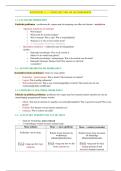
Deductive reasoning: Deductive reasoning is a logical process in which a conclusion is based on the
concordance of multiple premises that are generally assumed to be true. Deductive reasoning is
sometimes referred to as top-down logic. Deductive reasoning relies on making logical premises and
basing a conclusion around those premises.
In deductive reasoning, you’ll often make an argument for a certain idea. You make an inference, or
come to a conclusion, by applying different premises. A premise is a generally accepted idea, fact, or
rule, and it’s a statement that lays the groundwork for a theory or general idea. Conclusions are
statements supported by premises.
Formulate Hypothesis: There is a positive relationship between a countries’ level of annual per
capita chocolate consumption and the number of Nobel laureates of a country.
Univariate model (1 independent variable) vs. Multivariate model (more variables)
The independent variable is the cause. Its value is independent of other variables in your study.
The dependent variable is the effect. Its value depends on changes in the independent variable.
Confounding variable: Confounding variables (a.k.a. confounders or confounding factors) are a type
of extraneous variable that are related to a study’s independent and dependent variables. A variable
must meet two conditions to be a confounder:
It must be correlated with the independent variable. This may be a causal relationship, but it
does not have to be.
It must be causally related to the dependent variable.
, Multivariate model with control variables: A control variable is anything that is held constant or
limited in a research study. It’s a variable that is not of interest to the study’s aims, but is controlled
because it could influence the outcomes. For example R&D investments.
Mediator and Moderator: A mediating variable (or mediator) explains the process through which
two variables are related, while a moderating variable (or moderator) affects the strength and
direction of that relationship.
Mediating variables
A mediator is a way in which an independent variable impacts a dependent variable. It’s part of the
causal pathway of an effect, and it tells you how or why an effect takes place. Something is a
mediator:
1. It’s caused by the independent variable.
2. It influences the dependent variable.
3. When it’s taken into account, the statistical correlation between the independent and
dependent variables is higher than when it isn’t considered.
Mediation analysis is a way of statistically testing whether a variable is a mediator using linear
regression analyses or ANOVAs.
Moderating variables
A moderator influences the level, direction, or presence of a relationship between variables. It shows
you for whom, when, or under what circumstances a relationship will hold.
Moderators usually help you judge the external validity of your study by identifying the limitations of
when the relationship between variables holds. For example, while social media use can predict
2270)
Summary
,Content
Week 1...................................................................................................................................................3
Lecture 1. Introduction to the course and quantitative models.........................................................3
Week 2...................................................................................................................................................6
Lecture 2. Theory and research designs.............................................................................................6
Week 3...................................................................................................................................................9
Lecture 3. Linear regression in R.........................................................................................................9
Knowledge clip 1.linear regression...................................................................................................15
Knowledge clip 2. Linear regression clearly explained......................................................................18
Knowledge clip 3. Linear regression in R...........................................................................................21
Knowledge clip 4. Multiple regression clearly explained..................................................................22
Knowledge clip 5. Multiple Regression in R, Step by Step!!!.............................................................24
Knowledge clip 6. R-squared, clearly explained!..............................................................................26
Week 4..............................................................................................................................................29
Lecture 5. Binary logit models..........................................................................................................29
Week 5.................................................................................................................................................44
Lecture 6. Multilevel regression.......................................................................................................44
Week 6.................................................................................................................................................48
Lecture 7. Count Models..................................................................................................................48
Week 10...............................................................................................................................................58
Lecture 8. Time to event analysis.....................................................................................................58
Lecture 9. Wrap-up and report.........................................................................................................65
,Week 1
Lecture 1. Introduction to the course and
quantitative models
Deductive reasoning: Deductive reasoning is a logical process in which a conclusion is based on the
concordance of multiple premises that are generally assumed to be true. Deductive reasoning is
sometimes referred to as top-down logic. Deductive reasoning relies on making logical premises and
basing a conclusion around those premises.
In deductive reasoning, you’ll often make an argument for a certain idea. You make an inference, or
come to a conclusion, by applying different premises. A premise is a generally accepted idea, fact, or
rule, and it’s a statement that lays the groundwork for a theory or general idea. Conclusions are
statements supported by premises.
Formulate Hypothesis: There is a positive relationship between a countries’ level of annual per
capita chocolate consumption and the number of Nobel laureates of a country.
Univariate model (1 independent variable) vs. Multivariate model (more variables)
The independent variable is the cause. Its value is independent of other variables in your study.
The dependent variable is the effect. Its value depends on changes in the independent variable.
Confounding variable: Confounding variables (a.k.a. confounders or confounding factors) are a type
of extraneous variable that are related to a study’s independent and dependent variables. A variable
must meet two conditions to be a confounder:
It must be correlated with the independent variable. This may be a causal relationship, but it
does not have to be.
It must be causally related to the dependent variable.
, Multivariate model with control variables: A control variable is anything that is held constant or
limited in a research study. It’s a variable that is not of interest to the study’s aims, but is controlled
because it could influence the outcomes. For example R&D investments.
Mediator and Moderator: A mediating variable (or mediator) explains the process through which
two variables are related, while a moderating variable (or moderator) affects the strength and
direction of that relationship.
Mediating variables
A mediator is a way in which an independent variable impacts a dependent variable. It’s part of the
causal pathway of an effect, and it tells you how or why an effect takes place. Something is a
mediator:
1. It’s caused by the independent variable.
2. It influences the dependent variable.
3. When it’s taken into account, the statistical correlation between the independent and
dependent variables is higher than when it isn’t considered.
Mediation analysis is a way of statistically testing whether a variable is a mediator using linear
regression analyses or ANOVAs.
Moderating variables
A moderator influences the level, direction, or presence of a relationship between variables. It shows
you for whom, when, or under what circumstances a relationship will hold.
Moderators usually help you judge the external validity of your study by identifying the limitations of
when the relationship between variables holds. For example, while social media use can predict