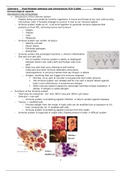
Summary Food Related Allergies and Intolerances FCH-21806 Period 2
Immunological aspects
Introduction into immunology
• Introduction of the immune system
- Despite being surrounded by harmful organisms toxins and threat of our own cells turning
into tumour cells humans manage to survive due to our immune system
- Immune system made up of: all work together to generate immune response that
protects us from MO, removing toxins and tumours
o Organs
o Tissues
o Cells
o Molecules
- Immune system can (within 10 days):
o Identify a threat
o Mount attack
o Eliminate pathogen
o Remember
- Immune system has prolonged reactions = chronic inflammation
- Self and non-self cells
o Key to healthy immune system is ability to distinguish
between body’s own cells (self) and foreign cells (non-
self)
o Body has cells that carry distinctive self-marker
molecules and when immune defenders encounters
cells/organisms carrying markers that say foreign attack
o Antigen: anything that can trigger this immune response
▪ Microbe, virus, part of microbe or tissues/cells from other persons
▪ The immune system can mistake self for non-self launch attack against
body’s own cells/tissues autoimmune disease
▪ When immune system respond to seemingly harmless foreign substance
allergy antigen is called allergen
• Functions of the immune system
- Total area for protection: 2m2 skin, 80m2 lung and 350m2 gut tissue
- Infection = non-self
o Immune system is protecting against infection help to protect against diseases
- Tumour = modified-self
o Provoke danger from the inside body cells can be modified due to exposure to UV,
toxic compounds, air modified self-cells
o Immune system is protecting against tumours from the inside
- Immune system is organized in single cells, floating around in body difficult system
1
,• The innate immune system
- Cells that are non specific
- Can distinguish self and non self cells but not
distinguish invaders from each other
- Feverishly fast response
o Within minutes to hours
o Causes fevers
- No memory associated
- Also includes:
o Chemical barriers
▪ Lysozymes in tears
▪ Low pH in stomach
o Physical barriers
▪ Epithelium in skin & gut
▪ Cilia in airways
- Cells: dendritic cells, NK, neutrophils, macrophages
- Molecules: acute phase proteins, anti-microbial substances, cytokines, chemokines,
complement enzymes
- Characteristics: rapid kinetics, omnipresence (present everywhere in body)
• The adaptive immune system
- Highly specific for each invader can identify them by unique parts/antigens can
distinguish between friendly and potential deadly ones
- Has to be primed/activated differentiate into right cell
- Disadvantage: Takes a few weeks
- Advantage: Immunologic memory
- Cells that are activated in adaptive immune response
undergo clonal expansion massively proliferate each
time adaptive immune cells see same pathogen
massively proliferate again stronger and faster response
each time that pathogen comes around
- Once destroyed most of colonially cells die off = called
clonal deletion
o Some survives as memory cells
- Cells: B- and T-lymphocytes, macrophages, dendritic cells
- Molecules: cytokines, antibody molecules
- Characteristics: specificity, amplification, memory
2
,• The phases of immunity
• Difference innate and adaptive immune system how they
recognize cells
- Adaptive: recognizes pathogen by specific antigen
- Innate: Pathogen Associated Molecular Patterns (PAMP)
o Include things like:
▪ Lipopolysaccharides (LPS)
▪ Lipoproteins
▪ Peptidoglycans
▪ Lipoteichoic acid (LTA)
o Found in pathogenic and non-pathogenic organisms
o Essential for survival of all pathogens because of
PAMP pathogen can be eliminated by immune
response
o Innate immune cells have special receptors to identify PAMP PRR (Pathogen
recognition receptors) 3 types:
▪ Intracellularly
➢ Pathogen inside the cell cell will release cytokines or cell will die
➢ NOD-like receptors
▪ Extracellularly (on cell membrane) 2 options after binding PRR and PAMP:
➢ Engulf pathogen release acidic lysosomal content into pathogen
destroying pathogen
❖ Often with mannose and scavenger receptors
➢ Send signal to nucleus to secrete cytokines or interferons
❖ Toll-like receptors (signalling receptor)
▪ Secreted PRR (by liver and immune cells)
➢ Complementary receptors induce complement cascade
o All PRRs trigger innate immune response obstinate pathogen activate
complement protein phagocytize pathogen activate inflammatory mediators
secrete cytokines, pro-inflammatory cytokines
3
, o Big blue cell (macrophage) interacting with virus/bacterium/parasite on cell surface
of these organisms there are molecules (Pathogen Associated Molecular Patterns)
essential to effect host cell cannot afford to mutate (loose capacity to infect cells)
immune system can recognize them by specific receptors (Pattern Recognition
Receptors) (able to recognize)
o TRL2 = recognizes gram positive bacteria not specific, but the total group
o TRL4 = recognizes gram negative bacteria not specific, but the total group
• Crucial role of dendritic cells
- Cell type that shows many extensions and is particularly present in those places where
antigens comes in (nose, lungs, skin, gut)
- First cells that take up antigen to activate immune response immune system can respond
to these fragments of these organisms/virus/micro organisms
- Connects both systems: innate and adaptive
4
Immunological aspects
Introduction into immunology
• Introduction of the immune system
- Despite being surrounded by harmful organisms toxins and threat of our own cells turning
into tumour cells humans manage to survive due to our immune system
- Immune system made up of: all work together to generate immune response that
protects us from MO, removing toxins and tumours
o Organs
o Tissues
o Cells
o Molecules
- Immune system can (within 10 days):
o Identify a threat
o Mount attack
o Eliminate pathogen
o Remember
- Immune system has prolonged reactions = chronic inflammation
- Self and non-self cells
o Key to healthy immune system is ability to distinguish
between body’s own cells (self) and foreign cells (non-
self)
o Body has cells that carry distinctive self-marker
molecules and when immune defenders encounters
cells/organisms carrying markers that say foreign attack
o Antigen: anything that can trigger this immune response
▪ Microbe, virus, part of microbe or tissues/cells from other persons
▪ The immune system can mistake self for non-self launch attack against
body’s own cells/tissues autoimmune disease
▪ When immune system respond to seemingly harmless foreign substance
allergy antigen is called allergen
• Functions of the immune system
- Total area for protection: 2m2 skin, 80m2 lung and 350m2 gut tissue
- Infection = non-self
o Immune system is protecting against infection help to protect against diseases
- Tumour = modified-self
o Provoke danger from the inside body cells can be modified due to exposure to UV,
toxic compounds, air modified self-cells
o Immune system is protecting against tumours from the inside
- Immune system is organized in single cells, floating around in body difficult system
1
,• The innate immune system
- Cells that are non specific
- Can distinguish self and non self cells but not
distinguish invaders from each other
- Feverishly fast response
o Within minutes to hours
o Causes fevers
- No memory associated
- Also includes:
o Chemical barriers
▪ Lysozymes in tears
▪ Low pH in stomach
o Physical barriers
▪ Epithelium in skin & gut
▪ Cilia in airways
- Cells: dendritic cells, NK, neutrophils, macrophages
- Molecules: acute phase proteins, anti-microbial substances, cytokines, chemokines,
complement enzymes
- Characteristics: rapid kinetics, omnipresence (present everywhere in body)
• The adaptive immune system
- Highly specific for each invader can identify them by unique parts/antigens can
distinguish between friendly and potential deadly ones
- Has to be primed/activated differentiate into right cell
- Disadvantage: Takes a few weeks
- Advantage: Immunologic memory
- Cells that are activated in adaptive immune response
undergo clonal expansion massively proliferate each
time adaptive immune cells see same pathogen
massively proliferate again stronger and faster response
each time that pathogen comes around
- Once destroyed most of colonially cells die off = called
clonal deletion
o Some survives as memory cells
- Cells: B- and T-lymphocytes, macrophages, dendritic cells
- Molecules: cytokines, antibody molecules
- Characteristics: specificity, amplification, memory
2
,• The phases of immunity
• Difference innate and adaptive immune system how they
recognize cells
- Adaptive: recognizes pathogen by specific antigen
- Innate: Pathogen Associated Molecular Patterns (PAMP)
o Include things like:
▪ Lipopolysaccharides (LPS)
▪ Lipoproteins
▪ Peptidoglycans
▪ Lipoteichoic acid (LTA)
o Found in pathogenic and non-pathogenic organisms
o Essential for survival of all pathogens because of
PAMP pathogen can be eliminated by immune
response
o Innate immune cells have special receptors to identify PAMP PRR (Pathogen
recognition receptors) 3 types:
▪ Intracellularly
➢ Pathogen inside the cell cell will release cytokines or cell will die
➢ NOD-like receptors
▪ Extracellularly (on cell membrane) 2 options after binding PRR and PAMP:
➢ Engulf pathogen release acidic lysosomal content into pathogen
destroying pathogen
❖ Often with mannose and scavenger receptors
➢ Send signal to nucleus to secrete cytokines or interferons
❖ Toll-like receptors (signalling receptor)
▪ Secreted PRR (by liver and immune cells)
➢ Complementary receptors induce complement cascade
o All PRRs trigger innate immune response obstinate pathogen activate
complement protein phagocytize pathogen activate inflammatory mediators
secrete cytokines, pro-inflammatory cytokines
3
, o Big blue cell (macrophage) interacting with virus/bacterium/parasite on cell surface
of these organisms there are molecules (Pathogen Associated Molecular Patterns)
essential to effect host cell cannot afford to mutate (loose capacity to infect cells)
immune system can recognize them by specific receptors (Pattern Recognition
Receptors) (able to recognize)
o TRL2 = recognizes gram positive bacteria not specific, but the total group
o TRL4 = recognizes gram negative bacteria not specific, but the total group
• Crucial role of dendritic cells
- Cell type that shows many extensions and is particularly present in those places where
antigens comes in (nose, lungs, skin, gut)
- First cells that take up antigen to activate immune response immune system can respond
to these fragments of these organisms/virus/micro organisms
- Connects both systems: innate and adaptive
4