

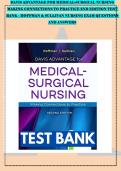
DAVIS ADVANTAGE FOR MEDICAL-SURGICAL NURSING
MAKING CONNECTIONS TO PRACTICE 2ND EDITION TEST
BANK – HOFFMAN & SULLIVAN NURSING EXAM QUESTIONS
AND ANSWERS
,Davis Advantage for Medical-Surgical Nursing: Making Connections to Practice, 2nd Edition
Authors: Janice J. Hoffman & Nancy J. Sullivan
Test Bank – Table of Contents
Unit I: Professional Foundations of Medical-Surgical Nursing
1. Foundations for Medical-Surgical Nursing
2. Interprofessional Collaboration and Care Coordination
3. Cultural Considerations
4. Ethical Concepts
5. Palliative Care and End-of-Life Issues
Unit II: Clinical Principles of Medical-Surgical Nursing
6. Geriatric Implications for Medical-Surgical Nursing
7. Oxygen Therapy Management
8. Fluid and Electrolyte Management
9. Acid-Base Balance
10. Overview of Infusion Therapies
11. Pain Management
12. Complementary and Alternative Care Initiatives
13. Overview of Cancer Care
14. Overview of Shock and Sepsis
Unit III: Managing the Surgical Experience
15. Priorities for the Preoperative Patient
16. Priorities for the Intraoperative Patient
17. Priorities for the Postoperative Patient
Unit IV: Promoting Health in Patients With Immune Disorders
18. Assessment of Immune Function
19. Coordinating Care for Patients With Immune Disorders
20. Coordinating Care for Patients With Connective Tissue Disorders
21. Coordinating Care for Patients With Multidrug-Resistant Organisms
Unit V: Promoting Health in Patients With Integumentary Disorders
22. Assessment of Integumentary Function
23. Coordinating Care for Patients With Integumentary Disorders
24. Coordinating Care for Patients With Burns
Unit VI: Promoting Health in Patients With Hematologic Disorders
25. Assessment of Hematologic Function
26. Coordinating Care for Patients With Hematologic Disorders
,Unit VII: Promoting Health in Patients With Cardiovascular Disorders
27. Assessment of Cardiovascular Function
28. Coordinating Care for Patients With Hypertension
29. Coordinating Care for Patients With Coronary Artery Disease
30. Coordinating Care for Patients With Cardiac Dysrhythmias
31. Coordinating Care for Patients With Heart Failure
32. Coordinating Care for Patients With Valvular, Inflammatory, and Infectious Cardiac Disorders
33. Coordinating Care for Patients With Peripheral Vascular Disorders
Unit VIII: Promoting Health in Patients With Respiratory Disorders
34. Assessment of Respiratory Function
35. Coordinating Care for Patients With Upper Respiratory Disorders
36. Coordinating Care for Patients With Lower Respiratory Disorders
37. Coordinating Care for Patients With Obstructive Pulmonary Disorders
38. Coordinating Care for Patients With Restrictive Pulmonary Disorders
Unit IX: Promoting Health in Patients With Neurologic Disorders
39. Assessment of Neurologic Function
40. Coordinating Care for Patients With Brain Disorders
41. Coordinating Care for Patients With Peripheral Nervous System Disorders
42. Coordinating Care for Patients With Spinal Cord Disorders
Unit X: Promoting Health in Patients With Musculoskeletal Disorders
43. Assessment of Musculoskeletal Function
44. Coordinating Care for Patients With Musculoskeletal Trauma
45. Coordinating Care for Patients With Musculoskeletal Disorders
Unit XI: Promoting Health in Patients With Gastrointestinal Disorders
46. Assessment of Gastrointestinal Function
47. Coordinating Care for Patients With Oral, Esophageal, and Gastric Disorders
48. Coordinating Care for Patients With Intestinal Disorders
49. Coordinating Care for Patients With Hepatic, Biliary, and Pancreatic Disorders
Unit XII: Promoting Health in Patients With Endocrine Disorders
50. Assessment of Endocrine Function
51. Coordinating Care for Patients With Diabetes Mellitus
52. Coordinating Care for Patients With Pituitary, Thyroid, Parathyroid, and Adrenal Disorders
Unit XIII: Promoting Health in Patients With Urinary Disorders
53. Assessment of Urinary Function
, 54. Coordinating Care for Patients With Urinary Disorders
Unit XIV: Promoting Health in Patients With Reproductive Disorders
55. Assessment of Reproductive Function
56. Coordinating Care for Patients With Female Reproductive Disorders
57. Coordinating Care for Patients With Male Reproductive Disorders
58. Coordinating Care for Patients With Breast Disorders
Unit XV: Emergency and Disaster Management
59. Emergency Preparedness and Disaster Management
60. Emergency and Trauma Nursing
Unit XVI: Special Topics
61. Substance Use Disorders
62. Mental Health Considerations in Medical-Surgical Nursing
63. Rehabilitation and Restorative Care
64. Care of the Bariatric Patient
65. Transplantation and Organ Donation
66. Genetics and Genomics in Medical-Surgical Nursing
67. Care of Patients Receiving Blood and Blood Products
68. Integrative and Complementary Therapies in Acute Care
69. Patient Safety and Quality Improvement
70. Clinical Judgment and Prioritization
71. Comprehensive Review and NCLEX®-Style Application Questions
MAKING CONNECTIONS TO PRACTICE 2ND EDITION TEST
BANK – HOFFMAN & SULLIVAN NURSING EXAM QUESTIONS
AND ANSWERS
,Davis Advantage for Medical-Surgical Nursing: Making Connections to Practice, 2nd Edition
Authors: Janice J. Hoffman & Nancy J. Sullivan
Test Bank – Table of Contents
Unit I: Professional Foundations of Medical-Surgical Nursing
1. Foundations for Medical-Surgical Nursing
2. Interprofessional Collaboration and Care Coordination
3. Cultural Considerations
4. Ethical Concepts
5. Palliative Care and End-of-Life Issues
Unit II: Clinical Principles of Medical-Surgical Nursing
6. Geriatric Implications for Medical-Surgical Nursing
7. Oxygen Therapy Management
8. Fluid and Electrolyte Management
9. Acid-Base Balance
10. Overview of Infusion Therapies
11. Pain Management
12. Complementary and Alternative Care Initiatives
13. Overview of Cancer Care
14. Overview of Shock and Sepsis
Unit III: Managing the Surgical Experience
15. Priorities for the Preoperative Patient
16. Priorities for the Intraoperative Patient
17. Priorities for the Postoperative Patient
Unit IV: Promoting Health in Patients With Immune Disorders
18. Assessment of Immune Function
19. Coordinating Care for Patients With Immune Disorders
20. Coordinating Care for Patients With Connective Tissue Disorders
21. Coordinating Care for Patients With Multidrug-Resistant Organisms
Unit V: Promoting Health in Patients With Integumentary Disorders
22. Assessment of Integumentary Function
23. Coordinating Care for Patients With Integumentary Disorders
24. Coordinating Care for Patients With Burns
Unit VI: Promoting Health in Patients With Hematologic Disorders
25. Assessment of Hematologic Function
26. Coordinating Care for Patients With Hematologic Disorders
,Unit VII: Promoting Health in Patients With Cardiovascular Disorders
27. Assessment of Cardiovascular Function
28. Coordinating Care for Patients With Hypertension
29. Coordinating Care for Patients With Coronary Artery Disease
30. Coordinating Care for Patients With Cardiac Dysrhythmias
31. Coordinating Care for Patients With Heart Failure
32. Coordinating Care for Patients With Valvular, Inflammatory, and Infectious Cardiac Disorders
33. Coordinating Care for Patients With Peripheral Vascular Disorders
Unit VIII: Promoting Health in Patients With Respiratory Disorders
34. Assessment of Respiratory Function
35. Coordinating Care for Patients With Upper Respiratory Disorders
36. Coordinating Care for Patients With Lower Respiratory Disorders
37. Coordinating Care for Patients With Obstructive Pulmonary Disorders
38. Coordinating Care for Patients With Restrictive Pulmonary Disorders
Unit IX: Promoting Health in Patients With Neurologic Disorders
39. Assessment of Neurologic Function
40. Coordinating Care for Patients With Brain Disorders
41. Coordinating Care for Patients With Peripheral Nervous System Disorders
42. Coordinating Care for Patients With Spinal Cord Disorders
Unit X: Promoting Health in Patients With Musculoskeletal Disorders
43. Assessment of Musculoskeletal Function
44. Coordinating Care for Patients With Musculoskeletal Trauma
45. Coordinating Care for Patients With Musculoskeletal Disorders
Unit XI: Promoting Health in Patients With Gastrointestinal Disorders
46. Assessment of Gastrointestinal Function
47. Coordinating Care for Patients With Oral, Esophageal, and Gastric Disorders
48. Coordinating Care for Patients With Intestinal Disorders
49. Coordinating Care for Patients With Hepatic, Biliary, and Pancreatic Disorders
Unit XII: Promoting Health in Patients With Endocrine Disorders
50. Assessment of Endocrine Function
51. Coordinating Care for Patients With Diabetes Mellitus
52. Coordinating Care for Patients With Pituitary, Thyroid, Parathyroid, and Adrenal Disorders
Unit XIII: Promoting Health in Patients With Urinary Disorders
53. Assessment of Urinary Function
, 54. Coordinating Care for Patients With Urinary Disorders
Unit XIV: Promoting Health in Patients With Reproductive Disorders
55. Assessment of Reproductive Function
56. Coordinating Care for Patients With Female Reproductive Disorders
57. Coordinating Care for Patients With Male Reproductive Disorders
58. Coordinating Care for Patients With Breast Disorders
Unit XV: Emergency and Disaster Management
59. Emergency Preparedness and Disaster Management
60. Emergency and Trauma Nursing
Unit XVI: Special Topics
61. Substance Use Disorders
62. Mental Health Considerations in Medical-Surgical Nursing
63. Rehabilitation and Restorative Care
64. Care of the Bariatric Patient
65. Transplantation and Organ Donation
66. Genetics and Genomics in Medical-Surgical Nursing
67. Care of Patients Receiving Blood and Blood Products
68. Integrative and Complementary Therapies in Acute Care
69. Patient Safety and Quality Improvement
70. Clinical Judgment and Prioritization
71. Comprehensive Review and NCLEX®-Style Application Questions

