
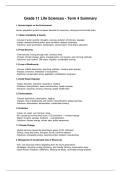
Grade 11 Life Sciences - Term 4 Summary
1. Human Impact on the Environment
Human population growth increases demand for resources, causing environmental strain.
1.1 Water Availability & Quality
- Causes of water scarcity: droughts, overuse, pollution (chemicals, sewage).
- Impact: reduced drinking water, poor sanitation, disease outbreaks.
- Solutions: water purification, desalination, conservation, fixing leaks, education.
1.2 Food Security
- Food security: having enough safe, nutritious food.
- Threats: climate change, pests, overpopulation, soil erosion, poor farming methods.
- Solutions: crop rotation, GM crops, irrigation, sustainable farming.
1.3 Loss of Biodiversity
- Causes: habitat destruction, poaching, pollution, invasive alien species.
- Impacts: extinction, imbalance in ecosystems.
- Solutions: conservation areas, legislation, rehabilitation programs.
1.4 Solid Waste Disposal
- Types: domestic, industrial, hazardous, medical.
- Problems: land pollution, water contamination, health hazards.
- Solutions: recycling, reusing, reducing, proper landfill sites.
1.5 Deforestation
- Causes: agriculture, urbanisation, logging.
- Impacts: loss of biodiversity, soil erosion, desertification, global warming.
- Solutions: afforestation, reforestation, sustainable forestry.
1.6 Pollution
- Types: air, water, soil, thermal, noise.
- Air: caused by burning fossil fuels, CO2 emissions → climate change.
- Water: oil spills, sewage, fertilizers → eutrophication.
- Solutions: cleaner energy, stricter laws, public awareness.
1.7 Climate Change
- Global warming caused by greenhouse gases (CO2, methane).
- Effects: rising sea levels, droughts, floods, extreme weather.
- Solutions: renewable energy, reducing carbon footprint, tree planting.
2. Management & Sustainable Use of Resources
- Aim: use resources without depleting them for future generations.
- Strategies: recycling, energy efficiency, eco-friendly farming, conservation laws.
- South African initiatives: SANParks, Working for Water, renewable energy projects.
1. Human Impact on the Environment
Human population growth increases demand for resources, causing environmental strain.
1.1 Water Availability & Quality
- Causes of water scarcity: droughts, overuse, pollution (chemicals, sewage).
- Impact: reduced drinking water, poor sanitation, disease outbreaks.
- Solutions: water purification, desalination, conservation, fixing leaks, education.
1.2 Food Security
- Food security: having enough safe, nutritious food.
- Threats: climate change, pests, overpopulation, soil erosion, poor farming methods.
- Solutions: crop rotation, GM crops, irrigation, sustainable farming.
1.3 Loss of Biodiversity
- Causes: habitat destruction, poaching, pollution, invasive alien species.
- Impacts: extinction, imbalance in ecosystems.
- Solutions: conservation areas, legislation, rehabilitation programs.
1.4 Solid Waste Disposal
- Types: domestic, industrial, hazardous, medical.
- Problems: land pollution, water contamination, health hazards.
- Solutions: recycling, reusing, reducing, proper landfill sites.
1.5 Deforestation
- Causes: agriculture, urbanisation, logging.
- Impacts: loss of biodiversity, soil erosion, desertification, global warming.
- Solutions: afforestation, reforestation, sustainable forestry.
1.6 Pollution
- Types: air, water, soil, thermal, noise.
- Air: caused by burning fossil fuels, CO2 emissions → climate change.
- Water: oil spills, sewage, fertilizers → eutrophication.
- Solutions: cleaner energy, stricter laws, public awareness.
1.7 Climate Change
- Global warming caused by greenhouse gases (CO2, methane).
- Effects: rising sea levels, droughts, floods, extreme weather.
- Solutions: renewable energy, reducing carbon footprint, tree planting.
2. Management & Sustainable Use of Resources
- Aim: use resources without depleting them for future generations.
- Strategies: recycling, energy efficiency, eco-friendly farming, conservation laws.
- South African initiatives: SANParks, Working for Water, renewable energy projects.


