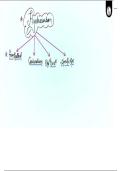
The Reproductive Systems
Female:
Fallopian
Tube/
Oviduct Uterine Horn
Fimbria
e
Uteru
s
Ovary
Cervix Endometriu
m
Vagin
a
Component Description
Vagina A muscular, tubular part of the female reproductive
system which connects to the cervix. It is responsible for
being the passageway for the exit of menstrual blood,
receiving the penis during sexual reproduction and
childbirth. To prevent infection, the vagina maintains an
acidic environment and uses a self-cleaning method
where the mucosal lining sheds and replaces old cells.
Cervix The cylindrical, narrow, lower part of the uterus which
connects the uterine cavity to the vaginal canal. It acts
as a passage for sperm to reach the uterus for
fertilisation to take place. During the menstrual cycle, the
cervix also produces mucus which can change in
consistency to either facilitate or impede sperm
movement. The mucus also acts as a protective barrier
which helps to prevent infections from entering the
1
, uterus.
Endometriu The inner lining of the uterus which provides a site for an
m embryo to implant during the early stages of conception
as well as facilitate the shedding of its top lining in the
absence of implantation. The endometrium is made of
two layers which are the stratum functionalis and stratum
basalis. The stratum functionalis is the upper layer of the
endometrium which thickens and becomes rich in blood
vessels and glands during the menstrual cycle by
responding to oestrogen and progesterone. If no
implantation occurs, this is the layer that is shed as
menstruation. The stratum basalis is the deeper layer,
and its role is to regenerate the stratum functionalis after
each menstruation.
Uterus A muscular organ in the pelvis is responsible for
thickening in preparation for a potential pregnancy,
housing and nourishing a foetus, and shedding if
pregnancy does not occur. The uterus consists of 3
layers:
The Perimetrium, which is the outer layer.
The Myometrium, which is the thick and muscular middle
layer. It is responsible for powerful contractions during
labour and menstruation.
The Endometrium, which is the inner lining.
Ovary Two small round organs located on either side of the
uterus. Their responsibility is to produce eggs (which are
also known as oocytes). The ovaries also produce the
hormones oestrogen and progesterone which help to
regulate the menstrual cycle.
Egg/ Ovum The female gamete which is responsible for carrying
genetic information of the female. The ovum is
characterised by its large spherical structure, containing
crucial components such as the corona radiata and zona
pellucida.
Fallopian Narrow, muscular tubes which connect the ovaries to the
Tube/ uterus and help to transport the ovum towards the uterus
Oviduct using peristaltic contractions of its muscular wall. The
oviduct is also responsible for providing a site for
fertilisation, by capturing an ovum using finger like
projections called fimbriae and facilitating the zygote (a
fertilised egg) for implantation.
Fimbriae Ciliated, finger like projections at the end of each
2
, fallopian tube that capture an ovulated egg from the
ovary and guide it into a fallopian tube by swaying in a
uniform pattern to generate currents. This process is
essential as it ensures the successful entry of the ovum
into the fallopian tube where it can potentially encounter
sperm for fertilisation by travelling into the uterus.
Uterine horn Extended portions located on the upper part of each end
of the uterus that connect to the fallopian tubes. It is the
pathway for where the zygote travels from the fallopian
tubes into the uterus for implantation.
Vas Deferens
Seminal
vesicle
Erectile tissue Prostate gland
Cowper’s gland
Penis
Epididymis
Testes
Scrotum
Slideshare.net, May 2011
Male:
Compone Description
nt
Penis Male reproductive organ that is used both for urination and
sexual reproduction. During sexual reproduction, the
erectile tissue, which is in the penis, fills with blood,
engorging the penis, causing it to become erect. This is
important for successful penetration of the vagina and the
passage of sperm into the cervix.
Additionally, the urethra which runs through the penis
allows for the exit of urine and sperm during ejaculation.
Erectile A specialised structure within the penis composed of three
tissue spongy spaces/cylinders which can become filled with
3
Female:
Fallopian
Tube/
Oviduct Uterine Horn
Fimbria
e
Uteru
s
Ovary
Cervix Endometriu
m
Vagin
a
Component Description
Vagina A muscular, tubular part of the female reproductive
system which connects to the cervix. It is responsible for
being the passageway for the exit of menstrual blood,
receiving the penis during sexual reproduction and
childbirth. To prevent infection, the vagina maintains an
acidic environment and uses a self-cleaning method
where the mucosal lining sheds and replaces old cells.
Cervix The cylindrical, narrow, lower part of the uterus which
connects the uterine cavity to the vaginal canal. It acts
as a passage for sperm to reach the uterus for
fertilisation to take place. During the menstrual cycle, the
cervix also produces mucus which can change in
consistency to either facilitate or impede sperm
movement. The mucus also acts as a protective barrier
which helps to prevent infections from entering the
1
, uterus.
Endometriu The inner lining of the uterus which provides a site for an
m embryo to implant during the early stages of conception
as well as facilitate the shedding of its top lining in the
absence of implantation. The endometrium is made of
two layers which are the stratum functionalis and stratum
basalis. The stratum functionalis is the upper layer of the
endometrium which thickens and becomes rich in blood
vessels and glands during the menstrual cycle by
responding to oestrogen and progesterone. If no
implantation occurs, this is the layer that is shed as
menstruation. The stratum basalis is the deeper layer,
and its role is to regenerate the stratum functionalis after
each menstruation.
Uterus A muscular organ in the pelvis is responsible for
thickening in preparation for a potential pregnancy,
housing and nourishing a foetus, and shedding if
pregnancy does not occur. The uterus consists of 3
layers:
The Perimetrium, which is the outer layer.
The Myometrium, which is the thick and muscular middle
layer. It is responsible for powerful contractions during
labour and menstruation.
The Endometrium, which is the inner lining.
Ovary Two small round organs located on either side of the
uterus. Their responsibility is to produce eggs (which are
also known as oocytes). The ovaries also produce the
hormones oestrogen and progesterone which help to
regulate the menstrual cycle.
Egg/ Ovum The female gamete which is responsible for carrying
genetic information of the female. The ovum is
characterised by its large spherical structure, containing
crucial components such as the corona radiata and zona
pellucida.
Fallopian Narrow, muscular tubes which connect the ovaries to the
Tube/ uterus and help to transport the ovum towards the uterus
Oviduct using peristaltic contractions of its muscular wall. The
oviduct is also responsible for providing a site for
fertilisation, by capturing an ovum using finger like
projections called fimbriae and facilitating the zygote (a
fertilised egg) for implantation.
Fimbriae Ciliated, finger like projections at the end of each
2
, fallopian tube that capture an ovulated egg from the
ovary and guide it into a fallopian tube by swaying in a
uniform pattern to generate currents. This process is
essential as it ensures the successful entry of the ovum
into the fallopian tube where it can potentially encounter
sperm for fertilisation by travelling into the uterus.
Uterine horn Extended portions located on the upper part of each end
of the uterus that connect to the fallopian tubes. It is the
pathway for where the zygote travels from the fallopian
tubes into the uterus for implantation.
Vas Deferens
Seminal
vesicle
Erectile tissue Prostate gland
Cowper’s gland
Penis
Epididymis
Testes
Scrotum
Slideshare.net, May 2011
Male:
Compone Description
nt
Penis Male reproductive organ that is used both for urination and
sexual reproduction. During sexual reproduction, the
erectile tissue, which is in the penis, fills with blood,
engorging the penis, causing it to become erect. This is
important for successful penetration of the vagina and the
passage of sperm into the cervix.
Additionally, the urethra which runs through the penis
allows for the exit of urine and sperm during ejaculation.
Erectile A specialised structure within the penis composed of three
tissue spongy spaces/cylinders which can become filled with
3