

CONSUMER STUDIES
- Grade 11 -
DESIGN ELEMENTS & PRINCIPLES
- Colour as a Design Element -
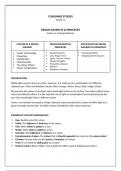
COLOUR AS A DESIGN DESIGN ELEMENTS & APPLICATION OF DESIGN
ELEMENT PRINCIPLES ELEMENTS & PRINCIPLES
Colour Terminology Design Elements Choosing Clothing
Properties Line, Shape, Form Designing Interior Spaces
Classification Space, Texture, Colour
Characteristics Design Principles
Proportion, Balance
The Colour Wheel
Rhythm
Colour Combinations
Emphasis, Harmony
INTRODUCTION
White light seems to have no colour. However, it is made up of a combination of 7 different
coloured rays. These are Rainbow Colours (Red, Orange, Yellow, Green, Blue, Indigo, Violet)
We perceive the colour of an object when white light shines on its surface. The object reflects some
colour and absorbs others. It is the rejected rays of light or wavelengths that are picked up by the
eye. Each wavelength forms a different colour
Colour is an element or property of light. Spectral colours produced by a beam of white light as it
passes through a prism Over 10 million colours identified on the colour spectrum
IMPORTANT COLOUR TERMINOLOGY
Hue: Another word for colour
Value: The lightness or darkness of the colour
Tint: When white is added to a hue
Shade: When black is added to a hue
Intensity: The brightness or dullness of a colour
Complementary Colour: The colour that is directly opposite the colour on the colour wheel
Chroma: Chroma refers to the purity or intensity of a colour
Tone: It is created by adding grey to a colour
Neutral colours: Black, White, Grey and Brown (Often used as Background Colour)
,PROPERTIES OF COLOUR:
VALUE
Characteristic of Colour
Value: Lightness or Darkness of Colour
Lightness or Darkness is created through Tints and Shadows
Tints: Made by adding White
Shades: Made by adding Black
INTENSITY OF COLOUR
Intensity or Chroma refers to the Purity of a Colour
Highest Intensity = Brightest and Purest
To Lower Intensity = Add Grey or the Complement of that Hue
CLASSIFICATION OF COLOUR:
PRIMARY COLOURS
Red, Blue, Yellow
Cannot be made by combining colours
SECONDARY COLOURS
Two Primary Colours Combined
Purple = Blue + Red
Orange = Red + Yellow
Green = Blue + Yellow
TERTIARY COLOURS
Intermediate colours
Combining a primary colour and a secondary colour
They are named after the two colours used.
The name of the primary colour used is always used first when naming the colour.
Yellow-orange, yellow-green
Blue-green, blue-purple
Red-purple, red-orange
, WARM COLOURS
Red and Yellow side of Colour Wheel
Action Colours, Feel Happy and Excited
Objects appear Closer and Larger
Makes room feel Smaller
COOL COLOURS
Blue and the colours near blue are seen as cool colours
Relaxing Colours
Make things seem Further Away and Smaller
Makes room feel Larger
COLOUR SYSTEMS/THEORIES:
1. Brewster (Prang System)
2. Munsell System
3. Ostwald System
BREWSTER (PRANG SYSTEM)
Standard Colour Wheel
Based on 3 Primary, 3 Secondary and 6 Tertiary Hues
12 Colours
MUNSELL SYSTEM
Hue = H
100 Colours
Black Value (0) Purest White Value (10)
Chromatic Colours: Red, Yellow, Green, Blue and Purple
The Fraction: Top Number (Value) Bottom Number (Chroma)
Describes and Analyses Colour in terms of Hue, Value and Chroma
OSTWALD SYSTEM
24 Hues, 28 Variations (672 Hues and 8 Neutrals)
The Configuration is a 3D Double Cone
Pure White Tops and Black at the bottom
THE COLOUR WHEEL
- Grade 11 -
DESIGN ELEMENTS & PRINCIPLES
- Colour as a Design Element -
COLOUR AS A DESIGN DESIGN ELEMENTS & APPLICATION OF DESIGN
ELEMENT PRINCIPLES ELEMENTS & PRINCIPLES
Colour Terminology Design Elements Choosing Clothing
Properties Line, Shape, Form Designing Interior Spaces
Classification Space, Texture, Colour
Characteristics Design Principles
Proportion, Balance
The Colour Wheel
Rhythm
Colour Combinations
Emphasis, Harmony
INTRODUCTION
White light seems to have no colour. However, it is made up of a combination of 7 different
coloured rays. These are Rainbow Colours (Red, Orange, Yellow, Green, Blue, Indigo, Violet)
We perceive the colour of an object when white light shines on its surface. The object reflects some
colour and absorbs others. It is the rejected rays of light or wavelengths that are picked up by the
eye. Each wavelength forms a different colour
Colour is an element or property of light. Spectral colours produced by a beam of white light as it
passes through a prism Over 10 million colours identified on the colour spectrum
IMPORTANT COLOUR TERMINOLOGY
Hue: Another word for colour
Value: The lightness or darkness of the colour
Tint: When white is added to a hue
Shade: When black is added to a hue
Intensity: The brightness or dullness of a colour
Complementary Colour: The colour that is directly opposite the colour on the colour wheel
Chroma: Chroma refers to the purity or intensity of a colour
Tone: It is created by adding grey to a colour
Neutral colours: Black, White, Grey and Brown (Often used as Background Colour)
,PROPERTIES OF COLOUR:
VALUE
Characteristic of Colour
Value: Lightness or Darkness of Colour
Lightness or Darkness is created through Tints and Shadows
Tints: Made by adding White
Shades: Made by adding Black
INTENSITY OF COLOUR
Intensity or Chroma refers to the Purity of a Colour
Highest Intensity = Brightest and Purest
To Lower Intensity = Add Grey or the Complement of that Hue
CLASSIFICATION OF COLOUR:
PRIMARY COLOURS
Red, Blue, Yellow
Cannot be made by combining colours
SECONDARY COLOURS
Two Primary Colours Combined
Purple = Blue + Red
Orange = Red + Yellow
Green = Blue + Yellow
TERTIARY COLOURS
Intermediate colours
Combining a primary colour and a secondary colour
They are named after the two colours used.
The name of the primary colour used is always used first when naming the colour.
Yellow-orange, yellow-green
Blue-green, blue-purple
Red-purple, red-orange
, WARM COLOURS
Red and Yellow side of Colour Wheel
Action Colours, Feel Happy and Excited
Objects appear Closer and Larger
Makes room feel Smaller
COOL COLOURS
Blue and the colours near blue are seen as cool colours
Relaxing Colours
Make things seem Further Away and Smaller
Makes room feel Larger
COLOUR SYSTEMS/THEORIES:
1. Brewster (Prang System)
2. Munsell System
3. Ostwald System
BREWSTER (PRANG SYSTEM)
Standard Colour Wheel
Based on 3 Primary, 3 Secondary and 6 Tertiary Hues
12 Colours
MUNSELL SYSTEM
Hue = H
100 Colours
Black Value (0) Purest White Value (10)
Chromatic Colours: Red, Yellow, Green, Blue and Purple
The Fraction: Top Number (Value) Bottom Number (Chroma)
Describes and Analyses Colour in terms of Hue, Value and Chroma
OSTWALD SYSTEM
24 Hues, 28 Variations (672 Hues and 8 Neutrals)
The Configuration is a 3D Double Cone
Pure White Tops and Black at the bottom
THE COLOUR WHEEL


