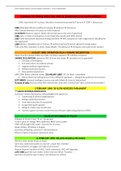
REPRODUCTION IN VERTEBRATES
Introduction: OVIPARY, OVOVIVIPARY AND VIVIPARY
Reproduction is a biological process during which a living organism produces offspring
(children). It is a characteristic of all living organisms and Vertebrates are animals having a a Ovipary
backbone. A successful reproduction is very important to ensure the continued existence Ovipary shows that eggs hatch outside the body. In oviparous animals, the embryo
of the species. Different animals use various reproductive strategies to increase their develops in an egg outside the female’s body.
reproductive success in the environment. There are two main types of reproductive
strategies, the r-strategy and k-strategy. Oviparous aquatic animals
• Fertilisation takes place externally in the water.
The r-strategy
• The developing embryo is surrounded and protected by a jelly-like layer.
• Some animals expand more energy in giving birth to many offspring, but spend little • Large number of gametes are produced.
time in parental care. • These animals include fishes and amphibians.
• Many of these offspring will die before the adulthood, but enough number will
survive to continue the species. Oviparous terrestrial animals
• Fertilisation takes place internally.
The k-strategy
• The developing embryo is surrounded and protected by shell.
• Some animals expand less energy in giving birth to fewer offspring but spend more • Fewer number of gametes are produced.
time on parental care. • These animals include birds, mammals and some reptiles.
• Many of these offspring will survive to adulthood.
b Ovovivipary
FERTILISATION
Ovovivipary shows that eggs hatch inside the body. In ovovivipary, the embryo develops
There are two fertilisation strategies, the External and Internal fertilisations. in an egg inside the female’s body.
The external fertilisation • Internal fertilisation takes place.
• The external fertilisation takes place outside the female’s body.
• The embryo is surrounded by thin membranous shell inside the female’s bode.
• It occurs most on the aquatic animals such as fishes and amphibians (animals that
• Fewer number of gametes are produced.
lives both on land and water such as frogs).
• These animals include snakes and some sharks.
• Very little behaviour is required between male and female.
• This type of fertilisation requires water for prevent gametes (egg and sperm cell) c Vivipary
from drying out.
Vivipary shows that the offspring are born alive.
The internal fertilisation
• The internal fertilisation takes place inside the female’s body • Internal fertilisation takes place.
• It occurs mostly on insects and terrestrial animals such as humans, cow, etc. • The fertilised egg develop into an embryo without the protection of a shell.
• There is large cooperative between male and female. • Fewer number of gametes are produced.
• This type of fertilisation does not require water • These animal include most mammals and certain sharks
Introduction: OVIPARY, OVOVIVIPARY AND VIVIPARY
Reproduction is a biological process during which a living organism produces offspring
(children). It is a characteristic of all living organisms and Vertebrates are animals having a a Ovipary
backbone. A successful reproduction is very important to ensure the continued existence Ovipary shows that eggs hatch outside the body. In oviparous animals, the embryo
of the species. Different animals use various reproductive strategies to increase their develops in an egg outside the female’s body.
reproductive success in the environment. There are two main types of reproductive
strategies, the r-strategy and k-strategy. Oviparous aquatic animals
• Fertilisation takes place externally in the water.
The r-strategy
• The developing embryo is surrounded and protected by a jelly-like layer.
• Some animals expand more energy in giving birth to many offspring, but spend little • Large number of gametes are produced.
time in parental care. • These animals include fishes and amphibians.
• Many of these offspring will die before the adulthood, but enough number will
survive to continue the species. Oviparous terrestrial animals
• Fertilisation takes place internally.
The k-strategy
• The developing embryo is surrounded and protected by shell.
• Some animals expand less energy in giving birth to fewer offspring but spend more • Fewer number of gametes are produced.
time on parental care. • These animals include birds, mammals and some reptiles.
• Many of these offspring will survive to adulthood.
b Ovovivipary
FERTILISATION
Ovovivipary shows that eggs hatch inside the body. In ovovivipary, the embryo develops
There are two fertilisation strategies, the External and Internal fertilisations. in an egg inside the female’s body.
The external fertilisation • Internal fertilisation takes place.
• The external fertilisation takes place outside the female’s body.
• The embryo is surrounded by thin membranous shell inside the female’s bode.
• It occurs most on the aquatic animals such as fishes and amphibians (animals that
• Fewer number of gametes are produced.
lives both on land and water such as frogs).
• These animals include snakes and some sharks.
• Very little behaviour is required between male and female.
• This type of fertilisation requires water for prevent gametes (egg and sperm cell) c Vivipary
from drying out.
Vivipary shows that the offspring are born alive.
The internal fertilisation
• The internal fertilisation takes place inside the female’s body • Internal fertilisation takes place.
• It occurs mostly on insects and terrestrial animals such as humans, cow, etc. • The fertilised egg develop into an embryo without the protection of a shell.
• There is large cooperative between male and female. • Fewer number of gametes are produced.
• This type of fertilisation does not require water • These animal include most mammals and certain sharks