© Warona Lekoko, 2024
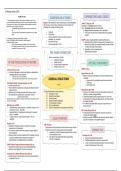
INCOME TAX ACT:
CARRYING ON A TRADE EXPENDITURE AND LOSSES
11. General deductions allowed in determination of taxable income. For the
purpose of determining the taxable income for the year of assessment derived Burgess v CIR: definition of “trade” should be given a wide interpretation Joffe & Co (Pty) Ltd v CIR:
by any person from carrying on any trade there shall be allowed as deductions and includes a “venture” being a transaction in which a person risks Expenditure = voluntary payment of money
from the income of such person so derived
something with the object of making a profit. Loss = involuntary deprivation (not deductible)
(a) expenditure and losses actually incurred in the production of
the Negligent behaviour essential to trade = deductible
income, provided such expenditure and losses are not of a capital → Continuity In this case, the action was not closely linked to the business
nature → Profit motive activities
→ Passive investment income (not actively involved in
23. Deductions not allowed in determination of taxable
income. No deductions shall in any case be made in respect of
generating, e.g., annuities) CSARS v Labat: obligation/liability & expenditure ≠ synonyms.
the following matters, namely → More than one trade Allotment/issuing of shares in exchange for the acquisition of an
(g) any moneys, claimed as a deduction from income derived → Pre trade expenditure (s11A) asset does not qualify as expenditure actually incurred as it does
from trade, to the extent to which such moneys were not laid out or not reduce the assets of the company
expended for the purposes of trade;
Expenditure =action of spending funds,
disbursement/consumption
PRE-TRADE EXPENDITURE
Prior to commencement of trade
Expenditure & losses
IN THE PRODUCTION OF INCOME
Actually incurred
During the year of assessment ACTUALLY INCURRED
Allowed in terms of s11
CSARS v Labat…
Joffe & Co (Pty) Ltd v CIR:
q Payment of damages by construction company to dependants of
Edgars Stores Ltd v CIR:
deceased killed when roof collapsed:
– What action gave rise to expenditure? ▪ Before an expense can be deducted, it must be unconditional (not
– contingent)
Is the action closely connected with the income earning activities?
GENERAL DEDUCTIONS expense can only be actually incurred once an event has
Port Elizabeth Electric Tramway Company Ltd v CIR: taken place
q “closely-connected” test s11(a) matching principle
q Test to determine if expense was necessary for performance/act of
producing income Nasionale Pers Bpk v KBI:
q Expense must be closely connected with the income earned The General Deduction Formula (definition): ▪ Expense is only actually incurred once the condition has been met.
q No requirement for expenditure be “necessarily” incurred – Carrying on a trade Until then, it remains contingent liability
Question that should asked: Expenditure and losses; ▪ Unconditional liability to effect payment during YOA, even if the
Was the expense an ‘inevitable concomitant’, closely linked to the operations of the Actually incurred; actual payment only takes place after year-end, would the expense
business? (unavoidable) During the year of assessment; have been deductible
In the production of income; ▪ If no definite & absolute liability during year to pay an amount ≠
BPSA (Pty) Ltd v CSARS: Not of a capital nature; actually incurred
✓ Recurrent annual royalty payments = expenditure incurred in the Laid out or expended for the purposes of trade (s23g)
production of income – deductible CIR v Golden Dumps (Pty) Ltd:
✓ Expenses that don’t create/preserve capital asset = revenue in ▪ If legal dispute outcome unresolved by year-end, amounts only
nature – deductible incurred when dispute settled
If capital in nature = enduring benefit created – then not
… DUAL PURPOSE
▪ Expense is actually incurred only when the court makes its decision
deductible (but only if the decision is not appealed against)
Provider v COT:
CIR v Nemojim:
☼ Apportionment if dual purpose (to receive income & exempt income)
q Expenditure voluntarily incurred on retirement to encourage
employees to join the employer
q To be incurred, doesn’t mean that a taxpayer is legally obliged to ☼ Expenses incurred for a dual purpose should be assessed DURING YOA
incur the expense closeness of connection between expense incurred + exempt
q Payments made to promote contended staff = deductible, if there is income received/ accrued
Sub-Nigel Ltd v CIR:
then apportion the expenditure relating to generating
a contract in existence with an employee for payment on • Accrual & matching principles irrelevant
retirement/there is an established policy to that effect. “income” as a deduction
• Claimable expenditure is deducted in year incurred
• s11(a) ≠ require that claimable expenditure must have produced
CSARS v Mobile Telephone Networks Holdings (Pty) Ltd: income in the same year it was incurred
q Apportionment must be done on a fair and reasonable basis
q Apportion costs if applied for more than one purpose
Commissioner for SARS v BP South Africa (Pty) Ltd:
q Interest expense incurred to advance income producing activities =
in production of income
, © Warona Lekoko, 2024 SPECIFIC TRANSACTIONS
LAID OUT OR EXPENDED FOR THE
PURPOSES OF TRADE (S23G) Advertising
NOT OF CAPITAL NATURE ✓ Must be (1) incurred in production of income & (2) not capital…
Costs resulting in acquisition of asset of permanent nature = capital
BPSA (Pty) Ltd v CSARS… CSARS v Scribante Construction (Pty) Ltd: nature
Rand Mines Ltd v CIR: Loan attained for trade purposes = production of income provided: Copyrights, inventions, patents, trademarks and know-how
Contracts to manage or provide services = capital in nature, do o sufficiently close link between the expenditure & income- Patent/trademark cost incurred capital in nature (unless dealer in
not generate income thus non-deductible earning operations patent rights incurs it)
Allow a person to provide services which would then in turn Acquisition costs = capital expenditure (unless acquired for
Further the deductions in issue weren’t limited as the only purpose
generate income, if person doesn’t provide the services, no of paying interest on the loan accounts was to borrowing money &
speculation purposes)
income will be earned. Irrespective, fixed/variable: taxpayer expends amount to obtain
re-investing it at a higher rate of interest = thus making profit &
enduring right to use & own
carrying on a trade.
New State Areas Ltd v CIR: ✓ IF repetitive payment to use asset = revenue (deductible)
Operations vs structure-test Interest charged on loan for shareholders ≠ deductible as it is not in ✓ Annual royalty payments for patent/trademark use = deductible
Main test to determine of nature expenditure =capital/revenue the production of income/ no close link to your income earning
Determine whether the expense was incurred: operations Damages and compensation
i. as part of the cost of performing the income-earning ✓ Payments (due to negligent) deductible only if negligence =
operations, “necessary concomitant” of trading purposes
ii. or as part of the cost of establishing/improving/adding to the Warner Lambert SA (Pty) Ltd v CSARS: ✓ Must be close connection: trading (/income-earning) operations &
income-earning Expenses incurred in ensuring that income is not lost is incurred in action causing liability
the production of income.
Education and continuing education
Tests and standards: If doesn’t create/improve/preserve capital asset = revenue in nature Costs incurred in improving knowledge = capital natue / not in
1. True nature of transaction & relationship between expenditure (deductible) production of income
and operations: Income earning operations vs income producing ✓ However in practice, the following is deductible:
structure o fees paid by practicing attorneys for attending courses
2. Creation of enduring benefit for business (conducted by ALSSA)
3. Fixed vs. Floating capital expenditure Fines o fees paid by CAs for attending courses (conducted by SAICA)
4. Once off expenditure Losses: Fire, theft and embezzlement ✓ SARS considers “on their merits” submissions, BUT insists should
5. Nature of business activities ✓ Loss of goods destroyed by fire/theft/lost = deductible be shown as expense closely-linked with earning of income
6. No ‘half-way house’ between capital & revenue nature of ✓ SARS allow loss to extent which cost exceeds amount recoverable
expenditure amount form insurance policy/indemnity Employment and services rendered
Loss of assets destroyed by fire/theft/lost ≠ deductible (capital) ✓ Amounts payable i.r.o service agreement from employer to
Examples: Loss of cash due to management defalcations ≠ deductible employee deductible if general formula met
Obtain goodwill ✓ Loss of cash due to subordinate employees defalcations ≠ - SARS entitled to disallow if excessive in relation to services
Pay for advertisements in local newspaper deductible performed
Acquire PPE - SARS in practice allows deduction of bursaries awarded by
Purchase trading stock Losses: Loans, advancements and guarantees employer if holder’s bursary requires them to continue working for
Costs to improve assets ✓ Loss from amounts made to 3rd parties (if custom of a trade to employer after completion of studies (provided not “unduly
Repairs to assets make loans/advances) = deductible generous”)
Loss from loan made by employer to employee ≠ deductible - Voluntarily awards deductibility depends on circumstances
(capital)
✓ If its custom of trade for employer to make advance to employees Goodwill
to meet expenditure necessarily incurred by them in carrying out Acquisition costs = capital expenditure
their duties = deductible ✓ If purpose derive income/profitable resale = cost deductible
✓ If purpose to derive income = monthly/annual nil affect
Trade: “every profession, trade, business, employment, calling, occupation or venture,
including the letting of any property and use of OR the grant of permission to use any patent… Loss from amounts borrowed from 3rd parties → consider purpose: ✓ Payments of rental nature = deductible (right of use)
design… trademark… copyright… or any other property which is of a similar nature”. ✓ Amounts held on revenue account (as working capital
Expenditure: disbursement of other assets with monetary value. Requires a diminution or
employed for purpose turned over at profit) = deductible Legal expenditure
movement of assets of person who expends. Expenditure results in reduction of assets. Amounts raised only for capital purposes ≠ deductible ✓ Expense linked to operation undertook in production of income, NOT
in protection of income (c)
Pre-trade expenditure: Expenditure/losses incurred before the commencement of trade.
Losses: Sale of debts ✓ If not deductible in s11(a) then deductible under s11(c)
Prepaid expenditure: Expenditure paid for in advance (taxpayer is already carrying on a trade Loss from sale of business, cease trading & sale of debts ≠
and paid some of their expenses in advance). deductible (not in income production) Legal expenditure of capital nature
ALSSA: Association of Law Societies of SA ✓ Trader required cash sells debts to finance company at discount If purpose protect trademarks/similar assets & eliminate
SAICA: SA Institute of Charted Accountants (loss) = deductible (income production) competition = capital nature
Rebates & credit: Amount(s) that decrease the tax liability that are determinable by SARS. ✓ Loss from buying debts to sell at profit = deductible Not deductible in (a) & (c)
Legal costs incurred in acquisition of asset ≠ deductible
Exemption: An amount (income) that is excluded from income (decreases taxable income). Provisions for anticipated losses or expenditure Distinction between expenses incurred in:
Provisions ≠ deductible (loss/expense NOT actually incurred) 1) Creation of right to receive income (capital)
Deduction: An amount (expenditure) that is reduced from income (decreases taxable income). Prohibited: s23(e) 2) Actual earning of income itself (income)
Exceptions… s11(j)
INCOME TAX ACT:
CARRYING ON A TRADE EXPENDITURE AND LOSSES
11. General deductions allowed in determination of taxable income. For the
purpose of determining the taxable income for the year of assessment derived Burgess v CIR: definition of “trade” should be given a wide interpretation Joffe & Co (Pty) Ltd v CIR:
by any person from carrying on any trade there shall be allowed as deductions and includes a “venture” being a transaction in which a person risks Expenditure = voluntary payment of money
from the income of such person so derived
something with the object of making a profit. Loss = involuntary deprivation (not deductible)
(a) expenditure and losses actually incurred in the production of
the Negligent behaviour essential to trade = deductible
income, provided such expenditure and losses are not of a capital → Continuity In this case, the action was not closely linked to the business
nature → Profit motive activities
→ Passive investment income (not actively involved in
23. Deductions not allowed in determination of taxable
income. No deductions shall in any case be made in respect of
generating, e.g., annuities) CSARS v Labat: obligation/liability & expenditure ≠ synonyms.
the following matters, namely → More than one trade Allotment/issuing of shares in exchange for the acquisition of an
(g) any moneys, claimed as a deduction from income derived → Pre trade expenditure (s11A) asset does not qualify as expenditure actually incurred as it does
from trade, to the extent to which such moneys were not laid out or not reduce the assets of the company
expended for the purposes of trade;
Expenditure =action of spending funds,
disbursement/consumption
PRE-TRADE EXPENDITURE
Prior to commencement of trade
Expenditure & losses
IN THE PRODUCTION OF INCOME
Actually incurred
During the year of assessment ACTUALLY INCURRED
Allowed in terms of s11
CSARS v Labat…
Joffe & Co (Pty) Ltd v CIR:
q Payment of damages by construction company to dependants of
Edgars Stores Ltd v CIR:
deceased killed when roof collapsed:
– What action gave rise to expenditure? ▪ Before an expense can be deducted, it must be unconditional (not
– contingent)
Is the action closely connected with the income earning activities?
GENERAL DEDUCTIONS expense can only be actually incurred once an event has
Port Elizabeth Electric Tramway Company Ltd v CIR: taken place
q “closely-connected” test s11(a) matching principle
q Test to determine if expense was necessary for performance/act of
producing income Nasionale Pers Bpk v KBI:
q Expense must be closely connected with the income earned The General Deduction Formula (definition): ▪ Expense is only actually incurred once the condition has been met.
q No requirement for expenditure be “necessarily” incurred – Carrying on a trade Until then, it remains contingent liability
Question that should asked: Expenditure and losses; ▪ Unconditional liability to effect payment during YOA, even if the
Was the expense an ‘inevitable concomitant’, closely linked to the operations of the Actually incurred; actual payment only takes place after year-end, would the expense
business? (unavoidable) During the year of assessment; have been deductible
In the production of income; ▪ If no definite & absolute liability during year to pay an amount ≠
BPSA (Pty) Ltd v CSARS: Not of a capital nature; actually incurred
✓ Recurrent annual royalty payments = expenditure incurred in the Laid out or expended for the purposes of trade (s23g)
production of income – deductible CIR v Golden Dumps (Pty) Ltd:
✓ Expenses that don’t create/preserve capital asset = revenue in ▪ If legal dispute outcome unresolved by year-end, amounts only
nature – deductible incurred when dispute settled
If capital in nature = enduring benefit created – then not
… DUAL PURPOSE
▪ Expense is actually incurred only when the court makes its decision
deductible (but only if the decision is not appealed against)
Provider v COT:
CIR v Nemojim:
☼ Apportionment if dual purpose (to receive income & exempt income)
q Expenditure voluntarily incurred on retirement to encourage
employees to join the employer
q To be incurred, doesn’t mean that a taxpayer is legally obliged to ☼ Expenses incurred for a dual purpose should be assessed DURING YOA
incur the expense closeness of connection between expense incurred + exempt
q Payments made to promote contended staff = deductible, if there is income received/ accrued
Sub-Nigel Ltd v CIR:
then apportion the expenditure relating to generating
a contract in existence with an employee for payment on • Accrual & matching principles irrelevant
retirement/there is an established policy to that effect. “income” as a deduction
• Claimable expenditure is deducted in year incurred
• s11(a) ≠ require that claimable expenditure must have produced
CSARS v Mobile Telephone Networks Holdings (Pty) Ltd: income in the same year it was incurred
q Apportionment must be done on a fair and reasonable basis
q Apportion costs if applied for more than one purpose
Commissioner for SARS v BP South Africa (Pty) Ltd:
q Interest expense incurred to advance income producing activities =
in production of income
, © Warona Lekoko, 2024 SPECIFIC TRANSACTIONS
LAID OUT OR EXPENDED FOR THE
PURPOSES OF TRADE (S23G) Advertising
NOT OF CAPITAL NATURE ✓ Must be (1) incurred in production of income & (2) not capital…
Costs resulting in acquisition of asset of permanent nature = capital
BPSA (Pty) Ltd v CSARS… CSARS v Scribante Construction (Pty) Ltd: nature
Rand Mines Ltd v CIR: Loan attained for trade purposes = production of income provided: Copyrights, inventions, patents, trademarks and know-how
Contracts to manage or provide services = capital in nature, do o sufficiently close link between the expenditure & income- Patent/trademark cost incurred capital in nature (unless dealer in
not generate income thus non-deductible earning operations patent rights incurs it)
Allow a person to provide services which would then in turn Acquisition costs = capital expenditure (unless acquired for
Further the deductions in issue weren’t limited as the only purpose
generate income, if person doesn’t provide the services, no of paying interest on the loan accounts was to borrowing money &
speculation purposes)
income will be earned. Irrespective, fixed/variable: taxpayer expends amount to obtain
re-investing it at a higher rate of interest = thus making profit &
enduring right to use & own
carrying on a trade.
New State Areas Ltd v CIR: ✓ IF repetitive payment to use asset = revenue (deductible)
Operations vs structure-test Interest charged on loan for shareholders ≠ deductible as it is not in ✓ Annual royalty payments for patent/trademark use = deductible
Main test to determine of nature expenditure =capital/revenue the production of income/ no close link to your income earning
Determine whether the expense was incurred: operations Damages and compensation
i. as part of the cost of performing the income-earning ✓ Payments (due to negligent) deductible only if negligence =
operations, “necessary concomitant” of trading purposes
ii. or as part of the cost of establishing/improving/adding to the Warner Lambert SA (Pty) Ltd v CSARS: ✓ Must be close connection: trading (/income-earning) operations &
income-earning Expenses incurred in ensuring that income is not lost is incurred in action causing liability
the production of income.
Education and continuing education
Tests and standards: If doesn’t create/improve/preserve capital asset = revenue in nature Costs incurred in improving knowledge = capital natue / not in
1. True nature of transaction & relationship between expenditure (deductible) production of income
and operations: Income earning operations vs income producing ✓ However in practice, the following is deductible:
structure o fees paid by practicing attorneys for attending courses
2. Creation of enduring benefit for business (conducted by ALSSA)
3. Fixed vs. Floating capital expenditure Fines o fees paid by CAs for attending courses (conducted by SAICA)
4. Once off expenditure Losses: Fire, theft and embezzlement ✓ SARS considers “on their merits” submissions, BUT insists should
5. Nature of business activities ✓ Loss of goods destroyed by fire/theft/lost = deductible be shown as expense closely-linked with earning of income
6. No ‘half-way house’ between capital & revenue nature of ✓ SARS allow loss to extent which cost exceeds amount recoverable
expenditure amount form insurance policy/indemnity Employment and services rendered
Loss of assets destroyed by fire/theft/lost ≠ deductible (capital) ✓ Amounts payable i.r.o service agreement from employer to
Examples: Loss of cash due to management defalcations ≠ deductible employee deductible if general formula met
Obtain goodwill ✓ Loss of cash due to subordinate employees defalcations ≠ - SARS entitled to disallow if excessive in relation to services
Pay for advertisements in local newspaper deductible performed
Acquire PPE - SARS in practice allows deduction of bursaries awarded by
Purchase trading stock Losses: Loans, advancements and guarantees employer if holder’s bursary requires them to continue working for
Costs to improve assets ✓ Loss from amounts made to 3rd parties (if custom of a trade to employer after completion of studies (provided not “unduly
Repairs to assets make loans/advances) = deductible generous”)
Loss from loan made by employer to employee ≠ deductible - Voluntarily awards deductibility depends on circumstances
(capital)
✓ If its custom of trade for employer to make advance to employees Goodwill
to meet expenditure necessarily incurred by them in carrying out Acquisition costs = capital expenditure
their duties = deductible ✓ If purpose derive income/profitable resale = cost deductible
✓ If purpose to derive income = monthly/annual nil affect
Trade: “every profession, trade, business, employment, calling, occupation or venture,
including the letting of any property and use of OR the grant of permission to use any patent… Loss from amounts borrowed from 3rd parties → consider purpose: ✓ Payments of rental nature = deductible (right of use)
design… trademark… copyright… or any other property which is of a similar nature”. ✓ Amounts held on revenue account (as working capital
Expenditure: disbursement of other assets with monetary value. Requires a diminution or
employed for purpose turned over at profit) = deductible Legal expenditure
movement of assets of person who expends. Expenditure results in reduction of assets. Amounts raised only for capital purposes ≠ deductible ✓ Expense linked to operation undertook in production of income, NOT
in protection of income (c)
Pre-trade expenditure: Expenditure/losses incurred before the commencement of trade.
Losses: Sale of debts ✓ If not deductible in s11(a) then deductible under s11(c)
Prepaid expenditure: Expenditure paid for in advance (taxpayer is already carrying on a trade Loss from sale of business, cease trading & sale of debts ≠
and paid some of their expenses in advance). deductible (not in income production) Legal expenditure of capital nature
ALSSA: Association of Law Societies of SA ✓ Trader required cash sells debts to finance company at discount If purpose protect trademarks/similar assets & eliminate
SAICA: SA Institute of Charted Accountants (loss) = deductible (income production) competition = capital nature
Rebates & credit: Amount(s) that decrease the tax liability that are determinable by SARS. ✓ Loss from buying debts to sell at profit = deductible Not deductible in (a) & (c)
Legal costs incurred in acquisition of asset ≠ deductible
Exemption: An amount (income) that is excluded from income (decreases taxable income). Provisions for anticipated losses or expenditure Distinction between expenses incurred in:
Provisions ≠ deductible (loss/expense NOT actually incurred) 1) Creation of right to receive income (capital)
Deduction: An amount (expenditure) that is reduced from income (decreases taxable income). Prohibited: s23(e) 2) Actual earning of income itself (income)
Exceptions… s11(j)