
Unit 4a Europe of the Dictators, 1918 1941
CIE
Here are the best resources to pass Unit 4a Europe of the Dictators, 1918 1941. Find Unit 4a Europe of the Dictators, 1918 1941 study guides, notes, assignments, and much more.

Lecture notes
Extended Notes - Stalin's Rise to Power
Stalin; formerly known as Iosif Vissarionovich Dzhugashvili, was a Marxist and an avid follower of Vladimir Lenin. His involvement in the Bolshevik movement was due to his active violent attacks on the Tsarist government, through bank robbing and kidnapping to fund the revolution, allowing him to become one of Lenin’s closest associates. Despite his early success within the Bolsheviks, he was not considered to be among the list of natural successors; Trotsky, Bukharin, Zinoviev, Kamenev and Ki...
 raulpatel10
Presentation
Presentation - Stalin's Consolidation of Power
Stalin; formerly known as Iosif Vissarionovich Dzhugashvili, was a Marxist and an avid follower of Vladimir Lenin. His involvement in the Bolshevik movement was due to his active violent attacks on the Tsarist government, through bank robbing and kidnapping to fund the revolution, allowing him to become one of Lenin’s closest associates. Despite his early success within the Bolsheviks, he was not considered to be among the list of natural successors; Trotsky, Bukharin, Zinoviev, Kamenev and Ki...
raulpatel10
Presentation
Presentation - Comparing Stalin to Other European Dictators
Stalin; formerly known as Iosif Vissarionovich Dzhugashvili, was a Marxist and an avid follower of Vladimir Lenin. His involvement in the Bolshevik movement was due to his active violent attacks on the Tsarist government, through bank robbing and kidnapping to fund the revolution, allowing him to become one of Lenin’s closest associates. Despite his early success within the Bolsheviks, he was not considered to be among the list of natural successors; Trotsky, Bukharin, Zinoviev, Kamenev and Ki...
raulpatel10

Lecture notes
Extended Notes - Russian Industrial Revolution
Stalin; formerly known as Iosif Vissarionovich Dzhugashvili, was a Marxist and an avid follower of Vladimir Lenin. His involvement in the Bolshevik movement was due to his active violent attacks on the Tsarist government, through bank robbing and kidnapping to fund the revolution, allowing him to become one of Lenin’s closest associates. Despite his early success within the Bolsheviks, he was not considered to be among the list of natural successors; Trotsky, Bukharin, Zinoviev, Kamenev and Ki...
raulpatel10
Essay
Extended Essay - Industrialising Russia (Stalin)
Stalin; formerly known as Iosif Vissarionovich Dzhugashvili, was a Marxist and an avid follower of Vladimir Lenin. His involvement in the Bolshevik movement was due to his active violent attacks on the Tsarist government, through bank robbing and kidnapping to fund the revolution, allowing him to become one of Lenin’s closest associates. Despite his early success within the Bolsheviks, he was not considered to be among the list of natural successors; Trotsky, Bukharin, Zinoviev, Kamenev and Ki...
raulpatel10
Essay
Essay - Stalin's Opposition
Stalin; formerly known as Iosif Vissarionovich Dzhugashvili, was a Marxist and an avid follower of Vladimir Lenin. His involvement in the Bolshevik movement was due to his active violent attacks on the Tsarist government, through bank robbing and kidnapping to fund the revolution, allowing him to become one of Lenin’s closest associates. Despite his early success within the Bolsheviks, he was not considered to be among the list of natural successors; Trotsky, Bukharin, Zinoviev, Kamenev and Ki...
raulpatel10
Essay
Essay - How Successful Were Stalin’s Economic Policies?
Stalin; formerly known as Iosif Vissarionovich Dzhugashvili, was a Marxist and an avid follower of Vladimir Lenin. His involvement in the Bolshevik movement was due to his active violent attacks on the Tsarist government, through bank robbing and kidnapping to fund the revolution, allowing him to become one of Lenin’s closest associates. Despite his early success within the Bolsheviks, he was not considered to be among the list of natural successors; Trotsky, Bukharin, Zinoviev, Kamenev and Ki...
raulpatel10
Presentation
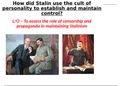
Presentation - Cult of Personality to Maintain Control
Stalin; formerly known as Iosif Vissarionovich Dzhugashvili, was a Marxist and an avid follower of Vladimir Lenin. His involvement in the Bolshevik movement was due to his active violent attacks on the Tsarist government, through bank robbing and kidnapping to fund the revolution, allowing him to become one of Lenin’s closest associates. Despite his early success within the Bolsheviks, he was not considered to be among the list of natural successors; Trotsky, Bukharin, Zinoviev, Kamenev and Ki...
raulpatel10
Presentation
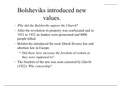
Extended Presentation - Stalin in The Bolshevik Party (50 Slides)
Stalin; formerly known as Iosif Vissarionovich Dzhugashvili, was a Marxist and an avid follower of Vladimir Lenin. His involvement in the Bolshevik movement was due to his active violent attacks on the Tsarist government, through bank robbing and kidnapping to fund the revolution, allowing him to become one of Lenin’s closest associates. Despite his early success within the Bolsheviks, he was not considered to be among the list of natural successors; Trotsky, Bukharin, Zinoviev, Kamenev and Ki...
raulpatel10
Lecture notes
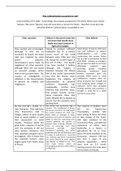
Extended Notes - Successes and Failures of Collectivisation
Stalin; formerly known as Iosif Vissarionovich Dzhugashvili, was a Marxist and an avid follower of Vladimir Lenin. His involvement in the Bolshevik movement was due to his active violent attacks on the Tsarist government, through bank robbing and kidnapping to fund the revolution, allowing him to become one of Lenin’s closest associates. Despite his early success within the Bolsheviks, he was not considered to be among the list of natural successors; Trotsky, Bukharin, Zinoviev, Kamenev and Ki...
raulpatel10
Study guide
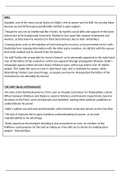
Flashcards - Stalin (32 Pages)
Stalin; formerly known as Iosif Vissarionovich Dzhugashvili, was a Marxist and an avid follower of Vladimir Lenin. His involvement in the Bolshevik movement was due to his active violent attacks on the Tsarist government, through bank robbing and kidnapping to fund the revolution, allowing him to become one of Lenin’s closest associates. Despite his early success within the Bolsheviks, he was not considered to be among the list of natural successors; Trotsky, Bukharin, Zinoviev, Kamenev and Ki...
raulpatel10
Essay
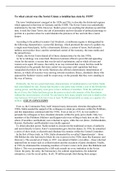
Essay - Totalitarianism
Stalin; formerly known as Iosif Vissarionovich Dzhugashvili, was a Marxist and an avid follower of Vladimir Lenin. His involvement in the Bolshevik movement was due to his active violent attacks on the Tsarist government, through bank robbing and kidnapping to fund the revolution, allowing him to become one of Lenin’s closest associates. Despite his early success within the Bolsheviks, he was not considered to be among the list of natural successors; Trotsky, Bukharin, Zinoviev, Kamenev and Ki...
raulpatel10
Summary
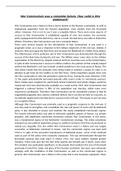
Exam Question - Was War Communism a Success?
A totalitarian state, is a where the central government of a state does not tolerate any parties with opposing views and exercises complete dictatorial rule over all or most aspects of life. Lenin, the leader of the Bolsheviks, took many measures in an attempt to create a totalitarian state, including the dissolution of Constituent Assembly, the use of decrees and the establishment of a secret police group called the Cheka. However there were also some ways in which he failed to achieve full tot...
raulpatel10
Presentation
Presentation - War Communism and NEP
A totalitarian state, is a where the central government of a state does not tolerate any parties with opposing views and exercises complete dictatorial rule over all or most aspects of life. Lenin, the leader of the Bolsheviks, took many measures in an attempt to create a totalitarian state, including the dissolution of Constituent Assembly, the use of decrees and the establishment of a secret police group called the Cheka. However there were also some ways in which he failed to achieve full tot...
raulpatel10

Summary
Exam Technique for Lenin Question
A totalitarian state, is a where the central government of a state does not tolerate any parties with opposing views and exercises complete dictatorial rule over all or most aspects of life. Lenin, the leader of the Bolsheviks, took many measures in an attempt to create a totalitarian state, including the dissolution of Constituent Assembly, the use of decrees and the establishment of a secret police group called the Cheka. However there were also some ways in which he failed to achieve full tot...
raulpatel10
Summary
Simple Notes - Lenin NEP Successes and Failures
A totalitarian state, is a where the central government of a state does not tolerate any parties with opposing views and exercises complete dictatorial rule over all or most aspects of life. Lenin, the leader of the Bolsheviks, took many measures in an attempt to create a totalitarian state, including the dissolution of Constituent Assembly, the use of decrees and the establishment of a secret police group called the Cheka. However there were also some ways in which he failed to achieve full tot...
raulpatel10
Summary
Simple Notes - How did Lenin Impose Communist Control
A totalitarian state, is a where the central government of a state does not tolerate any parties with opposing views and exercises complete dictatorial rule over all or most aspects of life. Lenin, the leader of the Bolsheviks, took many measures in an attempt to create a totalitarian state, including the dissolution of Constituent Assembly, the use of decrees and the establishment of a secret police group called the Cheka. However there were also some ways in which he failed to achieve full tot...
raulpatel10
Summary
Simple Notes - Factors that Led to the Communist Revolution
A totalitarian state, is a where the central government of a state does not tolerate any parties with opposing views and exercises complete dictatorial rule over all or most aspects of life. Lenin, the leader of the Bolsheviks, took many measures in an attempt to create a totalitarian state, including the dissolution of Constituent Assembly, the use of decrees and the establishment of a secret police group called the Cheka. However there were also some ways in which he failed to achieve full tot...
raulpatel10
Essay
Essay - Establishment of Bolshevik Rule
A totalitarian state, is a where the central government of a state does not tolerate any parties with opposing views and exercises complete dictatorial rule over all or most aspects of life. Lenin, the leader of the Bolsheviks, took many measures in an attempt to create a totalitarian state, including the dissolution of Constituent Assembly, the use of decrees and the establishment of a secret police group called the Cheka. However there were also some ways in which he failed to achieve full tot...
raulpatel10
Summary
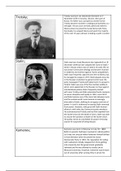
Russian Politician Biographies
A totalitarian state, is a where the central government of a state does not tolerate any parties with opposing views and exercises complete dictatorial rule over all or most aspects of life. Lenin, the leader of the Bolsheviks, took many measures in an attempt to create a totalitarian state, including the dissolution of Constituent Assembly, the use of decrees and the establishment of a secret police group called the Cheka. However there were also some ways in which he failed to achieve full tot...
raulpatel10