
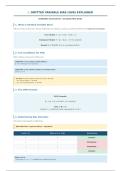
⚠ OMITTED VARIABLE BIAS (OVB) EXPLAINED
ECON2061 Econometrics | Complete Mini-Guide
1. What is Omitted Variable Bias?
OVB occurs when you leave out a relevant variable from your regression, causing your coefficient estimates to be biased and inconsistent.
True Model: Y = β₀ + β₁X₁ + β₂X₂ + u
Estimated Model: Y = β₀ + β₁X₁ + u* (X₂ omitted)
Result: β̂₁ is BIASED if X₂ is correlated with X₁
2. Two Conditions for OVB
BOTH conditions must be met for OVB to exist:
CONDITION 1: The omitted variable affects Y
β₂ ≠ 0 (X₂ belongs in the regression)
CONDITION 2: The omitted variable is correlated with X₁
Corr(X₁, X₂) ≠ 0
Key Rule: If either condition is NOT met, there is NO OVB.
• If X₂ doesn't affect Y → No OVB
• If X₂ is uncorrelated with X₁ → No OVB
3. The OVB Formula
OVB Formula:
β̂₁ →ᵖ β₁ + β₂ × [Cov(X₁, X₂) / Var(X₁)]
Bias = β₂ × δ
(where δ = coefficient from regressing X₂ on X₁)
4. Determining Bias Direction
The direction of bias depends on TWO things:
BIAS DIRECTION = Sign(Correlation) × Sign(Effect)
Corr(X₁, X₂) Effect of X₂ on Y (β₂) Bias Direction
+ + UPWARD ↑
+ − DOWNWARD ↓
− + DOWNWARD ↓
− − UPWARD ↑
Memory Trick:
• Same signs (++ or −−) → UPWARD bias (coefficient too high)
ECON2061 Econometrics | Complete Mini-Guide
1. What is Omitted Variable Bias?
OVB occurs when you leave out a relevant variable from your regression, causing your coefficient estimates to be biased and inconsistent.
True Model: Y = β₀ + β₁X₁ + β₂X₂ + u
Estimated Model: Y = β₀ + β₁X₁ + u* (X₂ omitted)
Result: β̂₁ is BIASED if X₂ is correlated with X₁
2. Two Conditions for OVB
BOTH conditions must be met for OVB to exist:
CONDITION 1: The omitted variable affects Y
β₂ ≠ 0 (X₂ belongs in the regression)
CONDITION 2: The omitted variable is correlated with X₁
Corr(X₁, X₂) ≠ 0
Key Rule: If either condition is NOT met, there is NO OVB.
• If X₂ doesn't affect Y → No OVB
• If X₂ is uncorrelated with X₁ → No OVB
3. The OVB Formula
OVB Formula:
β̂₁ →ᵖ β₁ + β₂ × [Cov(X₁, X₂) / Var(X₁)]
Bias = β₂ × δ
(where δ = coefficient from regressing X₂ on X₁)
4. Determining Bias Direction
The direction of bias depends on TWO things:
BIAS DIRECTION = Sign(Correlation) × Sign(Effect)
Corr(X₁, X₂) Effect of X₂ on Y (β₂) Bias Direction
+ + UPWARD ↑
+ − DOWNWARD ↓
− + DOWNWARD ↓
− − UPWARD ↑
Memory Trick:
• Same signs (++ or −−) → UPWARD bias (coefficient too high)


