Unit 2 Assignment B Anonymous
Introduction
Calorimetry is quantification of heat transfer and if it is released or absorbed
when a chemical reaction is undertaken. It is used in determining whether it is
exothermic (heat released) or endothermic (heat absorbed).
In day-to-day life situations, calorimetry is applied on different applications such
as controlling human metabolic rates, maintaining constant body temperature,
monitoring changes of physical states and measuring specific heat capacity
During the experiment, a number of equipment is used to measure and measure
precisely how materials cool and change state. A calibrated analogue
thermometer is used to measure the temperature of the materials with respect
to time. One needs to use a calibrated thermometer since it measures precisely
and consistently, which is essential at the phase change where the temperature
is constant. Small variations in temperature need to be measured precisely in
order to obtain a good cooling curve.
Calibrating analogue thermometer
For melting - Fill a beaker with crushed ice and add a small amount of cold water
to create an ice-water mixture. Stir the contents gently with a glass rod and allow
the beaker to stand for approximately 3 minutes to reach thermal equilibrium.
Insert the thermometer into the beaker, ensuring that the bulb or sensor tip is
fully submerged in the mixture. After about 30 seconds, take a reading—if the
thermometer is correctly calibrated, it should display a temperature of 0°C.
For boiling - Fill a kettle with water and bring it to a boil. Carefully pour the
boiling water into a beaker. Insert the thermometer into the beaker, ensuring
that the bulb or sensor tip is fully submerged and not touching the sides or
bottom of the container. After approximately 30 seconds, take a reading—if the
thermometer is correctly calibrated, it should display a temperature of 100°C.
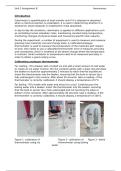
Figure 1- calibration of Figure 2- calibration of Figure 3 - kettle
thermometer using ice thermometer using boiling
water
, Unit 2 Assignment B Anonymous
Equipment List and Functions
Calorimeter – An insulated container fitted with a thermometer, used to
measure temperature changes during heating and cooling.
Thermometer – Measures temperature changes over time.
Digital Thermometer – Used for measuring air temperature accurately.
Analogue Thermometer – Used for measuring the temperature of
liquids, especially in water-based experiments.
Stop Clock – Used to record time intervals accurately during temperature
monitoring.
Clamp Stand and Clamp – Holds the thermometer securely in place,
ensuring it remains steady and correctly positioned.
Beaker – Used during thermometer testing and to hold hot or boiling
water.
Boiling Tube – Holds stearic acid or paraffin wax during heating.
Lid – Placed over the calorimeter to minimise heat loss to the
surroundings.
Bunsen Burner – Heats water in the beaker or directly heats the boiling
tube.
Introduction
Calorimetry is quantification of heat transfer and if it is released or absorbed
when a chemical reaction is undertaken. It is used in determining whether it is
exothermic (heat released) or endothermic (heat absorbed).
In day-to-day life situations, calorimetry is applied on different applications such
as controlling human metabolic rates, maintaining constant body temperature,
monitoring changes of physical states and measuring specific heat capacity
During the experiment, a number of equipment is used to measure and measure
precisely how materials cool and change state. A calibrated analogue
thermometer is used to measure the temperature of the materials with respect
to time. One needs to use a calibrated thermometer since it measures precisely
and consistently, which is essential at the phase change where the temperature
is constant. Small variations in temperature need to be measured precisely in
order to obtain a good cooling curve.
Calibrating analogue thermometer
For melting - Fill a beaker with crushed ice and add a small amount of cold water
to create an ice-water mixture. Stir the contents gently with a glass rod and allow
the beaker to stand for approximately 3 minutes to reach thermal equilibrium.
Insert the thermometer into the beaker, ensuring that the bulb or sensor tip is
fully submerged in the mixture. After about 30 seconds, take a reading—if the
thermometer is correctly calibrated, it should display a temperature of 0°C.
For boiling - Fill a kettle with water and bring it to a boil. Carefully pour the
boiling water into a beaker. Insert the thermometer into the beaker, ensuring
that the bulb or sensor tip is fully submerged and not touching the sides or
bottom of the container. After approximately 30 seconds, take a reading—if the
thermometer is correctly calibrated, it should display a temperature of 100°C.
Figure 1- calibration of Figure 2- calibration of Figure 3 - kettle
thermometer using ice thermometer using boiling
water
, Unit 2 Assignment B Anonymous
Equipment List and Functions
Calorimeter – An insulated container fitted with a thermometer, used to
measure temperature changes during heating and cooling.
Thermometer – Measures temperature changes over time.
Digital Thermometer – Used for measuring air temperature accurately.
Analogue Thermometer – Used for measuring the temperature of
liquids, especially in water-based experiments.
Stop Clock – Used to record time intervals accurately during temperature
monitoring.
Clamp Stand and Clamp – Holds the thermometer securely in place,
ensuring it remains steady and correctly positioned.
Beaker – Used during thermometer testing and to hold hot or boiling
water.
Boiling Tube – Holds stearic acid or paraffin wax during heating.
Lid – Placed over the calorimeter to minimise heat loss to the
surroundings.
Bunsen Burner – Heats water in the beaker or directly heats the boiling
tube.