Echo Chambers
C. Thi Nguyen
- Politics have become increasingly polarized
- Is social media to blame?
- Social networks have become sources of information.
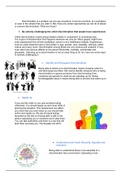
- But it is highly filtered information:
- You see what your friends share and comment on.
- And you see what the facebook/google/whatever algorithm thinks you
want to see.
- In other words, we live in Epistemic Bubbles.
- Epistemic Bubble: When you don’t hear people from the other side.
- It’s an informational network from which relevant voices have been excluded by
omission.
- Epistemic bubbles make us excessively self-confident.
- Looking to others for corroboration is a basic method for checking whether one
has reasoned well or badly.
- Normally, this is healthy, as when doing math homework with a friend.
- But in a bubble, we will encounter exaggerated amounts of agreement and
suppressed levels of disagreement.
- Luckily, bubbles can be popped.
- We just expose people into bubbles to new information they haven’t seen.
- But there appears to be a more pernicious problem.
- A “Post-Truth” World?
- People seem to not respond to new evidence.
- (“Alt Facts”? “Fake News”?)
- What explains this phenomenon?
- Do people not care about the truth anymore?
- Echo Chamber: A social structure from which other relevant voices have been actively
discredited.
- An echo chamber is what happens when you don’t trust people from the other side.
- They are like cults: A cult isolates its members by actively alienating them from any
outside sources. Those outside are actively labelled as malignant and untrustworthy. A
cult member’s trust is narrowed, aimed with laser-like focus on certain insider voices.
- Example: Conservatives and Liberals
- Problem: This is impractical. We just trust others for knowledge.
- Shame and humiliate those in the echo chamber?
- This only makes the cofre problem, a lack of trust, worse.
- Bombard those in echo chambers with even more facts?
- This also doesn’t address the core problem. Moreover, this raises the issue of
intellectual judo: these facts play into the conspiracy theories of those in echo
chambers.
- Nguyen’s Escape Route
, - Social-Epistemic Reboot: To escape, one must completely reset their trust
levels of all information sources.
- One must take the posture of a cognitive newborn, open and equally trusting to
all outside sources.
- It is rare that someone will do this, but it can be done. See the example of former
white nationalists Derek Black.
- Instead of ostracizing Black, some of his Jewish classmates befriended
him. By extending their good will to Black, they became sources of truth
for him.
- Nguyen’s Conclusions
- We should extend kindness and good will to those we see as stuck in echo
chambers.
- We should be cautious of ourselves being stuck in an echo chamber. Rather than
quickly discrediting our opponents as stupid and evil, we should consider their
arguments with charity and humility.
Ethics
What is Ethics?
- Metaethics: About the meaning of moral claims, the nature of moral facts and how we
can know the moral facts.
- Normative Ethics: About what the correct moral principles are.
- Applied Ethics: About answering specific moral questions.
Two Key Questions
- Do fetuses have a right to life?
- If fetuses do have a right to life, is it still okay to abort them?
Why Abortion is Immoral (Don Marquis, 1989)
- Marquis's Thesis: Abortion is prima facie seriously wrong.
- “Seriously Wrong” = as wrong as killing an innocent adult.
- “Prima Facie” = “at first appearance”.
- So come act being “prima facie wrong” means that there is some consideration against
doing the act, but that this consideration can be outweighed or defeated by some other
consideration.
- Example: Lying
Marquis's Strategy
- First figure out why it is wrong.
- Then see whether that reason also applies to fetuses/embryos.
- In other words: Look for
Some Bad Answers
- Because it “brutalizes” the killer.
- Because it makes the victims' friends and family sad.
Marquis’s Answer: The Future-Like-Ours Theory of the Wrongness of Killing (FLO)
- FLO: Killing an individual is prima facie seriously wrong when it deprives that individual
of a future like ours.
C. Thi Nguyen
- Politics have become increasingly polarized
- Is social media to blame?
- Social networks have become sources of information.
- But it is highly filtered information:
- You see what your friends share and comment on.
- And you see what the facebook/google/whatever algorithm thinks you
want to see.
- In other words, we live in Epistemic Bubbles.
- Epistemic Bubble: When you don’t hear people from the other side.
- It’s an informational network from which relevant voices have been excluded by
omission.
- Epistemic bubbles make us excessively self-confident.
- Looking to others for corroboration is a basic method for checking whether one
has reasoned well or badly.
- Normally, this is healthy, as when doing math homework with a friend.
- But in a bubble, we will encounter exaggerated amounts of agreement and
suppressed levels of disagreement.
- Luckily, bubbles can be popped.
- We just expose people into bubbles to new information they haven’t seen.
- But there appears to be a more pernicious problem.
- A “Post-Truth” World?
- People seem to not respond to new evidence.
- (“Alt Facts”? “Fake News”?)
- What explains this phenomenon?
- Do people not care about the truth anymore?
- Echo Chamber: A social structure from which other relevant voices have been actively
discredited.
- An echo chamber is what happens when you don’t trust people from the other side.
- They are like cults: A cult isolates its members by actively alienating them from any
outside sources. Those outside are actively labelled as malignant and untrustworthy. A
cult member’s trust is narrowed, aimed with laser-like focus on certain insider voices.
- Example: Conservatives and Liberals
- Problem: This is impractical. We just trust others for knowledge.
- Shame and humiliate those in the echo chamber?
- This only makes the cofre problem, a lack of trust, worse.
- Bombard those in echo chambers with even more facts?
- This also doesn’t address the core problem. Moreover, this raises the issue of
intellectual judo: these facts play into the conspiracy theories of those in echo
chambers.
- Nguyen’s Escape Route
, - Social-Epistemic Reboot: To escape, one must completely reset their trust
levels of all information sources.
- One must take the posture of a cognitive newborn, open and equally trusting to
all outside sources.
- It is rare that someone will do this, but it can be done. See the example of former
white nationalists Derek Black.
- Instead of ostracizing Black, some of his Jewish classmates befriended
him. By extending their good will to Black, they became sources of truth
for him.
- Nguyen’s Conclusions
- We should extend kindness and good will to those we see as stuck in echo
chambers.
- We should be cautious of ourselves being stuck in an echo chamber. Rather than
quickly discrediting our opponents as stupid and evil, we should consider their
arguments with charity and humility.
Ethics
What is Ethics?
- Metaethics: About the meaning of moral claims, the nature of moral facts and how we
can know the moral facts.
- Normative Ethics: About what the correct moral principles are.
- Applied Ethics: About answering specific moral questions.
Two Key Questions
- Do fetuses have a right to life?
- If fetuses do have a right to life, is it still okay to abort them?
Why Abortion is Immoral (Don Marquis, 1989)
- Marquis's Thesis: Abortion is prima facie seriously wrong.
- “Seriously Wrong” = as wrong as killing an innocent adult.
- “Prima Facie” = “at first appearance”.
- So come act being “prima facie wrong” means that there is some consideration against
doing the act, but that this consideration can be outweighed or defeated by some other
consideration.
- Example: Lying
Marquis's Strategy
- First figure out why it is wrong.
- Then see whether that reason also applies to fetuses/embryos.
- In other words: Look for
Some Bad Answers
- Because it “brutalizes” the killer.
- Because it makes the victims' friends and family sad.
Marquis’s Answer: The Future-Like-Ours Theory of the Wrongness of Killing (FLO)
- FLO: Killing an individual is prima facie seriously wrong when it deprives that individual
of a future like ours.