1|Page
–
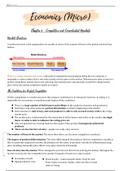
A market structure is the organisation of a market in terms of the number of firms in the market and how they
behave.
There is a range of market structures, with perfect competition and monopoly being the two extremes. A
monopoly is a price maker; this is one who actively sets the price in the market. Whereas price taker is seen in a
perfect competition market, this is one who lacks the market power and passively accepts the ruling market
price set by the market conditions outside its control.
Perfect competition is a market structure that requires conditions for its formation; however, in reality, it is
impossible for an economy to simultaneously display all the conditions.
➔ There is a large number of both buyers and selling’s in the market (consumers and producers).
➔ Each buyer and seller possesses perfect information on what is happening in the market.
➔ Each consumer is able to buy, and each producer is able to sell, as much as they wish at the ruling
market price.
➔ The market price is determined by the interaction of all the buyers and sellers in the market, no single
buyer or seller is able to influence the ruling price set.
➔ Only one good/service is being traded in the market, firms produce homogenous (identical)
products.
➔ There are low barriers of entry – people can easily enter and exit
The number of firms in the market: The more firms there are, the more competitive a market is.
The degree of product differentiation: The more differentiated the products, the less competitive a market is.
But in a perfectly competitive market, the products are the same. So products can only be differentiated using
price, branding and quality (also affects cross-price elasticity of demand).
Ease of entry into the market: This is designed to prevent new firms from entering the market. The higher the
barriers to entry, the less competitive the market. Examples of barriers to entry include:
➔ Economies of scale ➔ Brand loyalty – makes demand elastic. Hard for new
➔ High production costs firms to gain consumer loyalty, when one firm’s brand
name is strong
, 2|Page
➔ High set up costs Degree of product differentiation, ease of entry and
number of firms are used to distinguish between
➔ Strong competition
➔ Legal barriers different market structures
➔ Patents
The more concentrated a market is, the fewer firms it contains. An example of a concentrated market is the
pure monopoly, in which a single firm produces the whole of the output of a market – supplies the whole
market, with there being no other firms to compete against it. Concentrated markets with high market power,
face competitive pressure from other firms in the market (substitute products or outside firms trying to enter
the market) trying to destroy the monopoly position enjoyed by the firms or firms already in the market.
Between the two extreme market structures is imperfect competition. This is a competitive market where the
seller is selling heterogeneous/dissimilar (different) goods.
Market Structure – the organisation of a market in terms of the number of firms in the market and how they
behave.
Price Taker – A firm which passively accepts the ruling market price set by the market conditions outside its
control.
Price Maker – A firm possessing the power to set the price within the market.
Perfect Competition – A market which displays the conditions.
Competitive Market – A market where firms strive to outdo their rivals, but may not meet all the conditions of a
perfect competition.
Concentrated Market – A market containing very few firms, in the extreme only one firm.
Monopoly Power – The power of a firm to act as a price maker rather than as a price taker.
Imperfect Competition – Any market structure lying between the extremes of perfect competition and pure
monopoly.
Profit maximisation is an important objective for most firms – this is when a firm’s total sales revenue is
furthest above the total cost of production, (marginal cost=marginal revenue) this would give employees higher
wages and shareholders larger dividends. However, firms can also have other objectives, which some of these
may affect how a firm will behave as these impact what the firm may do, for example, a firm aiming to maximise
sales might set its price lower than a firm aiming to maximise profits.
Sales Maximisation a.k.a revenue maximisation happens at the level of output at which the sale of an extra unit
of output would yield no extra revenue. People who do sales maximisation should also take into account that
they must make a minimum or acceptable level of profit.
Growth Maximisation – This occurs when the decision-makers within a firm try to make the firm grow as fast as
possible. This can lead to conflict with profit maximisation as the manager’s value growth as it increases
influence and salaries, but firm owners may be interested in maximising profit.
Market Share Maximisation – This involves increasing the percentage of market output which the firm
produces. It involves a firm increasing its market power and monopoly power, hence accompanies growth
maximisation.
Alternative Objectives:
–
A market structure is the organisation of a market in terms of the number of firms in the market and how they
behave.
There is a range of market structures, with perfect competition and monopoly being the two extremes. A
monopoly is a price maker; this is one who actively sets the price in the market. Whereas price taker is seen in a
perfect competition market, this is one who lacks the market power and passively accepts the ruling market
price set by the market conditions outside its control.
Perfect competition is a market structure that requires conditions for its formation; however, in reality, it is
impossible for an economy to simultaneously display all the conditions.
➔ There is a large number of both buyers and selling’s in the market (consumers and producers).
➔ Each buyer and seller possesses perfect information on what is happening in the market.
➔ Each consumer is able to buy, and each producer is able to sell, as much as they wish at the ruling
market price.
➔ The market price is determined by the interaction of all the buyers and sellers in the market, no single
buyer or seller is able to influence the ruling price set.
➔ Only one good/service is being traded in the market, firms produce homogenous (identical)
products.
➔ There are low barriers of entry – people can easily enter and exit
The number of firms in the market: The more firms there are, the more competitive a market is.
The degree of product differentiation: The more differentiated the products, the less competitive a market is.
But in a perfectly competitive market, the products are the same. So products can only be differentiated using
price, branding and quality (also affects cross-price elasticity of demand).
Ease of entry into the market: This is designed to prevent new firms from entering the market. The higher the
barriers to entry, the less competitive the market. Examples of barriers to entry include:
➔ Economies of scale ➔ Brand loyalty – makes demand elastic. Hard for new
➔ High production costs firms to gain consumer loyalty, when one firm’s brand
name is strong
, 2|Page
➔ High set up costs Degree of product differentiation, ease of entry and
number of firms are used to distinguish between
➔ Strong competition
➔ Legal barriers different market structures
➔ Patents
The more concentrated a market is, the fewer firms it contains. An example of a concentrated market is the
pure monopoly, in which a single firm produces the whole of the output of a market – supplies the whole
market, with there being no other firms to compete against it. Concentrated markets with high market power,
face competitive pressure from other firms in the market (substitute products or outside firms trying to enter
the market) trying to destroy the monopoly position enjoyed by the firms or firms already in the market.
Between the two extreme market structures is imperfect competition. This is a competitive market where the
seller is selling heterogeneous/dissimilar (different) goods.
Market Structure – the organisation of a market in terms of the number of firms in the market and how they
behave.
Price Taker – A firm which passively accepts the ruling market price set by the market conditions outside its
control.
Price Maker – A firm possessing the power to set the price within the market.
Perfect Competition – A market which displays the conditions.
Competitive Market – A market where firms strive to outdo their rivals, but may not meet all the conditions of a
perfect competition.
Concentrated Market – A market containing very few firms, in the extreme only one firm.
Monopoly Power – The power of a firm to act as a price maker rather than as a price taker.
Imperfect Competition – Any market structure lying between the extremes of perfect competition and pure
monopoly.
Profit maximisation is an important objective for most firms – this is when a firm’s total sales revenue is
furthest above the total cost of production, (marginal cost=marginal revenue) this would give employees higher
wages and shareholders larger dividends. However, firms can also have other objectives, which some of these
may affect how a firm will behave as these impact what the firm may do, for example, a firm aiming to maximise
sales might set its price lower than a firm aiming to maximise profits.
Sales Maximisation a.k.a revenue maximisation happens at the level of output at which the sale of an extra unit
of output would yield no extra revenue. People who do sales maximisation should also take into account that
they must make a minimum or acceptable level of profit.
Growth Maximisation – This occurs when the decision-makers within a firm try to make the firm grow as fast as
possible. This can lead to conflict with profit maximisation as the manager’s value growth as it increases
influence and salaries, but firm owners may be interested in maximising profit.
Market Share Maximisation – This involves increasing the percentage of market output which the firm
produces. It involves a firm increasing its market power and monopoly power, hence accompanies growth
maximisation.
Alternative Objectives: