

Endocrine Control of Metabolism
Metabolism is the study of the synthesis (anabolism) and degradation (catabolism) of
the cellular constituents of living organisms.
Intermediary metabolism is the study of the central metabolic pathways in the cell,
integrating sugar, fatty acid and amino acid metabolism.
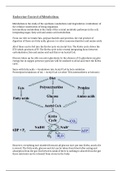
From our diet we intake fats, polysaccharides and proteins, the end product of
digestion of these are fatty acids, glucose (or other monosaccharides) and amino acids.
All of these can be fed into the Krebs cycle via Acetyl CoA. The Krebs cycle drives the
ETC which produces ATP. The Krebs cycle is the central integrating focus between
carbohydrates, fats and amino acid and this is via Acetyl CoA.
Glucose taken up by cells can enter glycolysis. In the absence of O2 glycolysis can give
energy but in oxygen presence pyruvate will be oxidised to ACoA and enter the Krebs
cycle.
Same with fatty acids -> breakdown into Acetyl CoA by beta oxidation
Proteolysis breakdown of AA -> Acetyl CoA (or other TCA intermedietes or ketones)
However, everything isn’t shuttled forward, all glucose isn’t put into Krebs, much of it
is stored. The fatty acids, glucose and AA can be taken from blood after eating and
absorption from the gut. But between meals if there is nothing to absorb from the gut
these nutrients can be released from stores in the body.
, -Glucose -> Glycogen
-Fatty acids -> TAGs
Two Phases of Metabolism: Absorptive and Fasting
The fed state or absorptive phase is the state of metabolism after a meal, for several
hours, while absorption is going on. During this phase, nutrients are being absorbed
from the gut and entering the circulation.
Several hours after a meal we enter the fasting state, by this we mean the condition of
having an empty stomach (e.g. waking up in morning). It is also called the post-
absorptive state.
Metabolic pathways switch between those in the fed state – when absorption and
laying down of energy reserves is going on and the fasting state – when there are no
nutrients to absorb from the gut and we live of stored nutrients.
This switching between metabolic state is regulated by hormones and a main point of
this hormonal regulation is to maintain blood sugar levels. These hormones include:
Insulin – Dominates absorptive state, released as blood glucose rises and promotes
storage (as glycogen) to decrease blood sugar.
Glucagon – Dominates post-absorptive state, function is nutrient release, such as
raising blood glucose when levels drop
Cortisol, growth hormone (somatotrophin), adrenaline: Release nutrients, raise blood
sugar levels (called diabetogenic hormones because of this)
Effects of Insulin
Insulin stops blood glucose rising after a meal and does this by promoting uptake of
glucose into four main tissues
-Adipose tissue (fat)
-Skeletal muscle
-Cardiac muscle
-Liver
Insulin also promotes uptake of free fatty acids and amino acids into adipose and
muscle tissue.
It stimulates glycogen synthesis (esp. in muscle and liver) and inhibits glycogenolysis
Insulin also further inhibits gluconeogenesis, lipolysis and proteolysis
The Flexible Uses of Glucose
Using the diagram below, we can explain the pathways active during the fed state and
fasting state.
Metabolism is the study of the synthesis (anabolism) and degradation (catabolism) of
the cellular constituents of living organisms.
Intermediary metabolism is the study of the central metabolic pathways in the cell,
integrating sugar, fatty acid and amino acid metabolism.
From our diet we intake fats, polysaccharides and proteins, the end product of
digestion of these are fatty acids, glucose (or other monosaccharides) and amino acids.
All of these can be fed into the Krebs cycle via Acetyl CoA. The Krebs cycle drives the
ETC which produces ATP. The Krebs cycle is the central integrating focus between
carbohydrates, fats and amino acid and this is via Acetyl CoA.
Glucose taken up by cells can enter glycolysis. In the absence of O2 glycolysis can give
energy but in oxygen presence pyruvate will be oxidised to ACoA and enter the Krebs
cycle.
Same with fatty acids -> breakdown into Acetyl CoA by beta oxidation
Proteolysis breakdown of AA -> Acetyl CoA (or other TCA intermedietes or ketones)
However, everything isn’t shuttled forward, all glucose isn’t put into Krebs, much of it
is stored. The fatty acids, glucose and AA can be taken from blood after eating and
absorption from the gut. But between meals if there is nothing to absorb from the gut
these nutrients can be released from stores in the body.
, -Glucose -> Glycogen
-Fatty acids -> TAGs
Two Phases of Metabolism: Absorptive and Fasting
The fed state or absorptive phase is the state of metabolism after a meal, for several
hours, while absorption is going on. During this phase, nutrients are being absorbed
from the gut and entering the circulation.
Several hours after a meal we enter the fasting state, by this we mean the condition of
having an empty stomach (e.g. waking up in morning). It is also called the post-
absorptive state.
Metabolic pathways switch between those in the fed state – when absorption and
laying down of energy reserves is going on and the fasting state – when there are no
nutrients to absorb from the gut and we live of stored nutrients.
This switching between metabolic state is regulated by hormones and a main point of
this hormonal regulation is to maintain blood sugar levels. These hormones include:
Insulin – Dominates absorptive state, released as blood glucose rises and promotes
storage (as glycogen) to decrease blood sugar.
Glucagon – Dominates post-absorptive state, function is nutrient release, such as
raising blood glucose when levels drop
Cortisol, growth hormone (somatotrophin), adrenaline: Release nutrients, raise blood
sugar levels (called diabetogenic hormones because of this)
Effects of Insulin
Insulin stops blood glucose rising after a meal and does this by promoting uptake of
glucose into four main tissues
-Adipose tissue (fat)
-Skeletal muscle
-Cardiac muscle
-Liver
Insulin also promotes uptake of free fatty acids and amino acids into adipose and
muscle tissue.
It stimulates glycogen synthesis (esp. in muscle and liver) and inhibits glycogenolysis
Insulin also further inhibits gluconeogenesis, lipolysis and proteolysis
The Flexible Uses of Glucose
Using the diagram below, we can explain the pathways active during the fed state and
fasting state.


