Exchange of substances
S A .: volume
.
*S A volume
.
:
ratio =
Texchange
organism in hot environment have high S A .:
. volume ratio
effective heat loss
Cell surface membrane features
S A X difference in conc .
-large SA Diffusion .
.
: V =
length of diffusion path
-short diffusion
pathway
maintain couc .
gradient
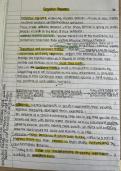
Gas exchange in plants
& for
·
Plants needs gas to respire photosynthesis
Epidermis are thin - all cells close to surface
very
↓ diffusion
-
pathway
spongy mesophyll adaptation :
-
irregular cells > -
large S A
. >
.
max.
-
rate of diffusion
-located in lower
a
region
-
close to stomata
- ↓ diffusion distance + ↑rate of diffusion
- air space >
-
gas exchange
Palisade
mesophyll adaptation :
-
regular cell-packed close together
fill w/
-
photosynthetic pigments > max -
.
photosynthesis
-top region > absorb
-
most sunlight
· Stomata :
- holes on leaf surface
-controls water loss
-Guard cells controls
opening & closing of stomata
-Actively transport K+ ions into the
cytoplasm
-
* K+ conc . = +Y
·
14 gradient -
> water more into cell through osmosis
Aturgor pressure ->
guard cell swells
inner cell wall thicker then outer cell wall
bend when swell - >
opens stomata
, Investigating Transpiration
Transpiration plant : absorb water from roots & evaporating through stomata
Factors affecting transpiration :
-light intensity
flight intensity
- = stomate closed >
-
↓transpiration
temp .
-
Temp =K E .
.
-
evaporates faster
Icons. from inside to outside ↑transpiration
-
gradient >
-
humidity
-
-thumidity = drier air
higher conc gradient from inside to outside > ↑ transpiration
-
Wind
intensity
-
-water removed
immediately
- 4 >
- ↑ transpiration
investigate using potometer :
to plant
use measure water uptake by
shoot of plant under water >
- water column remains unbroken
-
cut at an
angle >S
- . A
.
the bubble
measure distance moved
by air
Xerophytes
plants that survives in environment us low
availability of water
·
Adaptation :
-
spine leaves
-small S A
. . -
> reduce water loss
less stomate >
-
↓transpiration
-hair on surface
-
traps & reabsorb water
reduce conc
gradient of water loss
-X evaporation
Thick leaves
- ↑ diffusion distance
devaporation from transpiration >
- ↓water loss
, water transport in plant
Plant needs water for & temp
photosynthesis ,
maintain
rigidity in cells maintain .
water transport along plants through xylem
elongated tube made from dead cells
-no end walls
thick walls made from liglin
goes only up
Transpiration :
loss of through
water vapour stomata
by evaporation
Cohesion tension
theory :
combination of cohesion ,
adhesion & water tension
water loss from leaves -
transpiration
·
lowers ↑ in leaf cells
water in
xylem pulled up - > water tension
·
cohesion ->
water form H-bond w/ each other - > continuous column of water
adhesion H-bond w/ of column of from
- > water form walls
xylem -
prevent water
breaking
Movement of water in plants :
1) water vapour evaporates from stomate ->
transpiration
·
creates -
re 4- ↑water diffuse in
through osmosis
2) Twater tension >
-
pulls water into leaves
-transpirational pull
3) water are cohesive continuous column of water pulled
>
-
up
-
adhesion ->
helps transpiration
S A .: volume
.
*S A volume
.
:
ratio =
Texchange
organism in hot environment have high S A .:
. volume ratio
effective heat loss
Cell surface membrane features
S A X difference in conc .
-large SA Diffusion .
.
: V =
length of diffusion path
-short diffusion
pathway
maintain couc .
gradient
Gas exchange in plants
& for
·
Plants needs gas to respire photosynthesis
Epidermis are thin - all cells close to surface
very
↓ diffusion
-
pathway
spongy mesophyll adaptation :
-
irregular cells > -
large S A
. >
.
max.
-
rate of diffusion
-located in lower
a
region
-
close to stomata
- ↓ diffusion distance + ↑rate of diffusion
- air space >
-
gas exchange
Palisade
mesophyll adaptation :
-
regular cell-packed close together
fill w/
-
photosynthetic pigments > max -
.
photosynthesis
-top region > absorb
-
most sunlight
· Stomata :
- holes on leaf surface
-controls water loss
-Guard cells controls
opening & closing of stomata
-Actively transport K+ ions into the
cytoplasm
-
* K+ conc . = +Y
·
14 gradient -
> water more into cell through osmosis
Aturgor pressure ->
guard cell swells
inner cell wall thicker then outer cell wall
bend when swell - >
opens stomata
, Investigating Transpiration
Transpiration plant : absorb water from roots & evaporating through stomata
Factors affecting transpiration :
-light intensity
flight intensity
- = stomate closed >
-
↓transpiration
temp .
-
Temp =K E .
.
-
evaporates faster
Icons. from inside to outside ↑transpiration
-
gradient >
-
humidity
-
-thumidity = drier air
higher conc gradient from inside to outside > ↑ transpiration
-
Wind
intensity
-
-water removed
immediately
- 4 >
- ↑ transpiration
investigate using potometer :
to plant
use measure water uptake by
shoot of plant under water >
- water column remains unbroken
-
cut at an
angle >S
- . A
.
the bubble
measure distance moved
by air
Xerophytes
plants that survives in environment us low
availability of water
·
Adaptation :
-
spine leaves
-small S A
. . -
> reduce water loss
less stomate >
-
↓transpiration
-hair on surface
-
traps & reabsorb water
reduce conc
gradient of water loss
-X evaporation
Thick leaves
- ↑ diffusion distance
devaporation from transpiration >
- ↓water loss
, water transport in plant
Plant needs water for & temp
photosynthesis ,
maintain
rigidity in cells maintain .
water transport along plants through xylem
elongated tube made from dead cells
-no end walls
thick walls made from liglin
goes only up
Transpiration :
loss of through
water vapour stomata
by evaporation
Cohesion tension
theory :
combination of cohesion ,
adhesion & water tension
water loss from leaves -
transpiration
·
lowers ↑ in leaf cells
water in
xylem pulled up - > water tension
·
cohesion ->
water form H-bond w/ each other - > continuous column of water
adhesion H-bond w/ of column of from
- > water form walls
xylem -
prevent water
breaking
Movement of water in plants :
1) water vapour evaporates from stomate ->
transpiration
·
creates -
re 4- ↑water diffuse in
through osmosis
2) Twater tension >
-
pulls water into leaves
-transpirational pull
3) water are cohesive continuous column of water pulled
>
-
up
-
adhesion ->
helps transpiration