

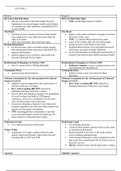
1920-1930’s
Positive Negative
Revival of Klu Klux Klan Revival of Klu Klux Klan
after the conviction of the Klan leader, David C. 1925- membership reached 4 million
Stephenson, for second-degree murder and evidence
of corruption by other members, membership fell to
around 30,000
The Boom The Boom
lynching was less common and more black people blacks in the south continued to struggle as incomes
were registered to vote which also gave them the fell below £200 a year
right to be jurors 1929- 1.25 million blacks had left the south
trials were sometimes fairer and more open. return of the soldiers after the war had brought
Harlem Renaissance greater poverty to the blacks in the north
for the first time, there were black people singing neighbourhood schools were segregated and much
and writing about their experiences and desires for less money was spent on black education
equality and freedom severe discrimination in employment particularly in
greatest impact was to reinforce racial pride and clerical work and the more skilled unionised trades
increased demands for key rights.
Brotherhood of Sleeping Car Porters 1925 Brotherhood of Sleeping Car Porters 1925
first AA union led by A Phillip Randolph Pullman Company- set up a company union to try
and undermine the Brotherhood
Communist Party Communist Party
opposed racial discrimination failed to create a mass movement for black
liberation
National Association for the Advancement of Coloured National Association for the Advancement of Coloured
People (NAACP) People (NAACP)
adopted a rigorous approach to the achievement of Dyer Anti- Lynching Bill 1922- halted by a
African American civil rights Southern Democratic filibuster in the Senate
Dyer Anti-Lynching Bill 1922- directed at
punishing lynching’s and mob violence
keen to show that members refused to be intimidated
by racial violence and held its 1920 annual
conference, which was considered to be the most
active Ku Klux Klan areas at the time.
focused on obtaining a Supreme Court ruling that
unequal expenditure on black and white schools was
against the Fourteenth Amendment
1936- encouraged black communities to provide
cases and gained legal victories for equal pay for
black teachers in Maryland and Virginia
Wall Street Crash Wall Street Crash
AA’s had not been part of the boom AA suffering increased
2 million black farmers left their farms in the south
Walter White as crop prices plummeted
organised a civil rights coalition between trade blacks migrated to the cities in the north and the
unions, church and liberals, which led to the anti- west worsening unemployment
lynching bills in 1937 and 1940 whites became desperate so they competed for jobs
that would have usually been left for blacks such as
domestic service
Hoover- failed to deal with the depression’s impact.
Agencies Alphabet Agencies
Positive Negative
Revival of Klu Klux Klan Revival of Klu Klux Klan
after the conviction of the Klan leader, David C. 1925- membership reached 4 million
Stephenson, for second-degree murder and evidence
of corruption by other members, membership fell to
around 30,000
The Boom The Boom
lynching was less common and more black people blacks in the south continued to struggle as incomes
were registered to vote which also gave them the fell below £200 a year
right to be jurors 1929- 1.25 million blacks had left the south
trials were sometimes fairer and more open. return of the soldiers after the war had brought
Harlem Renaissance greater poverty to the blacks in the north
for the first time, there were black people singing neighbourhood schools were segregated and much
and writing about their experiences and desires for less money was spent on black education
equality and freedom severe discrimination in employment particularly in
greatest impact was to reinforce racial pride and clerical work and the more skilled unionised trades
increased demands for key rights.
Brotherhood of Sleeping Car Porters 1925 Brotherhood of Sleeping Car Porters 1925
first AA union led by A Phillip Randolph Pullman Company- set up a company union to try
and undermine the Brotherhood
Communist Party Communist Party
opposed racial discrimination failed to create a mass movement for black
liberation
National Association for the Advancement of Coloured National Association for the Advancement of Coloured
People (NAACP) People (NAACP)
adopted a rigorous approach to the achievement of Dyer Anti- Lynching Bill 1922- halted by a
African American civil rights Southern Democratic filibuster in the Senate
Dyer Anti-Lynching Bill 1922- directed at
punishing lynching’s and mob violence
keen to show that members refused to be intimidated
by racial violence and held its 1920 annual
conference, which was considered to be the most
active Ku Klux Klan areas at the time.
focused on obtaining a Supreme Court ruling that
unequal expenditure on black and white schools was
against the Fourteenth Amendment
1936- encouraged black communities to provide
cases and gained legal victories for equal pay for
black teachers in Maryland and Virginia
Wall Street Crash Wall Street Crash
AA’s had not been part of the boom AA suffering increased
2 million black farmers left their farms in the south
Walter White as crop prices plummeted
organised a civil rights coalition between trade blacks migrated to the cities in the north and the
unions, church and liberals, which led to the anti- west worsening unemployment
lynching bills in 1937 and 1940 whites became desperate so they competed for jobs
that would have usually been left for blacks such as
domestic service
Hoover- failed to deal with the depression’s impact.
Agencies Alphabet Agencies


