
Lev Vygotsky (1934)
Vygotsky's theory of cognitive development argues that community and language play a central part in
learning.
While Jean Piaget concluded that children's cognitive development happens in stages, Vygotsky rejected his ideas
and believed that children develop independently of specific stages as the result of social interactions.
Vygotsky claimed that we are born with four elementary mental functions:
Attention
Sensation
Perception
Memory
It is our social and cultural environment that allows us to
use these elementary skills to develop and finally gain
higher mental functions.
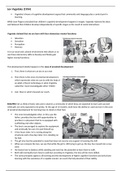
This development ideally happens in the zone of proximal development:
1. First, there is what we can do on our own
2. Then there is the zone of proximal development,
which represents what we can do with the help of
an adult a friend, technology or what Vygotsky
called the 'more knowledgable other' (MKO)
3. Last, there is what's beyond our reach.
EXAMPLE: let us think of twins who were raised in a community in which boys are expected to learn and succeed
while girls are only expected to be pretty. At the age of 10 months, both have the ability to crawl and are in the zone
of proximal development for learning how to stand on their feet.
The more knowledgable other, in this case the
father, provides the boy with opportunities to
practice in a playroom that he is equipped with
scaffolding and other objects.
The boy is encouraged to explore the equipment
and eventually he uses it to pull himself up.
A few hours later, he's cruising along the
structures and a few days later, he's standing on
his feet.
The girl also has the potential to stand but does not receive any support in learning the skill.
When we compare the two, we see that while the girl is still trying to get up, the boy has moved into a new
zone.
He knows how to balance while standing and now has the potential to learn how to walk.
Both will eventually learn how to walk but according to Vygotsky, the boy will be more skilled.
The same principles apply to all learning and the development of higher cognitive functions and only those
learning with the assistance of a capable mentor can reach the full potential of their ability.
Vygotsky's theory of cognitive development argues that community and language play a central part in
learning.
While Jean Piaget concluded that children's cognitive development happens in stages, Vygotsky rejected his ideas
and believed that children develop independently of specific stages as the result of social interactions.
Vygotsky claimed that we are born with four elementary mental functions:
Attention
Sensation
Perception
Memory
It is our social and cultural environment that allows us to
use these elementary skills to develop and finally gain
higher mental functions.
This development ideally happens in the zone of proximal development:
1. First, there is what we can do on our own
2. Then there is the zone of proximal development,
which represents what we can do with the help of
an adult a friend, technology or what Vygotsky
called the 'more knowledgable other' (MKO)
3. Last, there is what's beyond our reach.
EXAMPLE: let us think of twins who were raised in a community in which boys are expected to learn and succeed
while girls are only expected to be pretty. At the age of 10 months, both have the ability to crawl and are in the zone
of proximal development for learning how to stand on their feet.
The more knowledgable other, in this case the
father, provides the boy with opportunities to
practice in a playroom that he is equipped with
scaffolding and other objects.
The boy is encouraged to explore the equipment
and eventually he uses it to pull himself up.
A few hours later, he's cruising along the
structures and a few days later, he's standing on
his feet.
The girl also has the potential to stand but does not receive any support in learning the skill.
When we compare the two, we see that while the girl is still trying to get up, the boy has moved into a new
zone.
He knows how to balance while standing and now has the potential to learn how to walk.
Both will eventually learn how to walk but according to Vygotsky, the boy will be more skilled.
The same principles apply to all learning and the development of higher cognitive functions and only those
learning with the assistance of a capable mentor can reach the full potential of their ability.


