

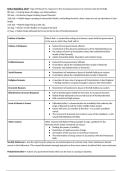
Kett’s Rebellion 1549- reign of Edward VI, response to the increasing enclosure of common land (in Norfolk).
8th July → Tearing down of hedges new Wymondham.
9th July → Protestors began heading toward Norwich.
12th July → Rebels began camping on Mousehold Heath, overlooking Norwich; other camps are set up elsewhere in East
Anglia
21st July → Rebels begin firing on the city.
1st Aug → Failure of John Dudley to recapture Norwich
27 Aug → Rebels finally defeated by forces led by the Earl of Northumberland
Motive of Leaders Robert Kett → wanted the ending of enclosure, upset with the government
in the way in which they dealt with it.
Motive of Followers ● hatred of local government officials
● resentment of the abuse by landowners of the Norfolk foldcourse
● the release of pent-up frustrations about the maladministration
locally of the Howards.
● rebels demanded better education and resident clergy
Political Reasons ● Hatred of local government officials
● Frustrations about the maladministration locally of Howards
● Character and stubbornness of Somerset
Social Reasons ● Resentment of landowners abuse of Norfolk foldcourse system
● Frustrations about the maladministration locally of Howards
Religious Reasons ● A reaction of slow rate of progress of Protestantism in East England
→ feeling ministers not good enough to advance the reformation
Economic Reasons ● Resentment of landowners abuse of Norfolk foldcourse system
Effectiveness of Crown Response ● Earl of Northampton Failed the first time to recapture Norwich
● Rebels finally defeated by forces led by Earl of Northumberland
● Kett convicted of high treason
Level of threat to Crown ● Ultimately failed → demonstrates the instability that underlay the
reign of Edward VI and the entire middle Tudor period
● Issues with over 25 counties at the time → so a point a political
unrest
● The removal of Somerset (not a direct cause of the rebellion) → NO
CALLS FOR REMOVAL OF KING
Other reasons Other reasons that Robert Kett got people to sign a petition for the
demands of the rebels contained 29 clauses.
● limiting the power of nobility.
● Restriction of rapid economic change
● prevention of the overuse of communal resources
● The reformation of clergy values in accordance with the Protestant
faith.
Norfolk foldcourse = was the right to graze sheep on an enclosed piece of common land. Some landowners denied
access to the foldcourse. This caused discontent amongst peasants as they were anxious to defend their own enclosures.
Maladministration = actions of a government body which can be seen as causing an injustice.
, Essex rebellion, 1601- reign of Elizabeth, Earl of Essex started it in response to coming out of favour and Cecil
becoming into Queens favour.
Motives of leaders Earl of Essex was frozen out of court by Robert Cecil (who was made
secretary of state)
The Queen had refused to renew his monopoly on the import of sweet wines
He had failed as a military leader in Ireland
He had disgraced himself in court by bursting into the Queen's bedchamber
All of this caused him to lose power and influence as a faction leader.
He sought greater control of the privy council
He sought the removal of Cecil as the Queen’s favorite.
Motives of followers He gathered about him some 300 supporters made up of soldiers and nobles
including the Earl of Southampton (a close friend of Essex)
Southampton (as a patron of the arts) induced players at the Globe Theatre
to revive Richard II (a play dealing with the deposition of a king) to stir up the
populace.
The company agreed when they were promised a payment of 40 shillings
Political reasons Sent to defeat the rebellion in Ireland but instead made peace with them
despite the Queens orders
Politically undermining Elizabeth
Made the government more unstable as Cecil and Essex started rival
fractions at court (making the privy council unstable)
Essex sought to gain more political power however Elizabeth gave increasing
political power to Cecil and not Essex
Social reasons The more political power the better the social status
Essex felt like he should be the one to have the increased status not Cecil
His jealousy towards Cecil was “an obsession”
He was the stepson of Dudley, who was the closest possible suitor for the
queen and therefore was looked on favorably
He was given his Earldom by the Queen
Fell out of favor with the queen by 1599 after being one of her favorites in
1596
She lost him his wealth and status
Effectiveness of Crown The Crown responded by ordering 4 of the Queens advisors to his house in
response London. But Essex locked them in the house and went to the streets to drum
up support but failed.
Earl of Nottingham led a force of men to Essex house, and he surrendered.
Essex was then tried and executed for treason.
It stopped government friction and made sure the threat of rebellion was
extinguished (effective).
Level of threat to Crown Relatively small as he lacked support. (only got support of 300 men, which is
very insignificant).
Cecil was aware of every move he made and reported back to the Queen.
It was a last attempt to regain power, it was a desperate and flawed plan.
The fact that it had no religious reasons makes it arguably less of a threat as it
wasn’t due to a major issue Elizabeth had faced in her reign
Also shows the progress made in her reign as both Catholics and protestants
joined the rebellion
One of Essex’s supporters was the Duke of Southampton, so it did have noble
support although he had also lost status and wealth
Wyatts rebellion 1554-
8th July → Tearing down of hedges new Wymondham.
9th July → Protestors began heading toward Norwich.
12th July → Rebels began camping on Mousehold Heath, overlooking Norwich; other camps are set up elsewhere in East
Anglia
21st July → Rebels begin firing on the city.
1st Aug → Failure of John Dudley to recapture Norwich
27 Aug → Rebels finally defeated by forces led by the Earl of Northumberland
Motive of Leaders Robert Kett → wanted the ending of enclosure, upset with the government
in the way in which they dealt with it.
Motive of Followers ● hatred of local government officials
● resentment of the abuse by landowners of the Norfolk foldcourse
● the release of pent-up frustrations about the maladministration
locally of the Howards.
● rebels demanded better education and resident clergy
Political Reasons ● Hatred of local government officials
● Frustrations about the maladministration locally of Howards
● Character and stubbornness of Somerset
Social Reasons ● Resentment of landowners abuse of Norfolk foldcourse system
● Frustrations about the maladministration locally of Howards
Religious Reasons ● A reaction of slow rate of progress of Protestantism in East England
→ feeling ministers not good enough to advance the reformation
Economic Reasons ● Resentment of landowners abuse of Norfolk foldcourse system
Effectiveness of Crown Response ● Earl of Northampton Failed the first time to recapture Norwich
● Rebels finally defeated by forces led by Earl of Northumberland
● Kett convicted of high treason
Level of threat to Crown ● Ultimately failed → demonstrates the instability that underlay the
reign of Edward VI and the entire middle Tudor period
● Issues with over 25 counties at the time → so a point a political
unrest
● The removal of Somerset (not a direct cause of the rebellion) → NO
CALLS FOR REMOVAL OF KING
Other reasons Other reasons that Robert Kett got people to sign a petition for the
demands of the rebels contained 29 clauses.
● limiting the power of nobility.
● Restriction of rapid economic change
● prevention of the overuse of communal resources
● The reformation of clergy values in accordance with the Protestant
faith.
Norfolk foldcourse = was the right to graze sheep on an enclosed piece of common land. Some landowners denied
access to the foldcourse. This caused discontent amongst peasants as they were anxious to defend their own enclosures.
Maladministration = actions of a government body which can be seen as causing an injustice.
, Essex rebellion, 1601- reign of Elizabeth, Earl of Essex started it in response to coming out of favour and Cecil
becoming into Queens favour.
Motives of leaders Earl of Essex was frozen out of court by Robert Cecil (who was made
secretary of state)
The Queen had refused to renew his monopoly on the import of sweet wines
He had failed as a military leader in Ireland
He had disgraced himself in court by bursting into the Queen's bedchamber
All of this caused him to lose power and influence as a faction leader.
He sought greater control of the privy council
He sought the removal of Cecil as the Queen’s favorite.
Motives of followers He gathered about him some 300 supporters made up of soldiers and nobles
including the Earl of Southampton (a close friend of Essex)
Southampton (as a patron of the arts) induced players at the Globe Theatre
to revive Richard II (a play dealing with the deposition of a king) to stir up the
populace.
The company agreed when they were promised a payment of 40 shillings
Political reasons Sent to defeat the rebellion in Ireland but instead made peace with them
despite the Queens orders
Politically undermining Elizabeth
Made the government more unstable as Cecil and Essex started rival
fractions at court (making the privy council unstable)
Essex sought to gain more political power however Elizabeth gave increasing
political power to Cecil and not Essex
Social reasons The more political power the better the social status
Essex felt like he should be the one to have the increased status not Cecil
His jealousy towards Cecil was “an obsession”
He was the stepson of Dudley, who was the closest possible suitor for the
queen and therefore was looked on favorably
He was given his Earldom by the Queen
Fell out of favor with the queen by 1599 after being one of her favorites in
1596
She lost him his wealth and status
Effectiveness of Crown The Crown responded by ordering 4 of the Queens advisors to his house in
response London. But Essex locked them in the house and went to the streets to drum
up support but failed.
Earl of Nottingham led a force of men to Essex house, and he surrendered.
Essex was then tried and executed for treason.
It stopped government friction and made sure the threat of rebellion was
extinguished (effective).
Level of threat to Crown Relatively small as he lacked support. (only got support of 300 men, which is
very insignificant).
Cecil was aware of every move he made and reported back to the Queen.
It was a last attempt to regain power, it was a desperate and flawed plan.
The fact that it had no religious reasons makes it arguably less of a threat as it
wasn’t due to a major issue Elizabeth had faced in her reign
Also shows the progress made in her reign as both Catholics and protestants
joined the rebellion
One of Essex’s supporters was the Duke of Southampton, so it did have noble
support although he had also lost status and wealth
Wyatts rebellion 1554-


