

Explanations for Gambling Addiction
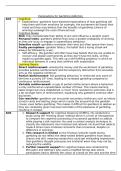
AO1 Cognitive:
Expectations- gamblers have distorted expectations of how gambling will
help them with their emotions for example, the excitement will boost their
mood and they may believe that the benefits of gambling (chance of
winning) outweigh the costs (financial loss)
Cognitive biases
Skill- they overestimate their ability to win and influence a random event.
Personal traits- gamblers believe they have a greater probability of winning
as they are lucky or engage in superstitious behaviour.
Selective recall- gamblers remember their wins but often ignore their loses.
Faulty perceptions- gambler fallacy; the belief that a losing streak will
always be followed by a win.
Self-efficacy- the gambler will often have bias beliefs that are are unable to
recover and abstain permanently as they don’t have the skills, so they
expect to gamble again. This sets up a self-fulfilling prophecy in which an
individual behaves in a way that confirms with expectation.
Learning theory:
Direct reinforcement- winning the money and the excitement of gambling
provides positive reinforcement and the temporary distraction from anxieties
acts as the negative reinforcer.
Partial reinforcement- the gambling behaviour is reinforced only some of
the time e.g every 10th time, leading to increased gambling compared to
continuous reinforcement.
Variable reinforcement- a type of partial reinforcement where a behaviour
is only reinforced an unpredictable number of times. This means learning
takes longer but once established, is much more resistant to extinction and is
a far stronger form of reinforcement, explaining why gamblers continue after
big losses.
Cue reactivity- gamblers can encounter secondary reinforcers such as lottery
scratch cards and betting shops which create the arousal that the gambler
craves, even before gambling. This makes it difficult for gamblers to abstain as
they are constantly given low-level reminders of the pleasures of gambling,
resulting in relapse.
AO3 1. Research support for cognitive biases by Griffiths. He conducted a
study using the ‘thinking aloud’ method which is a form of introspection
to compare the cognitive processing of occasional gamblers to addicts
while playing a slot machine. He used a content analysis technique to
classify the statements into irrational and rational. He found that addicts
made 6 times more irrational comments than occasional, despite no
difference in winnings.
2. This research is limited as the frivolous remarks made during
gambling do not reflect the deep-rooted beliefs gamblers have about
chance and skill, meaning researchers could get misleading impressions
that gamblers thought processes are irrational when they may not be,
reducing the validity.
3. Further research support for cognitive biases was conducted by
McCusker and Getting’s who used a modified Stroop task where
participants had to identify the colour of a word on the card and the time
AO1 Cognitive:
Expectations- gamblers have distorted expectations of how gambling will
help them with their emotions for example, the excitement will boost their
mood and they may believe that the benefits of gambling (chance of
winning) outweigh the costs (financial loss)
Cognitive biases
Skill- they overestimate their ability to win and influence a random event.
Personal traits- gamblers believe they have a greater probability of winning
as they are lucky or engage in superstitious behaviour.
Selective recall- gamblers remember their wins but often ignore their loses.
Faulty perceptions- gambler fallacy; the belief that a losing streak will
always be followed by a win.
Self-efficacy- the gambler will often have bias beliefs that are are unable to
recover and abstain permanently as they don’t have the skills, so they
expect to gamble again. This sets up a self-fulfilling prophecy in which an
individual behaves in a way that confirms with expectation.
Learning theory:
Direct reinforcement- winning the money and the excitement of gambling
provides positive reinforcement and the temporary distraction from anxieties
acts as the negative reinforcer.
Partial reinforcement- the gambling behaviour is reinforced only some of
the time e.g every 10th time, leading to increased gambling compared to
continuous reinforcement.
Variable reinforcement- a type of partial reinforcement where a behaviour
is only reinforced an unpredictable number of times. This means learning
takes longer but once established, is much more resistant to extinction and is
a far stronger form of reinforcement, explaining why gamblers continue after
big losses.
Cue reactivity- gamblers can encounter secondary reinforcers such as lottery
scratch cards and betting shops which create the arousal that the gambler
craves, even before gambling. This makes it difficult for gamblers to abstain as
they are constantly given low-level reminders of the pleasures of gambling,
resulting in relapse.
AO3 1. Research support for cognitive biases by Griffiths. He conducted a
study using the ‘thinking aloud’ method which is a form of introspection
to compare the cognitive processing of occasional gamblers to addicts
while playing a slot machine. He used a content analysis technique to
classify the statements into irrational and rational. He found that addicts
made 6 times more irrational comments than occasional, despite no
difference in winnings.
2. This research is limited as the frivolous remarks made during
gambling do not reflect the deep-rooted beliefs gamblers have about
chance and skill, meaning researchers could get misleading impressions
that gamblers thought processes are irrational when they may not be,
reducing the validity.
3. Further research support for cognitive biases was conducted by
McCusker and Getting’s who used a modified Stroop task where
participants had to identify the colour of a word on the card and the time


