

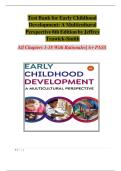
Test Bank for Early Childhood
op op op op
Development: A Multicultural
op op op
op Perspective 8th Edition by Jeffrey
op op op op
Trawick-Smith
op
All Chapters 1-18 With Rationales| A+ PASS
op op op op op op
1|P a g
op op op op
e
, Table of Contents op op
Chapter 1: Studying Early Childhood Development in a Diverse World
op op op op op op op op op
Learning Outcome Quizzes op op 1
Application Exercises op 12
Test Items op 14
Test Answer Keyop op 23
Chapter 1: Studying Early Childhood Development in a Diverse World
op op op op op op op op op
Chapter 1 Learning Outcome Quizzes
op op op op
Learning Outcome 1.1: Define early childhood development and explain how qualitative development is
op op op op op op op op op op op op
different from quantitative development.
op op op op
[Q1]
According to the textbook, which of the following statements best defines early childhood development?
op op op op op op op op op op op op op
1. The increase in knowledge and number of skills of young children over the first 5 years of life
op op op op op op op op op op op op op op op op op
2. The process of qualitative and quantitative changes in children from birth to age 8 [correct]
op op op op op op op op op op op op op op
3. The increase in sensorimotor intelligence between ages 3 and 9
op op op op op op op op op
4. The fixed order of acquiring skills and knowledge at each age from birth to
op op op op op op op op op op op op op
op age 7 [Feedback for Answer Choice 1]
op op op op op op
This statement suggests that children simply acquire greater knowledge and abilities as they age—
op op op op op op op op op op op op op
a purely quantitative view—and does not address qualitative changes. Also, early childhood is
op op op op op op op op op op op op
defined as birth to age 8 in the book.
op op op op op op op op op
[Feedback for Correct Answer 2] op op op op
Children do not simply become larger or obtain more knowledge as they develop. As they develop,
op op op op op op op op op op op op op op op
they become qualitatively different people, thinking and behaving in uniquely different ways.
op op op op op op op op op op op op
[Feedback for Answer Choice 3] op op op op
This statement addresses only one kind of intelligence that occurs in infancy. It does not include
op op op op op op op op op op op op op op op
other domains, such as physical or social development, or types of thinking that appear after
op op op op op op op op op op op op op op op
infancy.
op
[Feedback for Answer Choice 4] op op op op
2|P a g
op op op op
e
,This statement suggests that all children will acquire skills or knowledge in a fixed order, which is
op op op op op op op op op op op op op op op op
not always the case.
op op op op
[Q2]
Which of the following is the best example of a child becoming a qualitatively, not just
op op op op op op op op op op op op op op op
quantitatively, different person with development?
op op op op op
1. A child overcomes fears by having a deeper understanding of the world. [correct]
op op op op op op op op op op op op
2. A child acquires more mathematical skills and concepts.
op op op op op op op
3. A child forms a wider network of friendships and acquaintances.
op op op op op op op op op
4. A child becomes attached to multiple caregivers, including teachers and parents.
op op op op op op op op op op
[Feedback for Correct Answer 1] op op op op
In development, a child does not simply acquire more experience or knowledge about things that are
op op op op op op op op op op op op op op op
frightening; the child can now interpret and apply his or her knowledge to overcome these fears.
op op op op op op op op op op op op op op op op
[Feedback for Answer Choice 2] op op op op
This statement implies that in development children simply learn more of something—in this case,
op op op op op op op op op op op op op
more skills or knowledge. It does not recognize that children think and solve problems
op op op op op op op op op op op op op op
completely differently. They can apply and refine skills and knowledge in new ways as they
op op op op op op op op op op op op op op op
develop.
op
[Feedback for Answer Choice 3] op op op op
This answer is focused on quantitative changes in development—simply making more
op op op op op op op op op op
friends and acquaintances. It does not address how the nature of friendships or the child‟s
op op op op op op op op op op op op op op op
knowledge or social behaviors change with development.
op op op op op op op
[Feedback for Answer Choice 4] op op op op
This answer suggests that attachment to caregivers is simply the process of becoming attached to
op op op op op op op op op op op op op op
more people—a purely quantitative view of this aspect of development. It does not address how
op op op op op op op op op op op op op op op
the quality of these relationships changes with development.
op op op op op op op op
[Q3]
Which of the following examples relates most specifically to quantitative change in a child‟s
op op op op op op op op op op op op op
development?
1. Grayson has a strategy for figuring out which bowl is bigger than the others
op op op op op op op op op op op op op
3|P a g
op op op op
e
, 2. Grayson stopped being egocentric and taking toys away from others
op op op op op op op op op
3. Grayson grew two inches in the past six months [correct]
op op op op op op op op op
4. Grayson now asks for milk rather than crying
op op op op op op op
for it [Feedback for Answer Choice 1]
op op op op op op op
Grayson‟s development of a strategy for figuring out which bowl is biggest is an example of qualitative
op op op op op op op op op op op op op op op op
change.
[Feedback for Answer Choice 2] op op op op
Grayson‟s change in showing less egocentrism is an example of qualitative change.
op op op op op op op op op op op
op [Feedback for Correct Answer 3]op op op op
Grayson‟s growth in height represents quantitative change.
op op op op op op
[Feedback for Answer Choice 4] op op op op
Grayson‟s developmental change from crying for milk to asking for it represents qualitative change.
op op op op op op op op op op op op op
[Q4]
The definition of child development includes which of the following?
op op op op op op op op op
1. Process of complying op op
2. Process of conforming op op
3. Process of uniformity op op
4. Process of transforming op op
[correct] [Feedback for Answer
op op op op
op Choice 1] op
The definition of child development relates to changes rather than complying with any rules or
op op op op op op op op op op op op op op
expectations.
op
[Feedback for Answer Choice 2] op op op op
The definition of child development relates to changes rather than conformity.
op op op op op op op op op op
op [Feedback for Answer Choice 3] op op op op
The definition of child development relates to changes rather than uniformity.
op op op op op op op op op op
op [Feedback for Correct Answer 4]op op op op
4|P a g
op op op op
e
op op op op
Development: A Multicultural
op op op
op Perspective 8th Edition by Jeffrey
op op op op
Trawick-Smith
op
All Chapters 1-18 With Rationales| A+ PASS
op op op op op op
1|P a g
op op op op
e
, Table of Contents op op
Chapter 1: Studying Early Childhood Development in a Diverse World
op op op op op op op op op
Learning Outcome Quizzes op op 1
Application Exercises op 12
Test Items op 14
Test Answer Keyop op 23
Chapter 1: Studying Early Childhood Development in a Diverse World
op op op op op op op op op
Chapter 1 Learning Outcome Quizzes
op op op op
Learning Outcome 1.1: Define early childhood development and explain how qualitative development is
op op op op op op op op op op op op
different from quantitative development.
op op op op
[Q1]
According to the textbook, which of the following statements best defines early childhood development?
op op op op op op op op op op op op op
1. The increase in knowledge and number of skills of young children over the first 5 years of life
op op op op op op op op op op op op op op op op op
2. The process of qualitative and quantitative changes in children from birth to age 8 [correct]
op op op op op op op op op op op op op op
3. The increase in sensorimotor intelligence between ages 3 and 9
op op op op op op op op op
4. The fixed order of acquiring skills and knowledge at each age from birth to
op op op op op op op op op op op op op
op age 7 [Feedback for Answer Choice 1]
op op op op op op
This statement suggests that children simply acquire greater knowledge and abilities as they age—
op op op op op op op op op op op op op
a purely quantitative view—and does not address qualitative changes. Also, early childhood is
op op op op op op op op op op op op
defined as birth to age 8 in the book.
op op op op op op op op op
[Feedback for Correct Answer 2] op op op op
Children do not simply become larger or obtain more knowledge as they develop. As they develop,
op op op op op op op op op op op op op op op
they become qualitatively different people, thinking and behaving in uniquely different ways.
op op op op op op op op op op op op
[Feedback for Answer Choice 3] op op op op
This statement addresses only one kind of intelligence that occurs in infancy. It does not include
op op op op op op op op op op op op op op op
other domains, such as physical or social development, or types of thinking that appear after
op op op op op op op op op op op op op op op
infancy.
op
[Feedback for Answer Choice 4] op op op op
2|P a g
op op op op
e
,This statement suggests that all children will acquire skills or knowledge in a fixed order, which is
op op op op op op op op op op op op op op op op
not always the case.
op op op op
[Q2]
Which of the following is the best example of a child becoming a qualitatively, not just
op op op op op op op op op op op op op op op
quantitatively, different person with development?
op op op op op
1. A child overcomes fears by having a deeper understanding of the world. [correct]
op op op op op op op op op op op op
2. A child acquires more mathematical skills and concepts.
op op op op op op op
3. A child forms a wider network of friendships and acquaintances.
op op op op op op op op op
4. A child becomes attached to multiple caregivers, including teachers and parents.
op op op op op op op op op op
[Feedback for Correct Answer 1] op op op op
In development, a child does not simply acquire more experience or knowledge about things that are
op op op op op op op op op op op op op op op
frightening; the child can now interpret and apply his or her knowledge to overcome these fears.
op op op op op op op op op op op op op op op op
[Feedback for Answer Choice 2] op op op op
This statement implies that in development children simply learn more of something—in this case,
op op op op op op op op op op op op op
more skills or knowledge. It does not recognize that children think and solve problems
op op op op op op op op op op op op op op
completely differently. They can apply and refine skills and knowledge in new ways as they
op op op op op op op op op op op op op op op
develop.
op
[Feedback for Answer Choice 3] op op op op
This answer is focused on quantitative changes in development—simply making more
op op op op op op op op op op
friends and acquaintances. It does not address how the nature of friendships or the child‟s
op op op op op op op op op op op op op op op
knowledge or social behaviors change with development.
op op op op op op op
[Feedback for Answer Choice 4] op op op op
This answer suggests that attachment to caregivers is simply the process of becoming attached to
op op op op op op op op op op op op op op
more people—a purely quantitative view of this aspect of development. It does not address how
op op op op op op op op op op op op op op op
the quality of these relationships changes with development.
op op op op op op op op
[Q3]
Which of the following examples relates most specifically to quantitative change in a child‟s
op op op op op op op op op op op op op
development?
1. Grayson has a strategy for figuring out which bowl is bigger than the others
op op op op op op op op op op op op op
3|P a g
op op op op
e
, 2. Grayson stopped being egocentric and taking toys away from others
op op op op op op op op op
3. Grayson grew two inches in the past six months [correct]
op op op op op op op op op
4. Grayson now asks for milk rather than crying
op op op op op op op
for it [Feedback for Answer Choice 1]
op op op op op op op
Grayson‟s development of a strategy for figuring out which bowl is biggest is an example of qualitative
op op op op op op op op op op op op op op op op
change.
[Feedback for Answer Choice 2] op op op op
Grayson‟s change in showing less egocentrism is an example of qualitative change.
op op op op op op op op op op op
op [Feedback for Correct Answer 3]op op op op
Grayson‟s growth in height represents quantitative change.
op op op op op op
[Feedback for Answer Choice 4] op op op op
Grayson‟s developmental change from crying for milk to asking for it represents qualitative change.
op op op op op op op op op op op op op
[Q4]
The definition of child development includes which of the following?
op op op op op op op op op
1. Process of complying op op
2. Process of conforming op op
3. Process of uniformity op op
4. Process of transforming op op
[correct] [Feedback for Answer
op op op op
op Choice 1] op
The definition of child development relates to changes rather than complying with any rules or
op op op op op op op op op op op op op op
expectations.
op
[Feedback for Answer Choice 2] op op op op
The definition of child development relates to changes rather than conformity.
op op op op op op op op op op
op [Feedback for Answer Choice 3] op op op op
The definition of child development relates to changes rather than uniformity.
op op op op op op op op op op
op [Feedback for Correct Answer 4]op op op op
4|P a g
op op op op
e


